
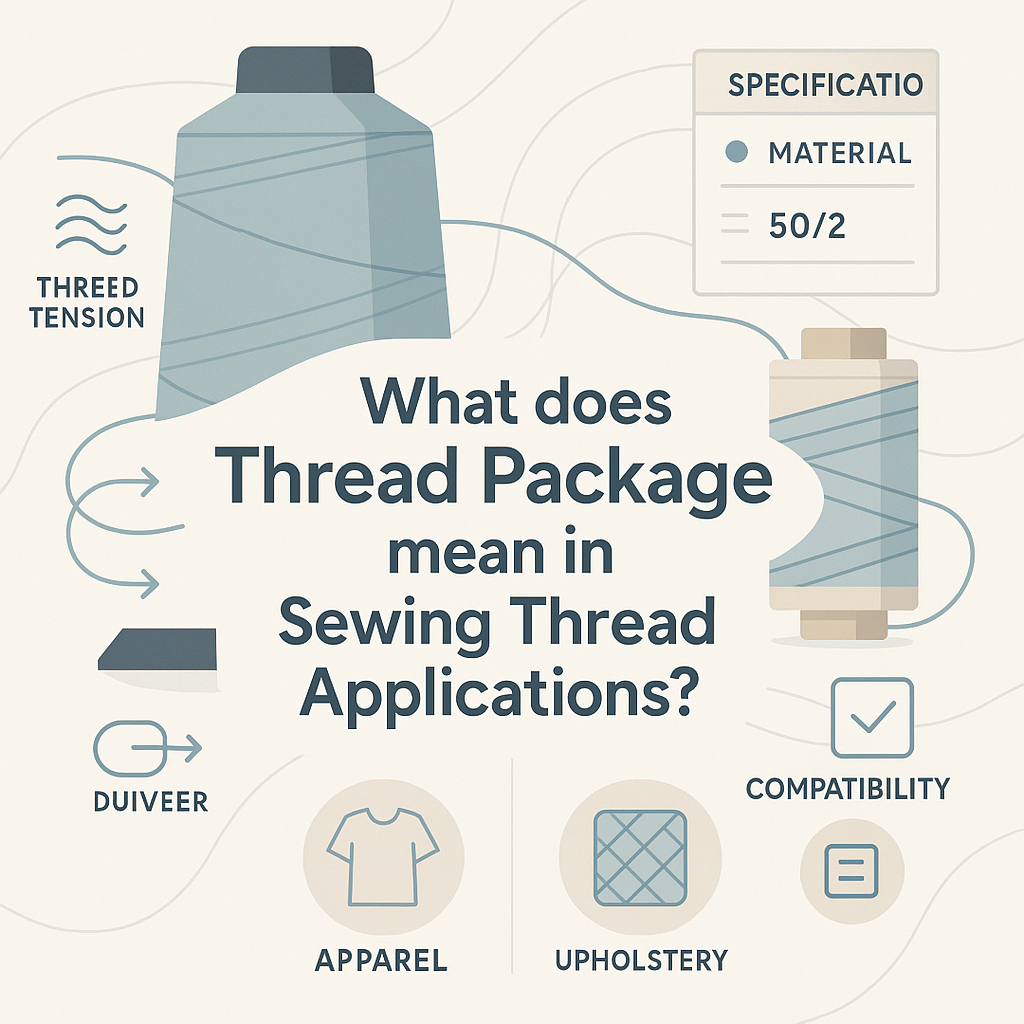
What does thread package mean in sewing thread applications?
In the world of sewing, understanding the term thread package is crucial for anyone involved in selecting or using sewing threads. A thread package refers to the way sewing threads are bundled and presented for use, which can significantly impact their performance and suitability for various applications. This article will explore the definition of thread packages, their importance in sewing performance, and how they are used in different sewing applications.
Basic definition
A thread package typically consists of the spool, cone, or bobbin that holds the sewing thread. The packaging can vary in size, shape, and material, depending on the type of thread and its intended use. For instance, industrial sewing threads may come in larger cones to accommodate high-volume sewing operations, while consumer threads might be packaged in smaller spools for home sewing projects.
Why it matters in sewing performance
The design and structure of a thread package can influence several factors related to sewing performance, including:
- Thread tension: The way thread is packaged can affect how it unwinds during sewing, impacting the tension and consistency of stitches.
- Thread delivery: A well-designed package ensures that the thread feeds smoothly, reducing the risk of tangling or breakage.
- Storage and shelf life: Proper packaging helps protect the thread from environmental factors, which can affect its durability and performance over time.
Where is thread package used?
Thread packages are utilized across various sewing applications, from industrial manufacturing to home crafting. Understanding where and how they are used can help buyers make informed decisions.
Common sewing thread products or applications
Different types of thread packages are suited for various applications, including:
- Apparel manufacturing: High tenacity polyester filament yarns are often packaged in large cones for efficient use in mass production.
- Upholstery: Bonded nylon threads are commonly used in upholstery applications, packaged to ensure optimal performance under stress.
- Quilting: Specialty threads may come in smaller spools, designed for ease of use in home sewing machines.
What buyers usually check
When evaluating thread packages, buyers often consider the following factors:
- Thread type: Understanding the material composition (e.g., polyester, nylon) is essential for matching the thread to the application.
- Package size: The size of the package should align with the production needs to minimize waste and ensure efficiency.
- Compatibility: Ensuring that the thread package is compatible with the sewing machine or equipment being used is vital for optimal performance.
How to evaluate thread package
Evaluating a thread package involves looking at various specifications and understanding common misconceptions that may arise.
Key points on a specification sheet
A specification sheet for a thread package should include:
- Material composition: Details on whether the thread is made from polyester, nylon, or a blend.
- Thread count: Information on the thickness and strength of the thread, which can affect its performance.
- Recommended applications: Guidance on where the thread is best suited, helping buyers make informed choices.
Common misunderstandings
Several misconceptions can lead to poor thread selection:
- All threads are the same: Different materials and constructions can lead to vastly different performance characteristics.
- Package size is irrelevant: Choosing the wrong package size can result in inefficiencies and increased costs.
- Thread color is the only consideration: While color is important, the material and construction are critical for performance.
Practical takeaway for sourcing teams
For sourcing teams, understanding thread packages is essential for making informed purchasing decisions. Here are some practical tips:
When to ask for samples
Requesting samples is advisable when:
- Testing a new thread type for a specific application.
- Evaluating the performance of a thread package in real-world conditions.
- Comparing different brands or types to find the best fit.
When another thread type may fit better
Consider exploring alternative thread types when:
- The current thread is not performing as expected in specific applications.
- Production requirements change, necessitating a different thread package.
- Cost efficiency becomes a priority, and a different material may offer better value.
In conclusion, understanding the concept of a thread package is vital for optimizing sewing performance and ensuring the right fit for various applications. By evaluating specifications, recognizing common misunderstandings, and knowing when to request samples, sourcing teams can make informed decisions that enhance their sewing operations.