
What does what is thread evenness mean in sewing thread applications?
Understanding what is thread evenness is essential for sewing thread buyers, as it directly impacts the quality and performance of sewing projects. Thread evenness refers to the uniformity of the thread’s diameter along its length. This characteristic plays a crucial role in determining how well the thread performs in various sewing applications.
Basic definition
Thread evenness can be defined as the consistency of the thread’s thickness throughout its entire length. Ideally, a high-quality sewing thread should have minimal variations in diameter, which contributes to a smoother sewing experience. In contrast, uneven threads can lead to issues such as thread breakage, uneven stitches, and poor seam quality.
Why it matters in sewing performance
The importance of thread evenness in sewing performance cannot be overstated. Here are a few reasons why it matters:
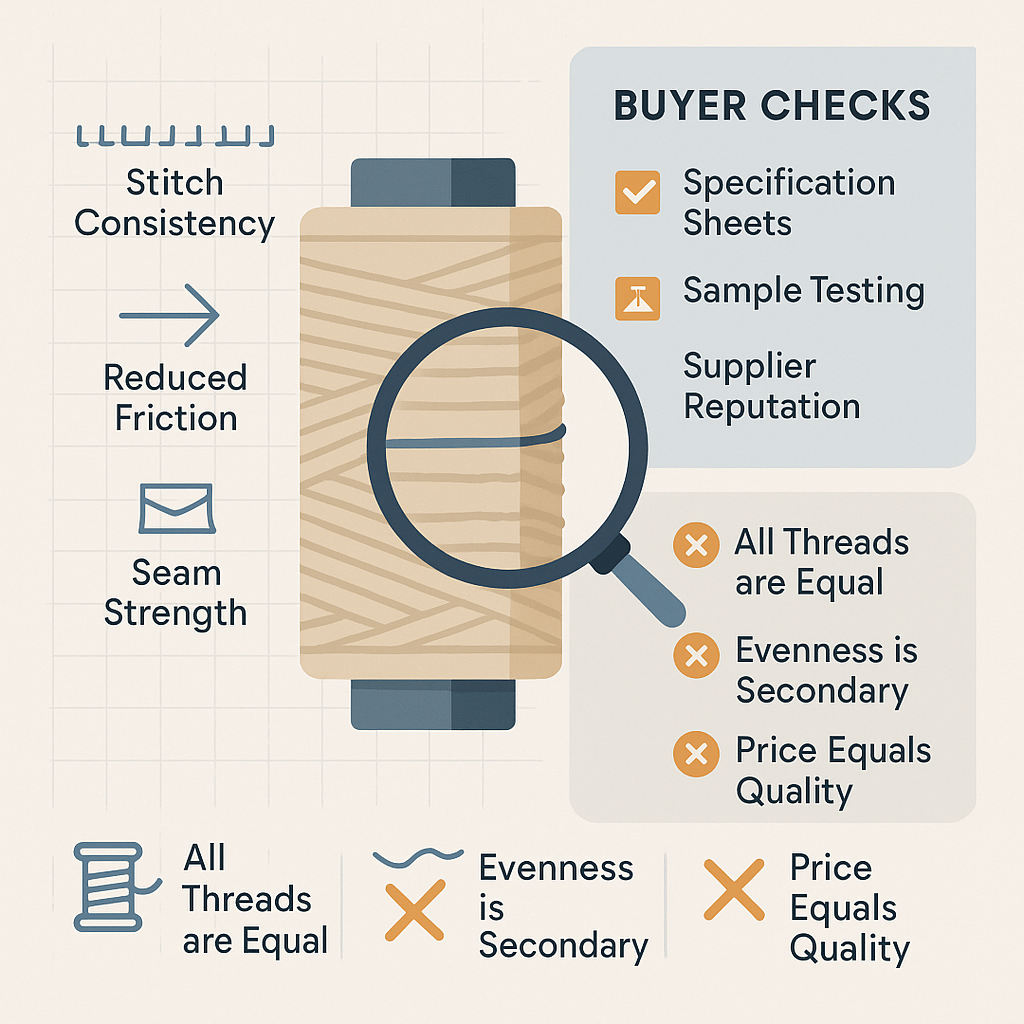
- Stitch Consistency: Even threads create uniform stitches, which are essential for aesthetic appeal and structural integrity.
- Reduced Friction: Consistent diameter reduces friction during sewing, minimizing the risk of thread breakage.
- Seam Strength: Threads with even thickness contribute to stronger seams, which are crucial for durability in finished products.
Where is what is thread evenness used?
Thread evenness is a critical factor in various sewing thread products and applications. Understanding where it is applied can help buyers make informed decisions.
Common sewing thread products or applications
Thread evenness is particularly important in the following products and applications:
- Industrial Sewing Threads: Used in high-speed sewing machines, where consistent performance is essential.
- Apparel Manufacturing: Even threads ensure that garments maintain their shape and durability after repeated wear and washing.
- Home Textiles: Products like curtains and upholstery benefit from even threads for aesthetic and functional purposes.
What buyers usually check
When sourcing sewing threads, buyers often check for:
- Specification Sheets: These documents provide information on thread evenness and other characteristics.
- Sample Testing: Evaluating samples allows buyers to assess thread evenness firsthand.
- Supplier Reputation: A supplier’s track record can indicate the quality of their threads, including evenness.
How to evaluate what is thread evenness
Evaluating thread evenness involves understanding key specifications and common misunderstandings that can arise.
Key points on a specification sheet
When reviewing a specification sheet, consider the following points related to thread evenness:
- Diameter Variability: Look for information on the acceptable range of diameter variations.
- Tensile Strength: Even threads often exhibit higher tensile strength, which can be a key indicator of quality.
- Type of Yarn: Different yarn types (e.g., polyester, nylon) can affect evenness, so understanding the material is crucial.
Common misunderstandings
Several misconceptions can cloud the understanding of thread evenness:
- All Threads are Equal: Not all threads are manufactured with the same level of precision; some may have significant variations.
- Evenness is Secondary: Some buyers may overlook evenness, focusing instead on color or finish, but this can lead to performance issues.
- Price Equals Quality: Higher-priced threads do not always guarantee better evenness; thorough evaluation is necessary.
Practical takeaway for sourcing teams
For sourcing teams, understanding thread evenness is vital for selecting the right sewing threads for specific applications.
When to ask for samples
Requesting samples is advisable when:
- You are evaluating a new supplier and want to assess their thread quality.
- You are considering a new application that requires specific thread characteristics.
- You need to compare multiple products to determine the best fit for your needs.
When another thread type may fit better
In some cases, it may be beneficial to consider alternative thread types if:
- The application requires specific performance characteristics that your current thread cannot meet.
- You encounter consistent issues with thread evenness in your current selection.
- You are exploring new materials that may offer improved performance or cost-effectiveness.
In conclusion, understanding what is thread evenness is crucial for making informed decisions in sewing thread procurement. By evaluating thread evenness, buyers can ensure that they select high-quality threads that meet the demands of their specific applications, ultimately leading to better sewing performance and product quality.