
What does what is tex in sewing thread mean in sewing thread applications?
For sewing thread buyers, understanding the term tex is essential. It serves as a key indicator of thread weight and performance, influencing the overall quality of sewing projects. This article delves into the definition of tex, its significance in sewing performance, and its applications in various industries.
Basic definition
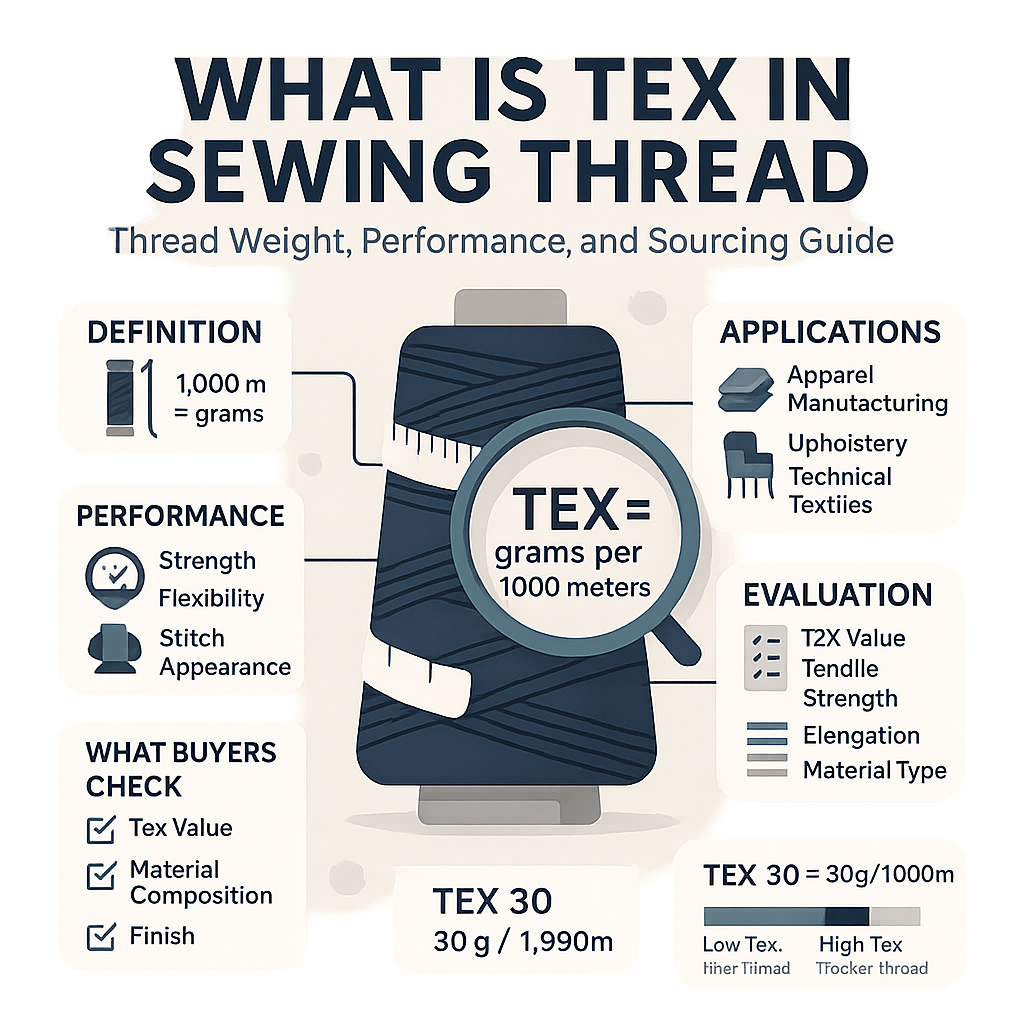
Tex is a unit of measurement that indicates the linear mass density of a thread or yarn. Specifically, it is defined as the mass in grams per 1,000 meters of the thread. For example, a thread with a tex value of 30 means that 1,000 meters of that thread weighs 30 grams. This measurement helps buyers gauge the thickness and strength of the thread, which are critical factors in selecting the right material for specific sewing applications.
Why it matters in sewing performance
The tex value directly correlates with the performance characteristics of the thread. A lower tex value indicates a finer thread, while a higher tex value signifies a thicker thread. Here’s why this matters:
- Strength: Thicker threads generally offer higher tensile strength, making them suitable for heavy-duty applications.
- Flexibility: Finer threads provide more flexibility, which is essential for delicate fabrics.
- Stitch appearance: The tex value influences the visual outcome of stitches, affecting the overall aesthetic of the finished product.
Where is what is tex in sewing thread used?
Understanding where tex is applied can help buyers make informed decisions about their thread choices. Different industries and applications require different thread specifications.
Common sewing thread products or applications
Tex is used across various sewing applications, including:
- Apparel manufacturing: Fine threads (lower tex values) are often used for lightweight fabrics, while thicker threads (higher tex values) are used for denim and outerwear.
- Upholstery: Heavy-duty threads with higher tex values are essential for durability in furniture and automotive upholstery.
- Technical textiles: Industries such as automotive and aerospace often require specialized threads with specific tex values to meet stringent performance criteria.
What buyers usually check
When evaluating threads, buyers typically consider the following:
- Tex value: To determine the appropriate thickness and strength for their application.
- Material composition: Polyester, nylon, or cotton threads each have unique properties that affect performance.
- Finish: Threads may be bonded or treated to enhance performance characteristics, such as reducing friction or increasing durability.
How to evaluate what is tex in sewing thread
Evaluating tex in sewing thread involves understanding its implications on performance and suitability for specific applications.
Key points on a specification sheet
When reviewing a specification sheet, buyers should look for:
- Tex value: Clearly stated for easy comparison.
- Tensile strength: Indicates how much force the thread can withstand before breaking.
- Elongation: The percentage of stretch before breaking, which affects the thread’s flexibility.
- Material type: Essential for understanding the thread’s properties and applications.
Common misunderstandings
There are several misconceptions about tex that can lead to poor thread selection:
- Higher tex equals better quality: Not necessarily; the right tex value depends on the specific application.
- All threads with the same tex perform similarly: Material composition and thread finish can significantly affect performance.
Practical takeaway for sourcing teams
For sourcing teams, understanding tex is vital for selecting the right thread for their sewing applications. Here are some practical tips:
When to ask for samples
Requesting samples is advisable when:
- You are exploring a new application that requires specific thread characteristics.
- You need to compare different tex values to determine the best fit for your project.
- You are considering a new supplier and want to assess their thread quality.
When another thread type may fit better
Sometimes, a different thread type may be more suitable based on the application requirements. Consider alternatives when:
- The fabric type demands a specific thread characteristic that your current options do not meet.
- You require enhanced durability or flexibility that another material can provide.
- You are working with specialized applications that may benefit from unique thread properties.
In conclusion, understanding what is tex in sewing thread is crucial for making informed decisions in thread selection. By considering the tex value, material composition, and application requirements, buyers can enhance their sewing projects’ performance and quality. Always remember to evaluate specifications carefully and consider requesting samples to ensure the best fit for your needs.