
What does what is poly cotton corespun thread mean in sewing thread applications?
Understanding what is poly cotton corespun thread is crucial for sewing thread buyers who aim to enhance their sewing applications. This unique thread combines the benefits of polyester and cotton, offering a versatile option for various sewing needs. In this section, we will explore its basic definition and why it matters in sewing performance.
Basic definition
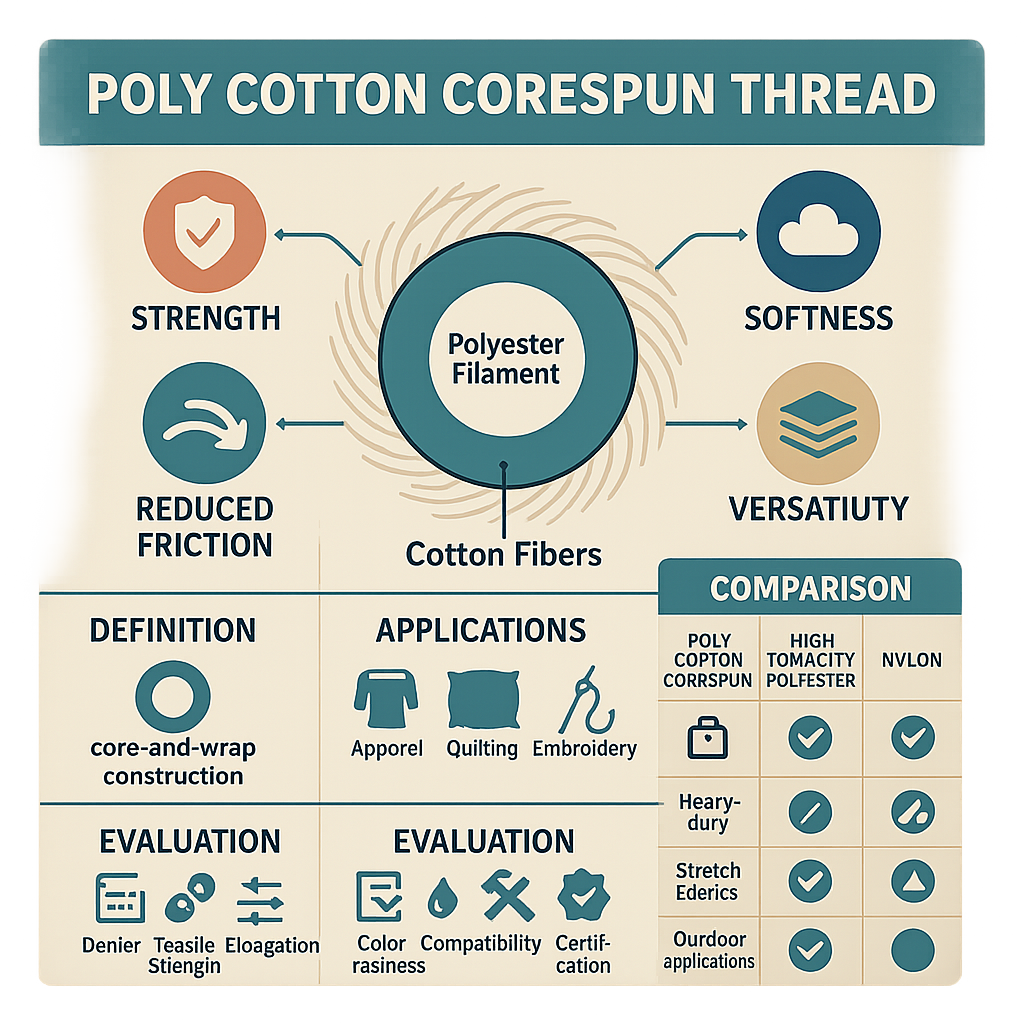
Poly cotton corespun thread is a type of sewing thread made by wrapping a polyester filament core with cotton fibers. This construction provides the thread with the strength and durability of polyester while retaining the softness and natural feel of cotton. The result is a thread that is not only robust but also pleasant to work with, making it suitable for a range of sewing applications.
Why it matters in sewing performance
The unique structure of poly cotton corespun thread contributes to its performance in several ways:
- Strength: The polyester core offers high tensile strength, making the thread less likely to break during sewing.
- Softness: The cotton wrapping provides a soft touch, which is particularly important for applications involving skin contact.
- Reduced Friction: The smooth surface of the thread minimizes friction during sewing, leading to fewer thread breaks and smoother stitching.
- Versatility: This thread can be used for various fabrics, from lightweight cottons to heavier materials, making it a go-to choice for many sewing projects.
Where is what is poly cotton corespun thread used?
Poly cotton corespun thread is widely utilized across various sewing applications. Understanding where this thread fits can help buyers make informed decisions about their sourcing needs.
Common sewing thread products or applications
This type of thread is commonly used in:
- Apparel Manufacturing: Ideal for sewing garments, especially those requiring a soft touch against the skin.
- Home Textiles: Suitable for curtains, upholstery, and other home décor items.
- Quilting: Offers the right balance of strength and softness for quilting projects.
- Embroidery: Works well for decorative stitching due to its smooth finish.
What buyers usually check
When sourcing poly cotton corespun thread, buyers often consider the following factors:
- Thread Count: Higher thread counts typically indicate better quality and durability.
- Color Fastness: Ensures that the thread will maintain its color through washing and exposure to light.
- Compatibility: The thread should be compatible with the sewing machines and fabrics being used.
- Certification: Look for certifications that indicate the thread meets industry standards for quality and safety.
How to evaluate what is poly cotton corespun thread
Evaluating poly cotton corespun thread involves understanding its specifications and addressing common misunderstandings. This knowledge can empower buyers to make better decisions.
Key points on a specification sheet
When reviewing a specification sheet for poly cotton corespun thread, consider the following key points:
- Denier or Tex: Indicates the thickness of the thread, which can affect its strength and application.
- Tensile Strength: A measure of how much force the thread can withstand before breaking.
- Elongation: Refers to how much the thread can stretch before it breaks, which is important for applications requiring flexibility.
- Finish: The type of finish applied to the thread can impact its performance, including its ability to resist fraying and abrasion.
Common misunderstandings
Several misconceptions can arise regarding poly cotton corespun thread:
- All Corespun Threads are the Same: Not all corespun threads are created equal; variations in materials and construction can lead to significant differences in performance.
- Polyester is Always Better: While polyester offers strength, the cotton component in poly cotton corespun thread provides essential softness, making it suitable for specific applications.
- Higher Price Equals Higher Quality: While price can be an indicator, it is essential to evaluate the thread based on its specifications and intended use rather than cost alone.
Practical takeaway for sourcing teams
For sourcing teams, understanding poly cotton corespun thread is vital for making informed purchasing decisions. Here are some practical takeaways:
When to ask for samples
Requesting samples is advisable when:
- You are considering a new supplier or thread type.
- You need to test the thread’s performance with specific fabrics or sewing machines.
- You want to evaluate the thread’s color fastness and overall quality before making a bulk purchase.
When another thread type may fit better
While poly cotton corespun thread is versatile, there are situations where another thread type may be more suitable:
- Heavy-Duty Applications: For projects requiring maximum strength, consider high tenacity polyester filament yarn.
- Stretch Fabrics: If working with stretch materials, a specialized elastic thread may provide better results.
- Outdoor Applications: For items exposed to harsh weather conditions, nylon threads may offer superior durability and resistance to UV light.
In conclusion, understanding what is poly cotton corespun thread is essential for sewing thread buyers who want to optimize their sewing applications. By grasping its definition, uses, evaluation criteria, and practical takeaways, sourcing teams can make informed decisions that enhance their sewing projects. Whether you are sourcing for apparel, home textiles, or specialized applications, knowing the strengths and limitations of poly cotton corespun thread will guide you in selecting the right materials for your needs.