
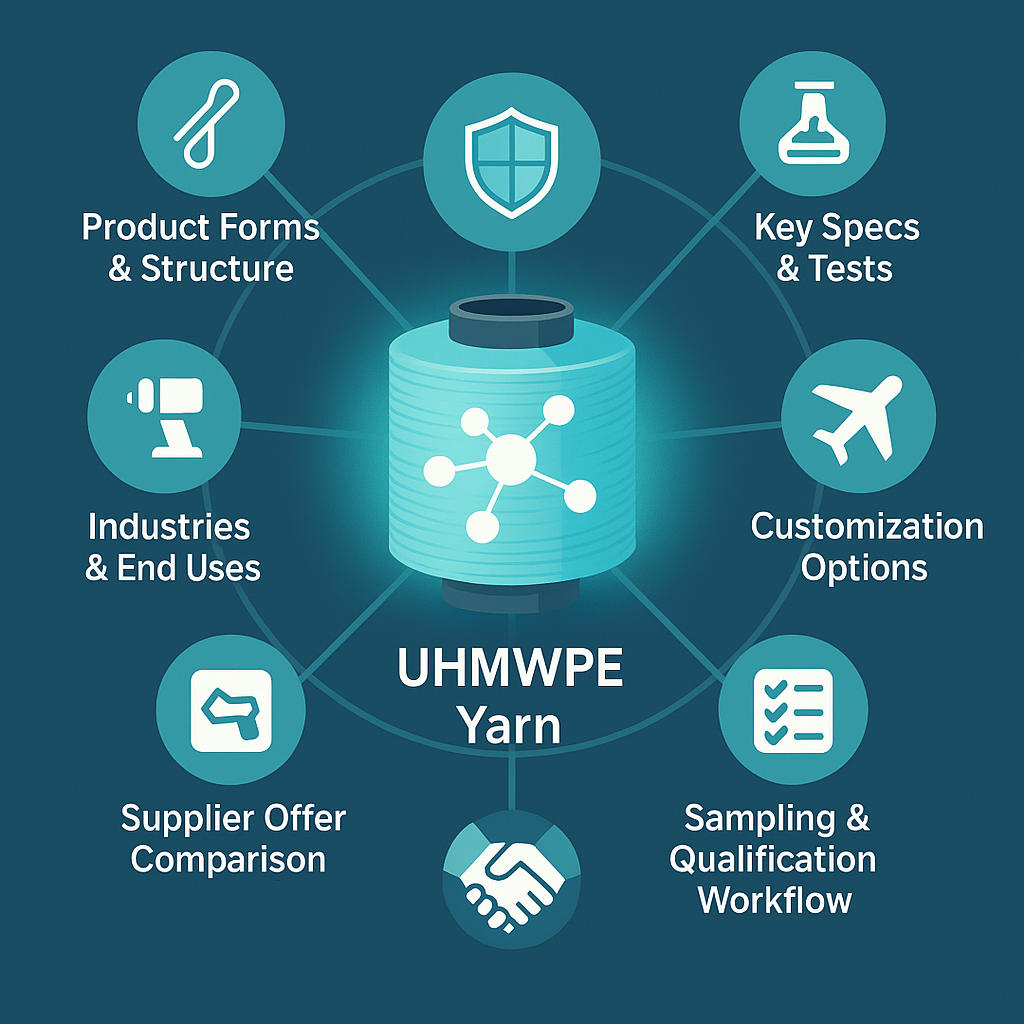
Product Structure and Available Forms
Understanding the structure and forms of UHMWPE (Ultra High Molecular Weight Polyethylene) yarn is crucial for effective lamination processes. This material is known for its exceptional strength-to-weight ratio, chemical resistance, and durability, making it a popular choice in various industrial applications.
Key Technical Points
- Molecular Weight: UHMWPE yarn typically has a molecular weight exceeding 3 million g/mol, contributing to its high tensile strength and low friction properties.
- Filament Structure: The yarn is available in different filament structures, including monofilament and multifilament, each offering unique performance characteristics.
- Weave Patterns: Various weave patterns can be employed to enhance the mechanical properties of the final laminated product.
Application and Sourcing Considerations
When considering UHMWPE yarn for lamination, it is essential to evaluate the specific application requirements. Factors such as environmental conditions, load-bearing needs, and compatibility with other materials should guide sourcing decisions. Engaging with a reliable UHMWPE yarn supplier can facilitate access to the right specifications.
Buyer Checklist Before Sampling
- Define the application requirements clearly.
- Assess the environmental conditions the laminated product will face.
- Determine the required mechanical properties, such as tensile strength and elongation.
- Identify any regulatory or certification requirements relevant to your industry.
Key Specifications and Test Items
To ensure the performance of UHMWPE yarn in lamination applications, understanding key specifications and test items is vital.
Key Technical Points
- Tensile Strength: Typically ranges from 1,500 to 3,000 MPa, depending on the yarn type and processing conditions.
- Elongation at Break: Generally falls between 3% to 5%, indicating the material’s ability to stretch before failure.
- Impact Resistance: UHMWPE yarn exhibits excellent impact resistance, making it suitable for high-stress applications.
Application and Sourcing Considerations
When sourcing UHMWPE yarn, consider the specific tests that the material has undergone, such as ASTM D3039 for tensile properties and ASTM D256 for impact resistance. These specifications will help ensure that the yarn meets the necessary performance criteria for your application.
Buyer Checklist Before Sampling
- Verify the test certifications and results from the supplier.
- Ensure that the yarn meets the specific standards required for your application.
- Request samples for preliminary testing in your application environment.
Common End Uses and Industries
UHMWPE yarn finds applications across a variety of industries due to its unique properties.
Typical Industries Using This Material
- Aerospace: Used in lightweight components and reinforcement materials.
- Marine: Ideal for ropes and nets due to its resistance to saltwater and UV degradation.
- Medical: Employed in surgical sutures and implants due to its biocompatibility.
- Defense: Utilized in body armor and protective gear for its high strength and lightweight nature.
Why Engineers and Buyers Choose It
Engineers and buyers often select UHMWPE yarn for its outstanding mechanical properties, including high tensile strength, low weight, and excellent chemical resistance. These attributes make it suitable for demanding applications where performance and reliability are critical.
When Another Material May Be Better
While UHMWPE yarn offers numerous advantages, there are scenarios where alternative materials may be more appropriate. For instance, if cost is a primary concern, other synthetic fibers may provide a more economical solution. Additionally, in applications requiring higher thermal resistance, materials like aramid fibers may be preferable.
Customization Options
Customization can enhance the performance of UHMWPE yarn in specific applications.
Key Technical Points
- Yarn Thickness: Custom thickness can be specified based on load requirements.
- Color and Finish: Options for color and surface finish can be tailored to meet aesthetic or functional needs.
- Coating Options: Various coatings can be applied to improve abrasion resistance or chemical compatibility.
Application and Sourcing Considerations
When considering customization, it is essential to communicate specific requirements to your UHMWPE yarn supplier. This ensures that the final product aligns with the intended application and performance standards.
Buyer Checklist Before Sampling
- Clearly define your customization needs.
- Discuss potential impacts on performance with the supplier.
- Request samples of customized options for evaluation.
Sampling, Qualification, and Order Workflow
A structured approach to sampling and qualification can streamline the procurement process for UHMWPE yarn.
Key Technical Points
- Sampling Protocol: Establish a clear protocol for sampling to ensure consistency in testing.
- Qualification Criteria: Define the criteria that the samples must meet before proceeding with larger orders.
- Order Workflow: Develop a workflow that includes timelines for sampling, testing, and order placement.
Application and Sourcing Considerations
Understanding the supplier’s capabilities and lead times is essential for effective planning. Ensure that the supplier can meet your timelines and quality requirements throughout the sampling and qualification process.
Buyer Checklist Before Sampling
- Establish a clear timeline for the sampling and qualification process.
- Communicate your qualification criteria to the supplier.
- Monitor the progress of sampling and testing closely.
How to Compare Offers from Different Suppliers
When evaluating offers from various UHMWPE yarn suppliers, a systematic approach can help ensure that you select the best option for your needs.
Key Technical Points
- Specifications Comparison: Compare the technical specifications of the yarn, including tensile strength, elongation, and impact resistance.
- Testing Certifications: Verify that the suppliers provide relevant test certifications for their products.
- Customization Capabilities: Assess each supplier’s ability to meet your customization needs.
Application and Sourcing Considerations
Consider the supplier’s reputation and experience in the industry. Engaging with a supplier that has a proven track record can provide additional confidence in your sourcing decisions.
Buyer Checklist Before Sampling
- Compile a list of specifications and requirements for comparison.
- Request detailed quotes from each supplier, including lead times and terms.
- Evaluate the overall value proposition, not just the price.
Conclusion
Understanding the nuances of UHMWPE yarn lamination is essential for making informed decisions in material selection and application fit. By carefully considering technical specifications, sourcing options, and customization capabilities, engineers and buyers can optimize their procurement processes. As you navigate the complexities of sourcing UHMWPE yarn, keep this guide as a reference to ensure that you are equipped with the knowledge needed to make sound decisions.