
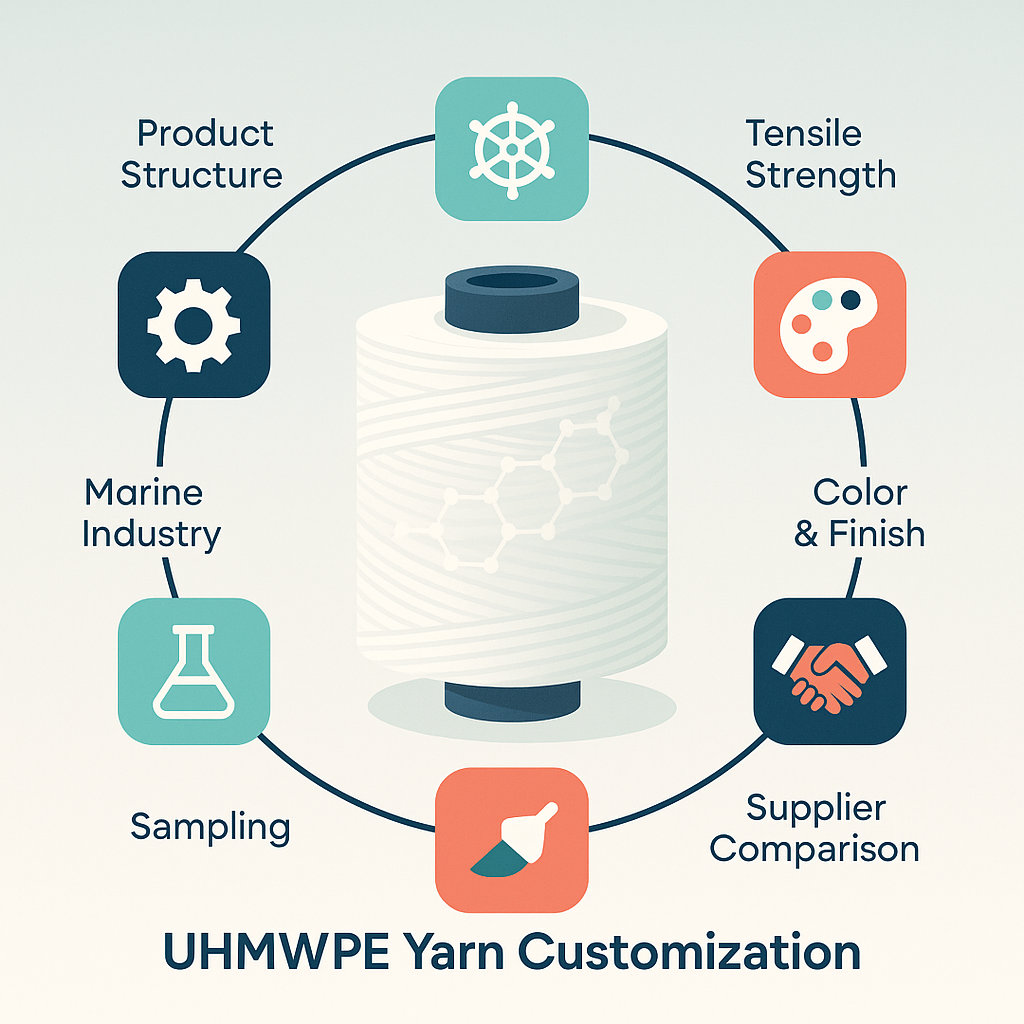
Product Structure and Available Forms
Understanding the structure and forms of UHMWPE yarn is crucial for making informed decisions about its applications and customization options. UHMWPE (Ultra-High Molecular Weight Polyethylene) yarn is known for its exceptional strength-to-weight ratio, chemical resistance, and low friction properties. These characteristics make it a preferred choice in various industrial applications.
Key Technical Points
- Molecular Weight: UHMWPE yarn typically has a molecular weight exceeding 3.1 million g/mol, contributing to its superior mechanical properties.
- Filament Structure: Available in various filament structures, including monofilament and multifilament, each offering different performance characteristics.
- Denier Range: The denier (thickness) of the yarn can be customized to meet specific application requirements, affecting strength and flexibility.
Application and Sourcing Considerations
When sourcing UHMWPE yarn, it is essential to consider the specific application requirements. Different industries may require different forms and specifications of the yarn. For instance, applications in marine environments may necessitate higher resistance to UV exposure and saltwater corrosion.
Buyer Checklist Before Sampling
- Define the specific application and performance requirements.
- Assess the environmental conditions the yarn will be exposed to.
- Determine the required denier and filament structure.
- Identify any regulatory or certification requirements relevant to your industry.
Key Specifications and Test Items
Understanding the key specifications and test items for UHMWPE yarn is vital for ensuring that the material meets the necessary performance standards.
Key Technical Points
- Tensile Strength: UHMWPE yarn boasts a tensile strength of up to 15 times that of steel, making it suitable for high-load applications.
- Elongation at Break: Typically ranges from 3% to 5%, indicating its ability to stretch without breaking.
- UV Resistance: Essential for applications exposed to sunlight, as prolonged exposure can degrade the material.
Application and Sourcing Considerations
Different applications may require specific testing protocols to ensure the yarn meets performance criteria. For example, in the aerospace industry, stringent testing for weight and strength is critical.
Buyer Checklist Before Sampling
- Review test results and certifications from potential suppliers.
- Consider the yarn’s compatibility with other materials in your application.
- Evaluate the supplier’s ability to meet your specific testing and certification needs.
Common End Uses and Industries
UHMWPE yarn is utilized across various industries due to its unique properties. Understanding these applications can help buyers make informed decisions.
Typical Industries Using This Material
- Marine: Used in ropes, nets, and other marine applications due to its resistance to saltwater and UV.
- Aerospace: Employed in components requiring lightweight yet strong materials.
- Medical: Utilized in surgical sutures and other medical applications due to its biocompatibility.
Why Engineers and Buyers Choose It
Engineers and buyers often select UHMWPE yarn for its excellent mechanical properties, including high tensile strength and low weight. These characteristics can lead to improved performance and efficiency in various applications.
When Another Material May Be Better
While UHMWPE yarn has many advantages, there are scenarios where other materials may be more appropriate. For instance, in applications requiring high-temperature resistance, aramid fibers may be a better choice due to their thermal stability.
Customization Options
Customization is a key aspect of sourcing UHMWPE yarn, allowing buyers to tailor the material to their specific needs.
Key Technical Points
- Color and Finish: Custom colors and finishes can be provided to meet aesthetic or branding requirements.
- Denier Customization: Adjusting the denier can optimize the yarn for specific applications, balancing strength and flexibility.
- Coatings: Specialized coatings can enhance properties such as abrasion resistance or chemical resistance.
Application and Sourcing Considerations
When considering customization options, it’s crucial to align the specifications with the intended application. For example, a coating may be necessary for applications in harsh environments, while color customization may be more relevant for consumer-facing products.
Buyer Checklist Before Sampling
- Identify the specific customization requirements for your application.
- Discuss potential trade-offs with suppliers regarding performance and cost.
- Request samples of customized options to evaluate performance in real-world conditions.
Sampling, Qualification, and Order Workflow
A structured approach to sampling and qualification is essential for ensuring that the selected UHMWPE yarn meets all necessary specifications.
Key Technical Points
- Sampling Protocols: Establish clear protocols for sampling to ensure consistency and reliability in testing.
- Qualification Criteria: Define the criteria that the yarn must meet before it can be approved for use.
- Documentation: Ensure that all relevant documentation, including test results and certifications, is available for review.
Application and Sourcing Considerations
Different applications may require varying levels of qualification. For instance, aerospace applications may necessitate more rigorous testing compared to general industrial uses.
Buyer Checklist Before Sampling
- Establish a clear timeline for sampling and qualification.
- Communicate your specific requirements to potential suppliers.
- Ensure that you have a plan for evaluating the performance of the samples.
How to Compare Offers from Different Suppliers
When sourcing UHMWPE yarn, comparing offers from different suppliers can be challenging but is essential for making informed decisions.
Key Technical Points
- Specifications: Ensure that you are comparing yarns with similar specifications, including tensile strength, elongation, and denier.
- Testing Protocols: Review the testing protocols used by each supplier to ensure they meet industry standards.
- Customization Options: Evaluate the customization options offered by each supplier and how they align with your needs.
Application and Sourcing Considerations
Consider the long-term relationship with suppliers, as consistent quality and reliability are critical for ongoing projects.
Buyer Checklist Before Sampling
- Compile a list of key specifications for comparison.
- Request detailed documentation from each supplier.
- Consider the supplier’s reputation and track record in the industry.
Conclusion
Understanding the customization options for UHMWPE yarn is essential for making informed sourcing decisions. By considering the material’s properties, application requirements, and potential trade-offs, buyers can select the most suitable yarn for their needs. A structured approach to sampling, qualification, and supplier comparison will further enhance the decision-making process, ensuring that the chosen material meets all necessary specifications.