
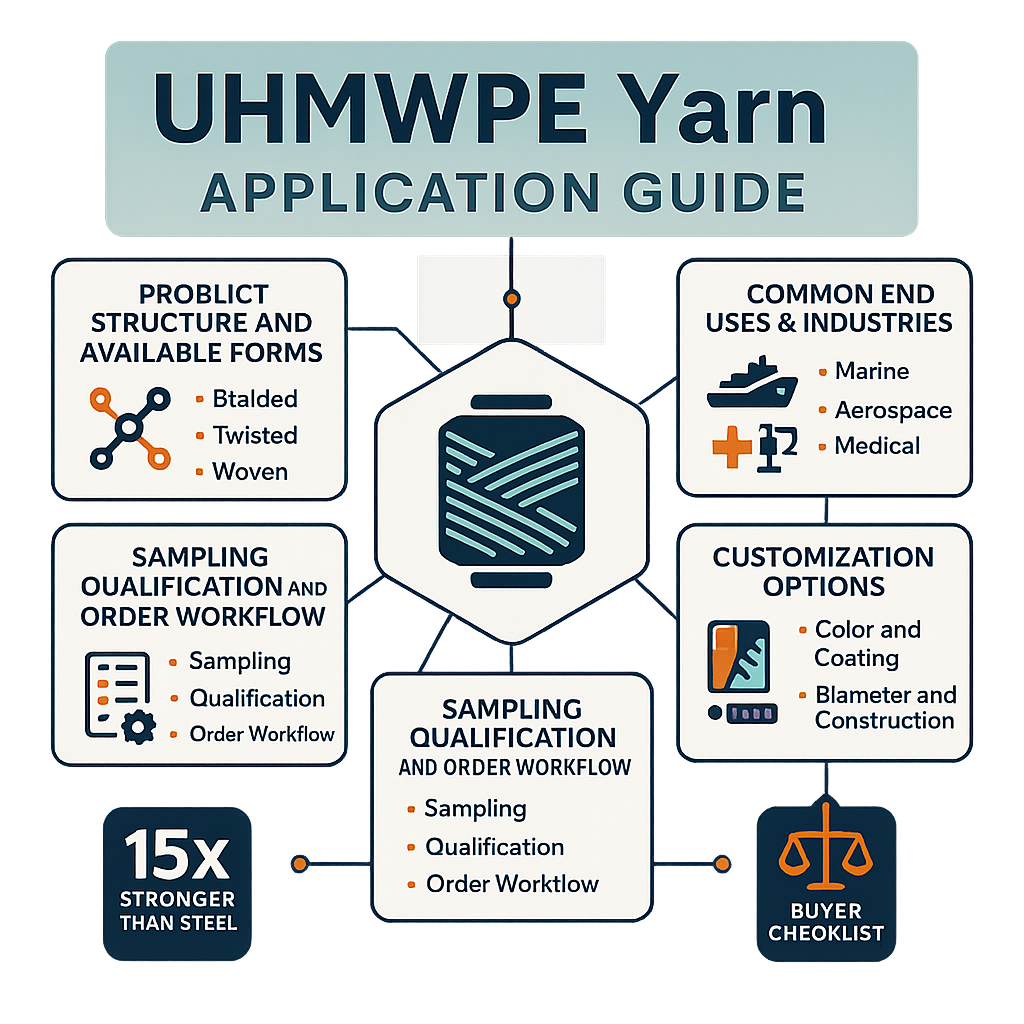
Product Structure and Available Forms
UHMWPE (Ultra High Molecular Weight Polyethylene) yarn is recognized for its exceptional strength-to-weight ratio, chemical resistance, and durability. Understanding its structure and available forms is crucial for selecting the right type for specific applications.
Key Technical Points
UHMWPE yarn is produced through a process that involves the polymerization of ethylene, resulting in long-chain molecules that contribute to its high molecular weight. This unique structure imparts several key properties:
- High tensile strength: UHMWPE yarn exhibits tensile strengths up to 15 times greater than steel, making it ideal for applications requiring robust materials.
- Low friction coefficient: This property allows for smooth movement in applications such as ropes and belts.
- Excellent chemical resistance: UHMWPE is resistant to a wide range of chemicals, making it suitable for use in harsh environments.
Application and Sourcing Considerations
When considering UHMWPE yarn for specific applications, it is essential to evaluate the yarn’s form (e.g., braided, twisted, or woven) and its compatibility with other materials. Additionally, sourcing from a reliable UHMWPE yarn supplier is critical to ensure quality and performance consistency.
Buyer Checklist Before Sampling
- Define the application requirements and performance expectations.
- Assess the environmental conditions the yarn will be exposed to.
- Identify potential suppliers and request samples for evaluation.
- Review the supplier’s certifications and quality assurance processes.
Key Specifications and Test Items
Understanding the specifications and testing methods for UHMWPE yarn is vital for ensuring it meets application requirements. Key specifications include:
Key Technical Points
- Tensile strength: Measured in megapascals (MPa), this indicates the maximum stress the yarn can withstand before failure.
- Elongation at break: This measures how much the yarn can stretch before breaking, which is crucial for applications requiring flexibility.
- Density: Understanding the density helps in calculating the weight and buoyancy of the yarn in specific applications.
Application and Sourcing Considerations
Different applications may require specific test items to validate performance. For instance, marine applications may necessitate tests for UV resistance, while industrial applications may focus on abrasion resistance.
Buyer Checklist Before Sampling
- Determine the relevant specifications for your application.
- Request test data from suppliers to validate performance claims.
- Consider third-party testing for independent verification.
Common End Uses and Industries
UHMWPE yarn is utilized across various industries due to its unique properties. Understanding these applications can guide decision-making.
Typical Industries Using This Material
- Marine: Used in ropes, nets, and other marine equipment due to its resistance to saltwater and UV degradation.
- Aerospace: Employed in lightweight components where high strength is essential.
- Medical: Utilized in surgical sutures and other medical devices due to its biocompatibility.
Why Engineers and Buyers Choose It
Engineers and buyers favor UHMWPE yarn for its performance characteristics, including:
- High strength-to-weight ratio, reducing overall system weight.
- Durability and longevity, leading to lower replacement costs.
- Versatility in applications across various industries.
When Another Material May Be Better
While UHMWPE yarn has many advantages, there are scenarios where alternative materials may be more suitable. For instance, if cost is a primary concern, other synthetic fibers may offer a more economical solution. Additionally, in applications requiring high-temperature resistance, materials like aramid fibers may be preferable.
Customization Options
Customization can enhance the performance of UHMWPE yarn for specific applications. Understanding these options is crucial for buyers.
Key Technical Points
- Color and coating: Custom colors and coatings can enhance visibility and provide additional protection against environmental factors.
- Diameter and construction: Tailoring the diameter and construction type can optimize performance for specific applications.
Application and Sourcing Considerations
Customization may impact lead times and costs. It is essential to communicate specific requirements to suppliers early in the sourcing process to avoid delays.
Buyer Checklist Before Sampling
- Identify specific customization needs based on application requirements.
- Discuss customization options with potential suppliers.
- Evaluate the impact of customization on performance and cost.
Sampling, Qualification, and Order Workflow
Understanding the workflow for sampling, qualification, and ordering UHMWPE yarn is essential for a smooth procurement process.
Key Technical Points
- Sampling: Request samples that reflect the final product specifications to ensure accurate evaluation.
- Qualification: Develop a qualification process that includes testing and validation of performance against application requirements.
Application and Sourcing Considerations
Ensure that the qualification process aligns with your internal standards and industry regulations. This may involve multiple rounds of testing and evaluation.
Buyer Checklist Before Sampling
- Establish a clear sampling and qualification timeline.
- Document all testing procedures and results for future reference.
- Communicate expectations clearly with suppliers to streamline the process.
How to Compare Offers from Different Suppliers
When evaluating offers from various UHMWPE yarn suppliers, a structured approach can help ensure you make an informed decision.
Key Technical Points
- Performance specifications: Compare the technical specifications of the yarn offered by different suppliers to ensure they meet your requirements.
- Quality assurance: Investigate the quality control processes each supplier employs to ensure consistency and reliability.
Application and Sourcing Considerations
Consider the supplier’s reputation and experience in the industry, as these factors can significantly impact the quality of the product and service.
Buyer Checklist Before Sampling
- Compile a list of key specifications and requirements for comparison.
- Request references or case studies from potential suppliers.
- Evaluate the total cost of ownership, including potential long-term savings from quality and performance.
Conclusion
In summary, the UHMWPE yarn application guide provides a comprehensive overview of the material’s properties, applications, and sourcing considerations. By understanding the technical aspects and evaluating different suppliers, engineers and decision-makers can make informed choices that align with their specific needs. A thoughtful approach to material selection can lead to enhanced performance, reduced costs, and improved project outcomes.