
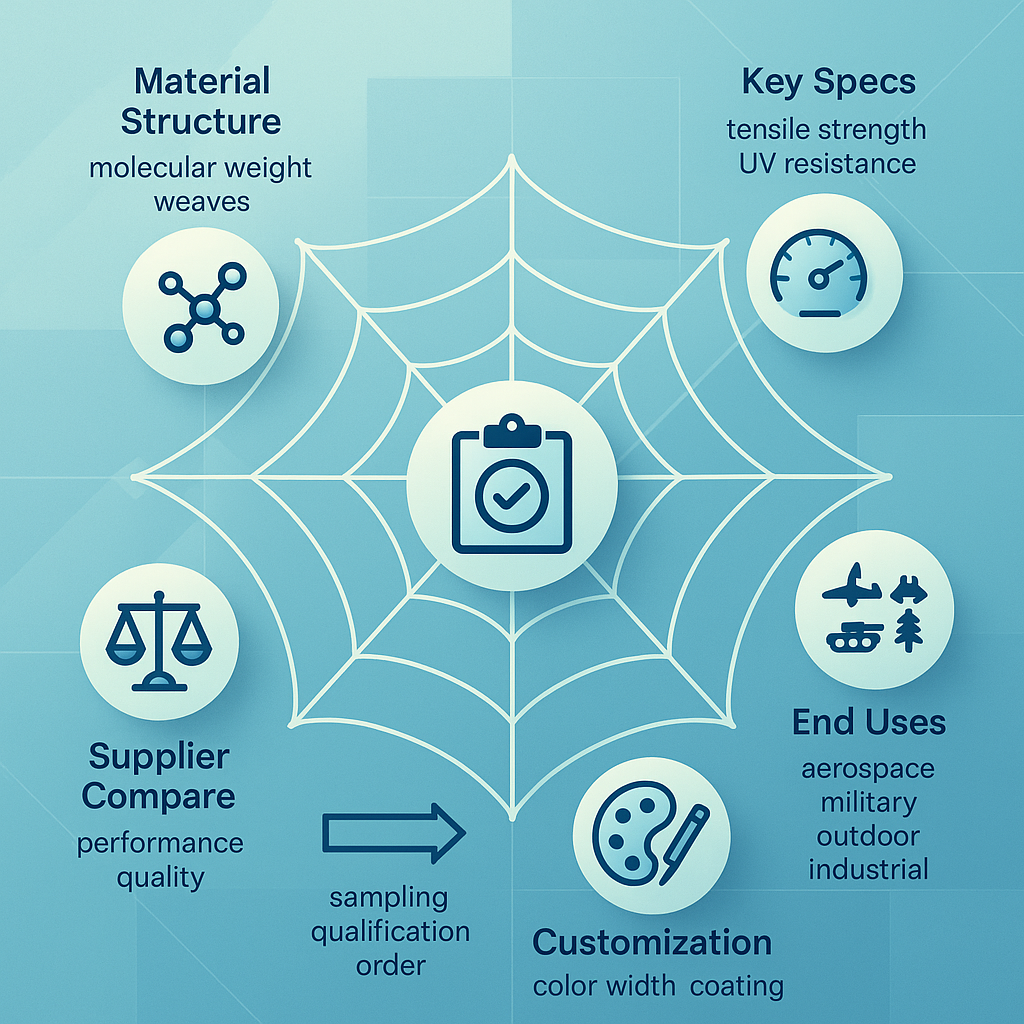
Product Structure and Available Forms
Understanding the structure and available forms of UHMWPE (Ultra High Molecular Weight Polyethylene) webbing is crucial for making informed decisions during the sampling process. UHMWPE webbing is known for its exceptional strength-to-weight ratio, durability, and resistance to abrasion and chemicals. These properties make it suitable for a variety of applications, from military and aerospace to outdoor gear and industrial uses.
Key Technical Points
- Material Composition: UHMWPE is a type of polyethylene with a molecular weight that can reach millions of g/mol, contributing to its high strength and low friction properties.
- Forms Available: UHMWPE webbing can be produced in various widths, thicknesses, and colors, allowing for customization based on specific application requirements.
- Manufacturing Techniques: Common techniques include weaving and braiding, which can affect the webbing’s flexibility and load-bearing capacity.
Application and Sourcing Considerations
When considering UHMWPE webbing, it is essential to evaluate its intended application. Different applications may require specific properties, such as UV resistance for outdoor use or enhanced abrasion resistance for industrial applications. Sourcing from a reputable supplier is also critical, as the quality of the webbing can significantly impact its performance.
Buyer Checklist Before Sampling
- Define the specific application and performance requirements.
- Research potential suppliers and their manufacturing capabilities.
- Request samples to evaluate the material’s properties and suitability.
- Consider the environmental conditions the webbing will be exposed to.
Key Specifications and Test Items
Before finalizing a decision on UHMWPE webbing, it is vital to understand the key specifications and test items that can influence performance.
Key Technical Points
- Tensile Strength: This measures the maximum amount of tensile (pulling) stress that the webbing can withstand before failure.
- Elongation at Break: This indicates how much the webbing can stretch before breaking, which is important for applications requiring flexibility.
- UV Resistance: Essential for outdoor applications, this property determines how well the material can withstand prolonged exposure to sunlight.
Application and Sourcing Considerations
Different applications may necessitate varying specifications. For instance, military applications may prioritize tensile strength and abrasion resistance, while recreational uses may focus on weight and flexibility. Understanding these needs can guide your sourcing decisions.
Buyer Checklist Before Sampling
- Identify the critical specifications needed for your application.
- Request test data from suppliers to verify performance claims.
- Evaluate the consistency of the material across different batches.
Common End Uses and Industries
UHMWPE webbing is utilized across various industries due to its unique properties. Understanding these applications can help buyers assess its suitability for their needs.
Typical Industries Using This Material
- Aerospace: Used in harnesses and safety equipment due to its lightweight and high strength.
- Military: Employed in tactical gear and equipment for its durability and reliability.
- Outdoor Recreation: Common in climbing gear, backpacks, and other outdoor equipment.
- Industrial: Utilized in lifting and rigging applications where strength and low weight are critical.
Why Engineers and Buyers Choose It
Engineers and buyers often select UHMWPE webbing for its combination of lightweight properties and high strength. This makes it ideal for applications where reducing weight is essential without compromising on performance. Additionally, its resistance to chemicals and abrasion enhances its longevity in demanding environments.
When Another Material May Be Better
While UHMWPE webbing offers numerous advantages, there are scenarios where alternative materials may be more suitable. For example, if cost is a primary concern, nylon or polyester webbing may provide a more economical solution, albeit with trade-offs in strength and durability. Similarly, for applications requiring high-temperature resistance, materials like aramid fibers may be more appropriate.
Customization Options
Customization can play a significant role in ensuring that UHMWPE webbing meets specific application needs. Understanding the available options can help buyers make informed decisions.
Key Technical Points
- Color and Coating: Custom colors and coatings can enhance visibility and provide additional protection against environmental factors.
- Width and Thickness: Adjusting these dimensions can optimize the webbing for specific loads and applications.
- Specialized Weaves: Different weaving techniques can alter the flexibility and strength characteristics of the webbing.
Application and Sourcing Considerations
Customization should align with the intended application. For instance, a thicker webbing may be necessary for heavy-duty industrial applications, while a lighter, more flexible option may be better suited for recreational uses.
Buyer Checklist Before Sampling
- Determine the specific customization needs based on application requirements.
- Discuss options with potential suppliers to understand feasibility and lead times.
- Request samples of customized options to evaluate their performance.
Sampling, Qualification, and Order Workflow
The process of sampling, qualification, and ordering UHMWPE webbing involves several critical steps that ensure the material meets the necessary specifications.
Key Technical Points
- Sampling Process: Request samples that reflect the specifications and customization options you are considering.
- Qualification Testing: Conduct tests to verify that the samples meet your performance criteria.
- Order Workflow: Understand the typical workflow from sampling to ordering, including lead times and minimum order quantities.
Application and Sourcing Considerations
Ensuring that the sampling process aligns with your application needs is crucial. This includes verifying that the samples are representative of the final product you intend to order.
Buyer Checklist Before Sampling
- Outline the specific tests you plan to conduct on the samples.
- Clarify the timeline for sampling and qualification with suppliers.
- Ensure that the supplier can accommodate any necessary adjustments based on testing results.
How to Compare Offers from Different Suppliers
When evaluating offers from various suppliers, a systematic approach can help ensure that you make the best decision for your needs.
Key Technical Points
- Performance Specifications: Compare the technical specifications of the UHMWPE webbing offered by different suppliers.
- Quality Assurance: Investigate the quality control processes each supplier has in place to ensure consistency and reliability.
- Customer Support: Assess the level of support and responsiveness from suppliers during the sampling and ordering process.
Application and Sourcing Considerations
Different suppliers may offer varying levels of customization and support, which can impact your overall experience. Consider not only the price but also the value added through service and expertise.
Buyer Checklist Before Sampling
- Compile a list of key specifications and requirements for comparison.
- Evaluate supplier responsiveness and willingness to provide samples.
- Consider the long-term relationship potential with each supplier.
Conclusion
In summary, the process of selecting UHMWPE webbing involves careful consideration of various factors, from understanding the material’s properties to evaluating supplier offerings. By following a structured sampling checklist, buyers can make informed decisions that align with their specific application needs. Whether you are sourcing for military, industrial, or recreational uses, a thorough understanding of UHMWPE webbing will enhance your decision-making process.