
Product Structure and Available Forms
Understanding the structure of UHMWPE (Ultra High Molecular Weight Polyethylene) webbing is essential for engineers and buyers looking to leverage its unique properties in various applications. UHMWPE webbing is known for its high strength-to-weight ratio, excellent abrasion resistance, and low friction properties, making it suitable for demanding environments.
Key Technical Points
UHMWPE webbing is typically available in flat and tubular forms, with varying widths and thicknesses depending on the intended application. The lamination process can enhance the webbing’s performance by adding layers of protective materials or coatings, which can improve durability and resistance to environmental factors.
Application and Sourcing Considerations
When considering UHMWPE webbing for specific applications, it is crucial to evaluate the environmental conditions it will face, such as exposure to UV light, chemicals, or extreme temperatures. Sourcing from a reputable UHMWPE webbing supplier ensures that the material meets industry standards and specifications.
Buyer Checklist Before Sampling
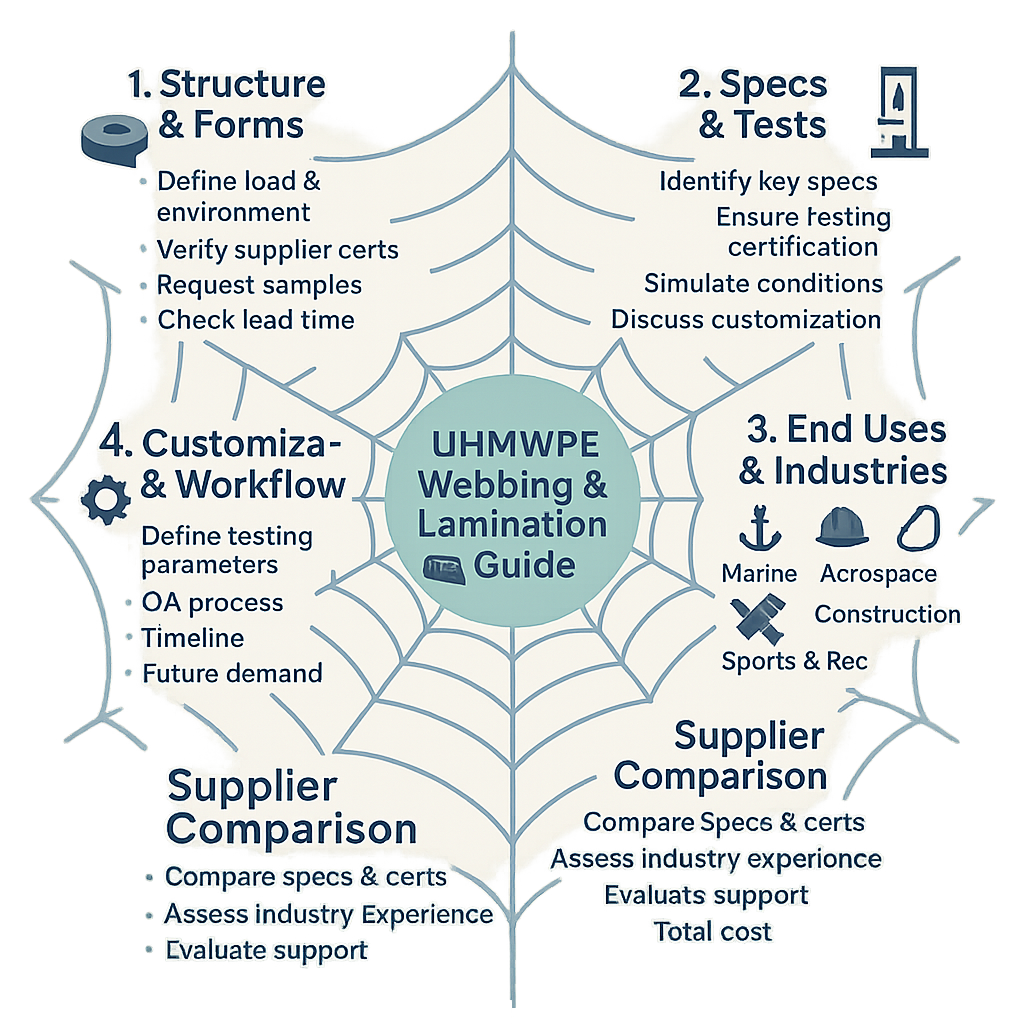
- Define the application requirements, including load capacity and environmental factors.
- Verify the supplier’s certifications and quality control processes.
- Request samples to assess the material’s performance in real-world conditions.
- Consider the lead time and availability of the desired specifications.
Key Specifications and Test Items
To ensure that UHMWPE webbing meets the necessary performance criteria, it is vital to understand the key specifications and test items that should be evaluated during the sourcing process.
Key Technical Points
Key specifications for UHMWPE webbing include tensile strength, elongation at break, abrasion resistance, and UV stability. Testing these properties can provide insights into how the webbing will perform under specific conditions.
Application and Sourcing Considerations
Different applications may require different specifications. For instance, webbing used in marine applications may need enhanced UV resistance, while webbing for industrial lifting may prioritize tensile strength. Understanding these nuances can guide sourcing decisions.
Buyer Checklist Before Sampling
- Identify the key specifications relevant to your application.
- Ensure the supplier conducts appropriate testing and provides certification.
- Evaluate the performance of the webbing under simulated conditions.
- Discuss potential customization options with the supplier.
Common End Uses and Industries
UHMWPE webbing is utilized across various industries, each with unique requirements and challenges. Understanding these applications can help buyers make informed decisions.
Typical Industries Using This Material
- Marine: Used in mooring lines and safety harnesses due to its resistance to saltwater and UV degradation.
- Aerospace: Employed in cargo nets and restraint systems, where weight and strength are critical.
- Construction: Utilized in lifting slings and safety equipment, where high tensile strength is essential.
- Sports and Recreation: Found in climbing gear and outdoor equipment, benefiting from its lightweight and durable nature.
Why Engineers and Buyers Choose It
Engineers and buyers favor UHMWPE webbing for its superior performance characteristics, including high strength, low weight, and excellent resistance to wear and tear. These properties make it an ideal choice for applications where reliability and safety are paramount.
When Another Material May Be Better
While UHMWPE webbing offers numerous advantages, there are scenarios where alternative materials may be more suitable. For example, if cost is a primary concern, polyester webbing might be a more economical choice, albeit with lower performance characteristics.
Customization Options
Customization can play a significant role in ensuring that UHMWPE webbing meets specific application requirements. Understanding the available options can help buyers tailor solutions to their needs.
Key Technical Points
Customization options for UHMWPE webbing may include varying widths, colors, and additional coatings for enhanced performance. Buyers should discuss these options with their suppliers to ensure that the final product aligns with their application requirements.
Application and Sourcing Considerations
When considering customization, it is essential to evaluate how these changes may impact the webbing’s performance. For instance, adding a protective coating may enhance durability but could also affect flexibility.
Buyer Checklist Before Sampling
- Identify necessary customization options based on application needs.
- Discuss potential impacts of customization on performance with the supplier.
- Request samples of customized webbing to assess performance.
- Confirm lead times for customized orders.
Sampling, Qualification, and Order Workflow
The process of sampling, qualifying, and ordering UHMWPE webbing is critical to ensuring that the material meets the required specifications and performance criteria.
Key Technical Points
Sampling should involve testing the webbing under conditions that closely mimic the intended application. This may include tensile testing, abrasion testing, and environmental exposure tests to validate performance.
Application and Sourcing Considerations
Engaging with a knowledgeable UHMWPE webbing supplier can facilitate the qualification process, ensuring that the webbing meets industry standards and specific application requirements.
Buyer Checklist Before Sampling
- Define the testing parameters based on application requirements.
- Ensure the supplier has a robust quality assurance process in place.
- Discuss the timeline for sampling and qualification.
- Evaluate the supplier’s ability to meet future demand and specifications.
How to Compare Offers from Different Suppliers
When sourcing UHMWPE webbing, comparing offers from different suppliers can be challenging. Understanding key factors can help streamline this process.
Key Technical Points
When comparing offers, focus on specifications, testing certifications, and the supplier’s reputation in the industry. It is also essential to consider the supplier’s ability to provide ongoing support and customization options.
Application and Sourcing Considerations
Evaluating the supplier’s experience in your specific industry can provide insights into their understanding of your unique requirements. This can be a significant factor in ensuring that the webbing meets your performance expectations.
Buyer Checklist Before Sampling
- Compare specifications and certifications from different suppliers.
- Assess the supplier’s experience and reputation in your industry.
- Evaluate the level of customer support and technical assistance offered.
- Consider the total cost of ownership, including potential customization and lead times.
Conclusion
Understanding the nuances of UHMWPE webbing lamination is crucial for making informed decisions in various industrial applications. By considering the technical specifications, application fit, and sourcing options, engineers and buyers can select the right materials to meet their needs. A thorough evaluation process, including sampling and qualification, will further ensure that the chosen webbing performs reliably in its intended environment.
As you navigate the complexities of sourcing UHMWPE webbing, keep in mind the importance of aligning your choices with application requirements and performance expectations. This thoughtful approach will ultimately lead to better outcomes in your projects.