
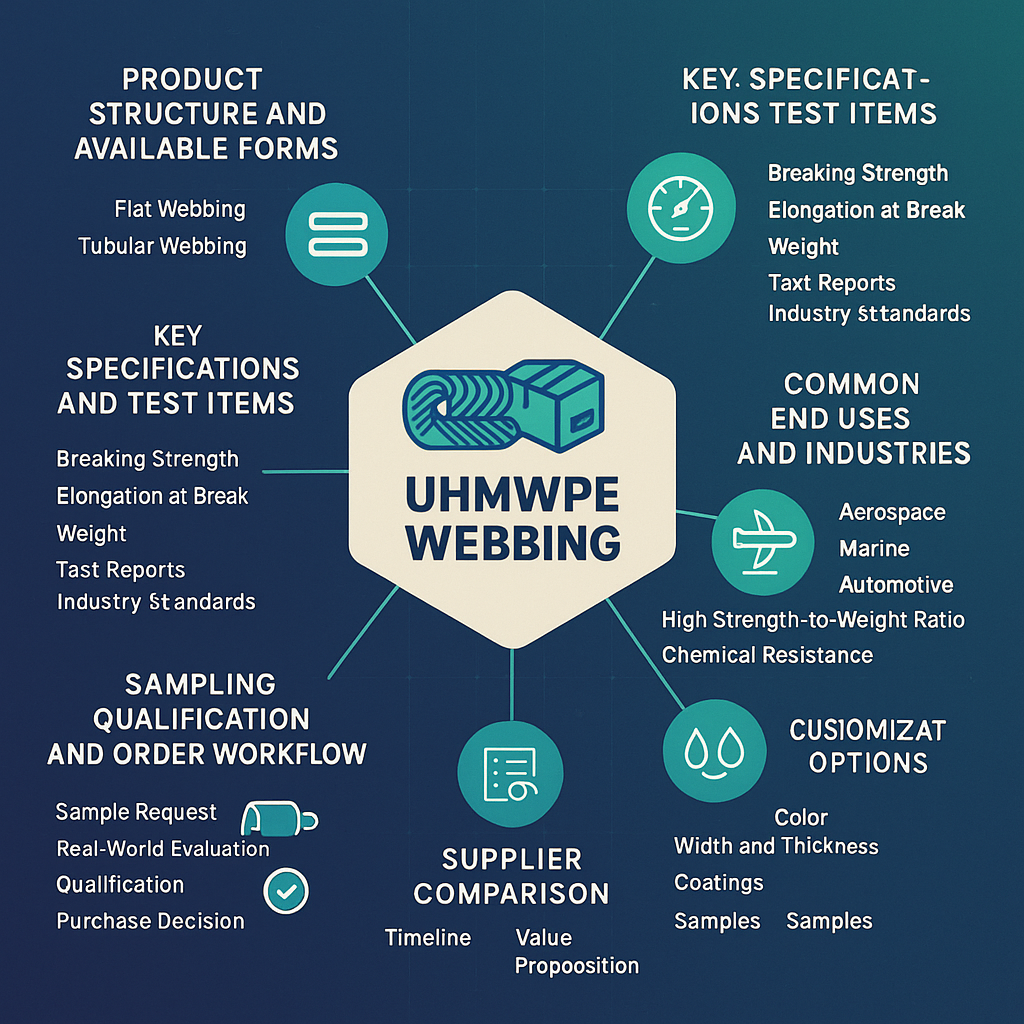
Product Structure and Available Forms
Understanding the structure and forms of UHMWPE (Ultra High Molecular Weight Polyethylene) webbing is crucial for making informed decisions in export packaging. This material is characterized by its exceptional strength-to-weight ratio, chemical resistance, and durability, making it a preferred choice in various industrial applications.
Key Technical Points
UHMWPE webbing typically comes in flat and tubular forms. Flat webbing is often used in applications requiring high tensile strength and low stretch, while tubular webbing is ideal for applications where flexibility and ease of handling are paramount. Key technical points to consider include:
- Tensile Strength: UHMWPE webbing can withstand significant loads, often exceeding that of steel at a fraction of the weight.
- UV Resistance: The material’s resistance to ultraviolet degradation is essential for outdoor applications.
- Low Friction: This property allows for smoother operation in applications such as pulleys and winches.
Application and Sourcing Considerations
When sourcing UHMWPE webbing, it is important to consider the specific application requirements. Different applications may necessitate different specifications, such as width, thickness, and color. Additionally, understanding the end-use environment—whether it involves exposure to chemicals, extreme temperatures, or abrasion—will guide material selection.
Buyer Checklist Before Sampling
- Define the application requirements clearly.
- Identify the necessary specifications, including width and tensile strength.
- Consider environmental factors that may affect performance.
- Research potential suppliers and their product offerings.
Key Specifications and Test Items
To ensure that the UHMWPE webbing meets the required standards, various specifications and test items should be evaluated. Understanding these elements can help buyers make informed decisions.
Key Technical Points
Key specifications to look for include:
- Breaking Strength: This is a critical measure of the webbing’s load-bearing capacity.
- Elongation at Break: This indicates how much the webbing can stretch before failure, which is important for applications requiring flexibility.
- Weight: The weight of the webbing should be considered, especially in applications where weight savings are critical.
Application and Sourcing Considerations
Different applications may require different testing standards. For instance, webbing used in safety harnesses must meet stringent safety standards, while webbing for general industrial use may have more lenient requirements. Understanding the specific testing protocols relevant to your industry can guide sourcing decisions.
Buyer Checklist Before Sampling
- Review relevant industry standards for your application.
- Request test reports from suppliers to verify specifications.
- Evaluate the supplier’s quality assurance processes.
Common End Uses and Industries
UHMWPE webbing is utilized across various industries due to its unique properties. Understanding the common end uses can help buyers identify the right material for their applications.
Typical Industries Using This Material
- Aerospace: Used in harnesses and rigging due to its lightweight and strong characteristics.
- Marine: Common in sailing and boating applications for its resistance to saltwater and UV rays.
- Automotive: Employed in safety belts and other applications requiring high strength and durability.
Why Engineers and Buyers Choose It
Engineers and buyers often select UHMWPE webbing for its superior performance characteristics, including:
- High strength-to-weight ratio, allowing for lighter designs without sacrificing safety.
- Resistance to abrasion and chemicals, enhancing longevity in harsh environments.
- Low moisture absorption, preventing degradation over time.
When Another Material May Be Better
While UHMWPE webbing offers numerous advantages, there are scenarios where alternative materials may be more suitable. For instance, if cost is a primary concern, polyester webbing may provide a more economical solution, albeit with lower performance characteristics. Additionally, for applications requiring high heat resistance, aramid fibers might be more appropriate.
Customization Options
Customization is often necessary to meet specific application requirements. Understanding the available options can help buyers tailor UHMWPE webbing to their needs.
Key Technical Points
Customization options may include:
- Color: Different colors can be used for coding or branding purposes.
- Width and Thickness: Adjusting these dimensions can optimize performance for specific applications.
- Coatings: Additional coatings can enhance properties such as UV resistance or grip.
Application and Sourcing Considerations
When considering customization, it is essential to communicate specific requirements clearly to suppliers. This ensures that the final product meets the intended application needs without compromising performance.
Buyer Checklist Before Sampling
- Identify specific customization needs for your application.
- Discuss options with potential suppliers to understand feasibility.
- Request samples of customized products to evaluate performance.
Sampling, Qualification, and Order Workflow
Understanding the workflow for sampling, qualification, and ordering is crucial for ensuring that the right UHMWPE webbing is selected for your application.
Key Technical Points
The sampling process should include:
- Requesting samples that closely match your specifications.
- Evaluating samples under real-world conditions to assess performance.
- Documenting findings to inform final purchasing decisions.
Application and Sourcing Considerations
During the qualification phase, it is essential to assess not only the material properties but also the supplier’s reliability and quality control processes. This ensures that the webbing will perform consistently over time.
Buyer Checklist Before Sampling
- Define the criteria for evaluating samples.
- Establish a timeline for the sampling and qualification process.
- Communicate expectations clearly with suppliers.
How to Compare Offers from Different Suppliers
With multiple suppliers offering UHMWPE webbing, knowing how to effectively compare their offers is essential for making informed decisions.
Key Technical Points
When comparing offers, consider the following:
- Specifications: Ensure that the specifications align with your application needs.
- Testing Standards: Verify that the supplier adheres to relevant industry testing standards.
- Lead Times: Understand the expected lead times for delivery to avoid project delays.
Application and Sourcing Considerations
In addition to technical specifications, consider the supplier’s reputation and customer service. A supplier that is responsive and knowledgeable can significantly enhance the sourcing experience.
Buyer Checklist Before Sampling
- Gather detailed quotes from multiple suppliers.
- Evaluate each supplier’s track record and customer reviews.
- Assess the overall value proposition, not just the price.
Conclusion
In summary, understanding the intricacies of UHMWPE webbing and its export packaging requirements is essential for making informed sourcing decisions. By considering the product structure, specifications, applications, and supplier comparisons, buyers can ensure that they select the right material for their needs. A thoughtful approach to sampling and qualification can further enhance the decision-making process, leading to successful outcomes in various industrial applications.
As you navigate the complexities of sourcing UHMWPE webbing, keep this guide as a reference to help you evaluate your options and make informed choices that align with your specific requirements.