
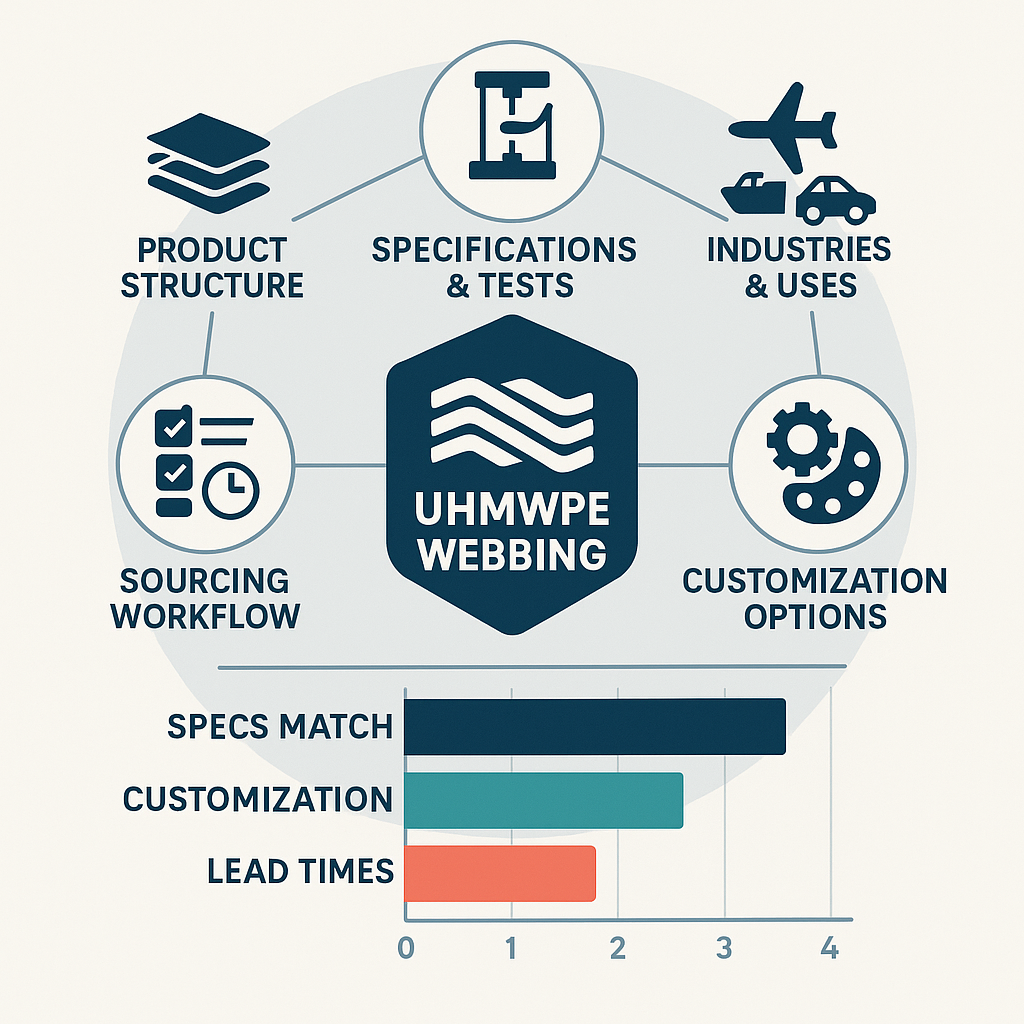
Product Structure and Available Forms
UHMWPE (Ultra High Molecular Weight Polyethylene) webbing is a high-performance material known for its exceptional strength-to-weight ratio, abrasion resistance, and low friction properties. Understanding the product structure and available forms is crucial for industries looking to leverage its unique characteristics.
Key Technical Points
- Composition: UHMWPE is made from long-chain polyethylene molecules, which contribute to its durability and resistance to wear.
- Forms: Available in various forms, including flat webbing, tubular webbing, and custom shapes, allowing for versatility in applications.
- Thickness and Width: Customization options often include varying thicknesses and widths, tailored to specific load requirements and application needs.
Application and Sourcing Considerations
When considering UHMWPE webbing, it is essential to evaluate the specific applications and sourcing strategies. Industries such as aerospace, marine, and automotive frequently utilize this material due to its lightweight yet robust characteristics.
Buyer Checklist Before Sampling
- Identify the specific application and load requirements.
- Determine the necessary thickness and width for your application.
- Consider environmental factors such as temperature and exposure to chemicals.
Key Specifications and Test Items
Understanding the key specifications and test items associated with UHMWPE webbing is vital for ensuring that the material meets the necessary performance standards.
Key Technical Points
- Tensile Strength: UHMWPE webbing typically exhibits high tensile strength, making it suitable for heavy-duty applications.
- Elongation at Break: This property indicates how much the material can stretch before breaking, which is crucial for dynamic applications.
- UV Resistance: Consideration of UV resistance is important for outdoor applications to prevent degradation over time.
Application and Sourcing Considerations
When sourcing UHMWPE webbing, it is important to consider the specific applications, such as lifting, securing, or towing. Each application may have different performance requirements, necessitating careful evaluation of specifications.
Buyer Checklist Before Sampling
- Review the technical specifications against your application needs.
- Ensure that the supplier can provide documentation for testing and certification.
- Assess the supplier’s ability to meet your customization requirements.
Common End Uses and Industries
UHMWPE webbing is employed across a variety of industries due to its unique properties. Understanding these applications can aid in making informed decisions about material selection.
Typical Industries Using This Material
- Aerospace: Used for securing cargo and in safety harnesses.
- Marine: Ideal for mooring lines and safety equipment due to its resistance to saltwater.
- Automotive: Utilized in seat belts and other safety applications.
Why Engineers and Buyers Choose It
Engineers and buyers often select UHMWPE webbing for its lightweight nature, high strength, and durability. These properties contribute to improved performance and safety in critical applications.
When Another Material May Be Better
While UHMWPE is highly advantageous, there are scenarios where alternative materials may be more suitable. For instance, in applications requiring high-temperature resistance, materials like aramid fibers may be preferred.
Customization Options
Customization is a significant aspect of UHMWPE webbing, allowing it to be tailored to specific application needs. Understanding the available options can help in selecting the right product.
Key Technical Points
- Color and Coating: Custom colors and coatings can enhance visibility and provide additional protection against environmental factors.
- End Treatments: Options such as heat sealing or stitching can be customized to improve durability and functionality.
- Length and Configuration: Custom lengths and configurations can be designed to meet specific application requirements.
Application and Sourcing Considerations
When exploring customization options, consider how these modifications will impact the performance and suitability of the webbing for your application. Collaborating with a knowledgeable supplier can facilitate this process.
Buyer Checklist Before Sampling
- Define the specific customization requirements for your application.
- Discuss potential impacts of customization on performance with your supplier.
- Request samples of customized options to evaluate fit and performance.
Sampling, Qualification, and Order Workflow
Understanding the workflow for sampling, qualification, and ordering is essential for ensuring that the selected UHMWPE webbing meets your requirements.
Key Technical Points
- Sampling Process: Request samples based on your specifications to evaluate performance in real-world conditions.
- Qualification Testing: Conduct necessary testing to ensure that the material meets your application standards.
- Order Workflow: Establish a clear order workflow with your supplier to streamline the process.
Application and Sourcing Considerations
Consider how the sampling and qualification process aligns with your project timelines and requirements. Effective communication with your supplier can help mitigate delays.
Buyer Checklist Before Sampling
- Clarify your testing requirements and performance criteria.
- Ensure that the supplier understands your application needs.
- Establish a timeline for sampling and qualification.
How to Compare Offers from Different Suppliers
When evaluating offers from various suppliers, a systematic approach can help ensure that you select the best option for your needs.
Key Technical Points
- Specifications Comparison: Compare technical specifications to ensure that each option meets your performance requirements.
- Customization Capabilities: Assess each supplier’s ability to meet your specific customization needs.
- Lead Times: Consider the lead times associated with each supplier to align with your project schedule.
Application and Sourcing Considerations
Evaluate how each supplier’s offerings align with your application needs and sourcing strategies. This can help in making a more informed decision.
Buyer Checklist Before Sampling
- Compile a list of specifications and requirements for comparison.
- Engage with suppliers to clarify any uncertainties regarding their offerings.
- Document your findings to facilitate a thorough evaluation process.
Conclusion
Understanding the various UHMWPE webbing customization options is essential for making informed decisions in industrial applications. By considering technical specifications, application fit, and sourcing strategies, buyers can ensure that they select the right material for their needs. A thoughtful approach to sampling, qualification, and supplier comparison will further enhance the decision-making process. Ultimately, a well-informed choice can lead to improved performance, safety, and efficiency in your applications.