
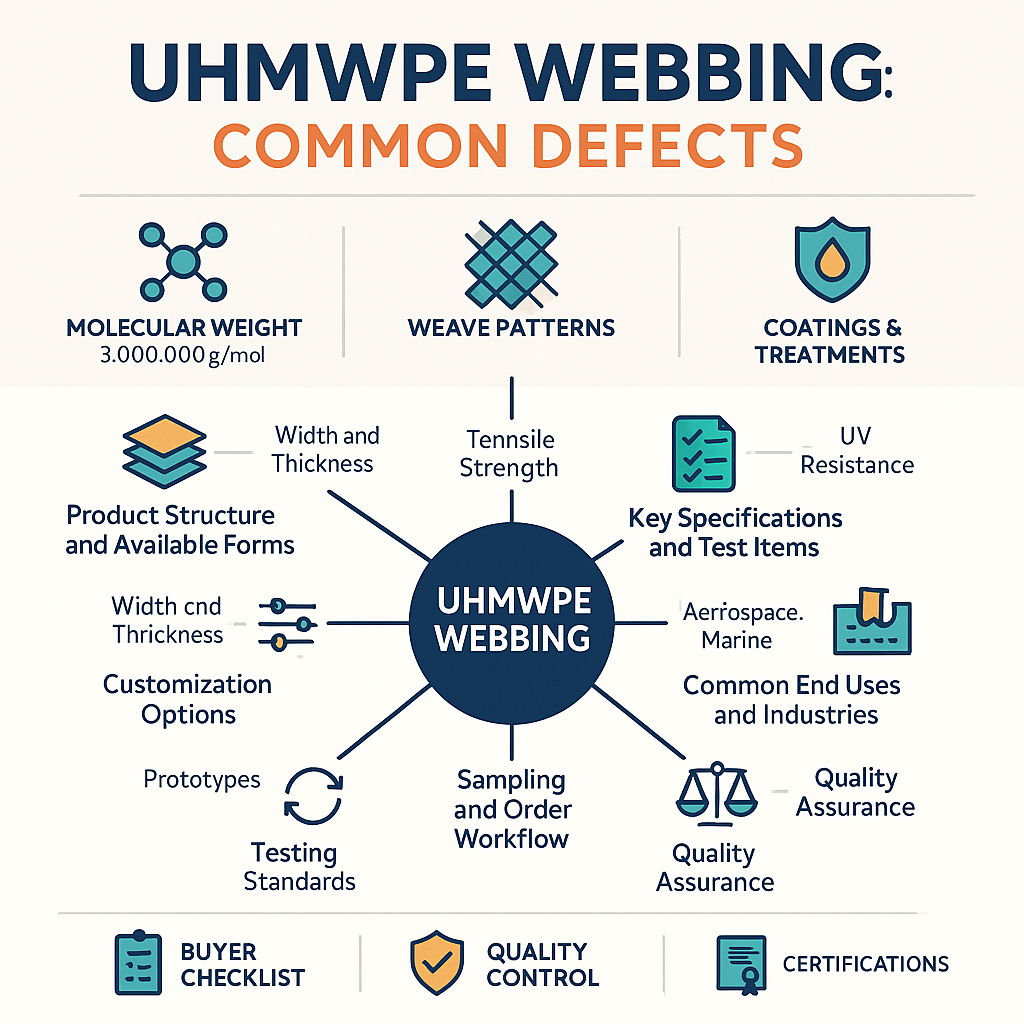
Product Structure and Available Forms
UHMWPE (Ultra High Molecular Weight Polyethylene) webbing is a high-performance material known for its exceptional strength-to-weight ratio, abrasion resistance, and low friction properties. Understanding the structure and available forms of UHMWPE webbing is essential for identifying potential defects and ensuring optimal performance in various applications.
Key Technical Points
- Molecular Weight: The unique properties of UHMWPE stem from its high molecular weight, typically exceeding 3 million g/mol, which contributes to its durability and resistance to wear.
- Weave Patterns: UHMWPE webbing can be produced in various weave patterns, affecting its flexibility, strength, and application suitability.
- Coatings and Treatments: Surface treatments can enhance UV resistance and chemical stability, but may introduce defects if not applied correctly.
Application and Sourcing Considerations
When sourcing UHMWPE webbing, it is important to consider the specific applications it will be used for, such as lifting, towing, or securing loads. Each application may require different specifications, and understanding these will help in identifying potential defects.
Buyer Checklist Before Sampling
- Define the application requirements clearly.
- Assess the supplier’s quality control processes.
- Request samples to evaluate performance under expected conditions.
Key Specifications and Test Items
To ensure the reliability of UHMWPE webbing, specific key specifications and test items should be evaluated. Understanding these can help identify common defects that may arise during production or handling.
Key Technical Points
- Tensile Strength: A critical measure of the webbing’s ability to withstand forces without breaking.
- Elongation at Break: Indicates how much the webbing can stretch before failure, which is vital for applications involving dynamic loads.
- UV Resistance: Essential for outdoor applications; poor UV resistance can lead to premature degradation.
Application and Sourcing Considerations
Different applications may require specific testing protocols. For example, webbing used in marine environments may need additional tests for saltwater resistance. Understanding these requirements can help in sourcing the right product.
Buyer Checklist Before Sampling
- Verify the testing standards used by the supplier.
- Ensure that the webbing meets industry-specific certifications.
- Request documentation of test results for transparency.
Common End Uses and Industries
UHMWPE webbing is utilized across various industries due to its unique properties. Understanding the common end uses can provide insights into the potential defects that may arise in specific applications.
Typical Industries Using This Material
- Aerospace: Used in harnesses and safety equipment due to its lightweight and strong characteristics.
- Marine: Commonly found in mooring lines and sails, where resistance to water and UV exposure is critical.
- Automotive: Employed in safety belts and towing applications, requiring high tensile strength and durability.
Why Engineers and Buyers Choose It
Engineers and buyers favor UHMWPE webbing for its combination of strength, lightweight nature, and resistance to environmental factors. These properties make it an ideal choice for demanding applications where performance is paramount.
When Another Material May Be Better
While UHMWPE offers numerous advantages, there are instances where alternative materials may be more suitable. For example, if cost is a primary concern, polyester webbing may provide a more economical solution, albeit with lower performance characteristics.
Customization Options
Customization can play a significant role in ensuring that UHMWPE webbing meets specific performance requirements. Understanding the available options can help in avoiding common defects associated with standard products.
Key Technical Points
- Width and Thickness: Custom dimensions can be specified based on load requirements and application needs.
- Color and Marking: Custom colors or markings can enhance visibility and identification, but may affect the webbing’s properties if not properly formulated.
- End Treatments: Options such as heat sealing or stitching can improve durability but require careful execution to prevent defects.
Application and Sourcing Considerations
When considering customization, it is crucial to communicate clearly with the supplier about the intended application and any specific performance criteria. This will help in minimizing defects associated with miscommunication.
Buyer Checklist Before Sampling
- Discuss customization options thoroughly with the supplier.
- Request prototypes to assess the impact of custom features on performance.
- Evaluate the supplier’s experience with custom orders.
Sampling, Qualification, and Order Workflow
Establishing a clear workflow for sampling, qualification, and ordering is essential to mitigate risks associated with common defects in UHMWPE webbing. A structured approach can lead to better outcomes and reduced errors.
Key Technical Points
- Sampling Procedures: Define clear protocols for sampling to ensure that the samples accurately represent the final product.
- Qualification Criteria: Establish criteria for evaluating samples based on performance metrics relevant to the application.
- Order Specifications: Clearly outline specifications in the order to avoid misunderstandings that could lead to defects.
Application and Sourcing Considerations
Understanding the specific application requirements can help streamline the sampling and qualification process. This ensures that the final product meets the necessary standards and reduces the likelihood of defects.
Buyer Checklist Before Sampling
- Confirm the sampling process with the supplier.
- Document qualification criteria to ensure consistency.
- Review the order workflow to identify potential bottlenecks.
How to Compare Offers from Different Suppliers
When evaluating offers from various UHMWPE webbing suppliers, a systematic approach can help in making informed decisions. Understanding the nuances of each offer can reveal potential defects and performance issues.
Key Technical Points
- Quality Assurance: Investigate the quality assurance processes each supplier employs to minimize defects.
- Performance Metrics: Compare performance metrics such as tensile strength, elongation, and UV resistance across offers.
- Customization Capabilities: Assess each supplier’s ability to meet specific customization needs without compromising quality.
Application and Sourcing Considerations
Consider how each supplier’s offerings align with your specific application requirements. This alignment can help in identifying which supplier is best suited to meet your needs while minimizing defects.
Buyer Checklist Before Sampling
- Compile a comparison matrix of supplier offerings.
- Evaluate the reputation and experience of each supplier in the industry.
- Request references or case studies to validate performance claims.
Conclusion
Understanding the common defects associated with UHMWPE webbing is essential for engineers and buyers aiming to make informed decisions. By focusing on product structure, specifications, and application considerations, stakeholders can better navigate the complexities of sourcing and ensure optimal performance in their applications. A thorough checklist can serve as a practical tool for evaluating suppliers and products, ultimately leading to more reliable outcomes.