
Introduction
In the realm of high-performance textiles, UHMWPE (Ultra High Molecular Weight Polyethylene) webbing stands out for its exceptional strength, durability, and versatility. This UHMWPE webbing application guide aims to provide engineers, buyers, and decision-makers with a thorough understanding of the material’s structure, specifications, and practical applications. Understanding these factors is crucial for selecting the right webbing for specific industrial needs, ensuring optimal performance and safety.
Product Structure and Available Forms
Key Technical Points
UHMWPE webbing is characterized by its high tensile strength and low weight, making it an ideal choice for applications requiring robust yet lightweight materials. The molecular structure of UHMWPE contributes to its remarkable resistance to abrasion, chemicals, and UV light, which are critical factors in outdoor and industrial environments.
Application and Sourcing Considerations
When sourcing UHMWPE webbing, it is essential to consider the specific requirements of your application. Factors such as load-bearing capacity, environmental exposure, and required flexibility will influence the selection process. Additionally, working with a reliable UHMWPE webbing supplier can ensure that you receive materials that meet industry standards and specifications.
Buyer Checklist Before Sampling
- Define the application requirements: load capacity, environmental conditions, and flexibility.
- Verify the supplier’s certifications and quality assurance processes.
- Request samples to assess the material’s performance in real-world conditions.
- Evaluate the supplier’s lead times and delivery capabilities.
Key Specifications and Test Items
Key Technical Points
Understanding the key specifications of UHMWPE webbing is vital for ensuring it meets the demands of your application. Important specifications include breaking strength, elongation at break, and resistance to environmental factors. Testing methods such as tensile testing and abrasion resistance tests are essential to validate these specifications.
Application and Sourcing Considerations
Different applications may require varying specifications. For instance, webbing used in marine applications may need enhanced UV resistance, while webbing for lifting applications may prioritize high tensile strength. Collaborating with a knowledgeable supplier can help you navigate these specifications effectively.
Buyer Checklist Before Sampling
- Identify the critical specifications needed for your application.
- Confirm the testing methods used by the supplier to validate these specifications.
- Assess the supplier’s ability to provide documentation for compliance with industry standards.
Common End Uses and Industries
Typical Industries Using This Material
UHMWPE webbing finds applications across various industries, including:
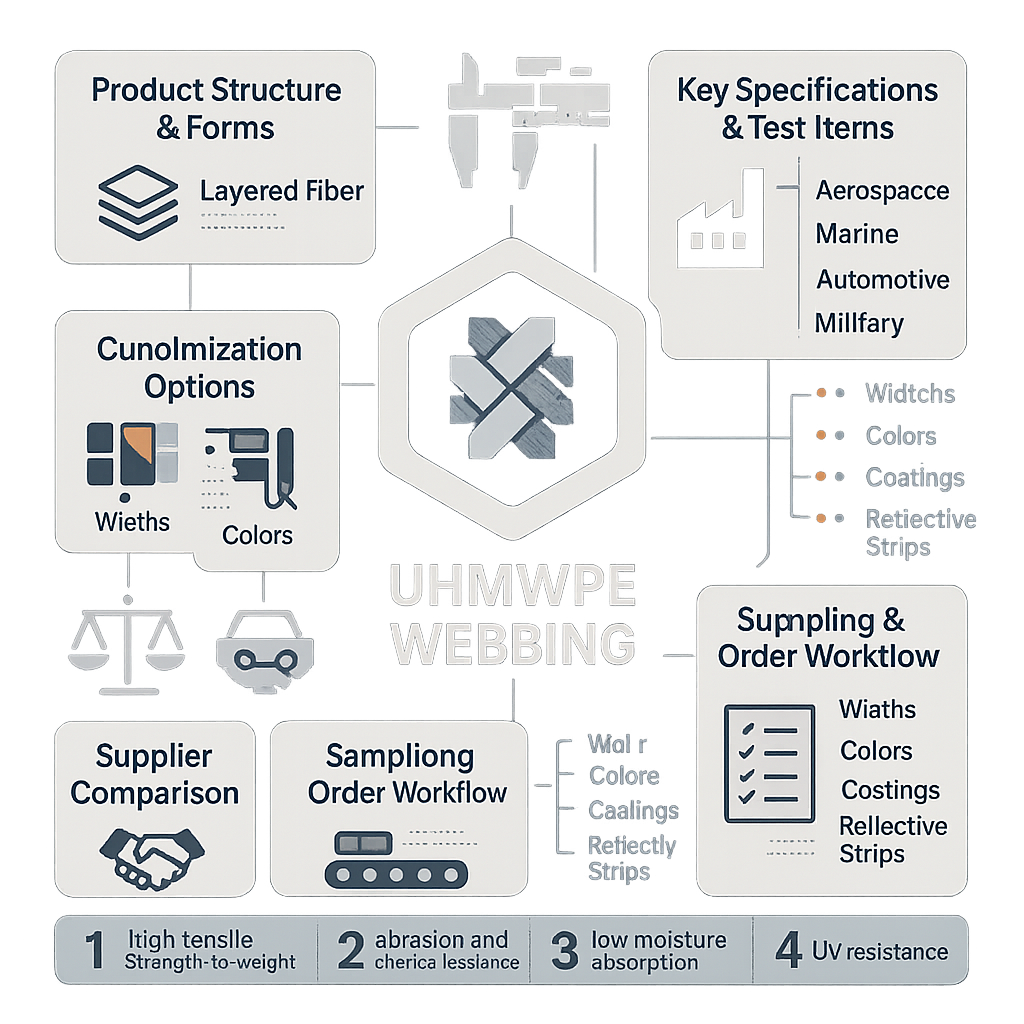
- Aerospace: Used in harnesses and safety equipment due to its lightweight and high strength.
- Marine: Ideal for mooring lines and rigging, offering resistance to saltwater and UV exposure.
- Automotive: Utilized in safety belts and tie-downs, where strength and durability are paramount.
- Military: Employed in tactical gear and equipment, benefiting from its lightweight and high-performance characteristics.
Why Engineers and Buyers Choose It
Engineers and buyers favor UHMWPE webbing for its unique combination of properties, including:
- High tensile strength-to-weight ratio.
- Excellent resistance to abrasion and chemicals.
- Low moisture absorption, making it suitable for various environments.
When Another Material May Be Better
While UHMWPE webbing offers numerous advantages, there are scenarios where alternative materials may be more suitable. For example, if cost is a primary concern, nylon or polyester webbing may provide adequate performance at a lower price point. Additionally, in applications requiring high heat resistance, materials like aramid fibers may be more appropriate.
Customization Options
Key Technical Points
Customization of UHMWPE webbing can enhance its performance for specific applications. Options may include varying widths, colors, and patterns, as well as the incorporation of additional features such as reflective strips or specific coatings for enhanced durability.
Application and Sourcing Considerations
When considering customization, it is essential to communicate your specific needs clearly to the supplier. This ensures that the final product aligns with your application requirements and performance expectations.
Buyer Checklist Before Sampling
- Determine the necessary custom features for your application.
- Discuss potential lead times for customized orders with the supplier.
- Request prototypes to evaluate the performance of customized webbing.
Sampling, Qualification, and Order Workflow
Key Technical Points
The process of sampling and qualification is critical in ensuring that the UHMWPE webbing meets your application requirements. This typically involves requesting samples, conducting performance tests, and evaluating the material against your specifications.
Application and Sourcing Considerations
Establishing a clear workflow for sampling and qualification can streamline the decision-making process. This may include defining timelines for testing and evaluation, as well as establishing criteria for acceptance.
Buyer Checklist Before Sampling
- Outline the testing procedures you will use to evaluate the samples.
- Set clear timelines for the sampling and evaluation process.
- Communicate your acceptance criteria to the supplier upfront.
How to Compare Offers from Different Suppliers
Key Technical Points
When comparing offers from different UHMWPE webbing suppliers, it is essential to evaluate not just the price but also the quality and specifications of the materials offered. Understanding the supplier’s reputation and their ability to meet your specific requirements is equally important.
Application and Sourcing Considerations
Consider factors such as lead times, customer service, and the supplier’s experience in your industry when making comparisons. A supplier with a strong track record in your specific application area may provide additional value beyond just the material cost.
Buyer Checklist Before Sampling
- Compare specifications and certifications across different suppliers.
- Assess the supplier’s experience and reputation in your industry.
- Evaluate the total cost of ownership, including shipping and potential delays.
Conclusion
Understanding the intricacies of UHMWPE webbing is essential for making informed decisions in its application and sourcing. By considering the material’s specifications, customization options, and supplier capabilities, engineers and buyers can ensure they select the right webbing for their specific needs. This UHMWPE webbing application guide serves as a valuable resource for navigating these considerations, ultimately leading to more effective and efficient material selection.