
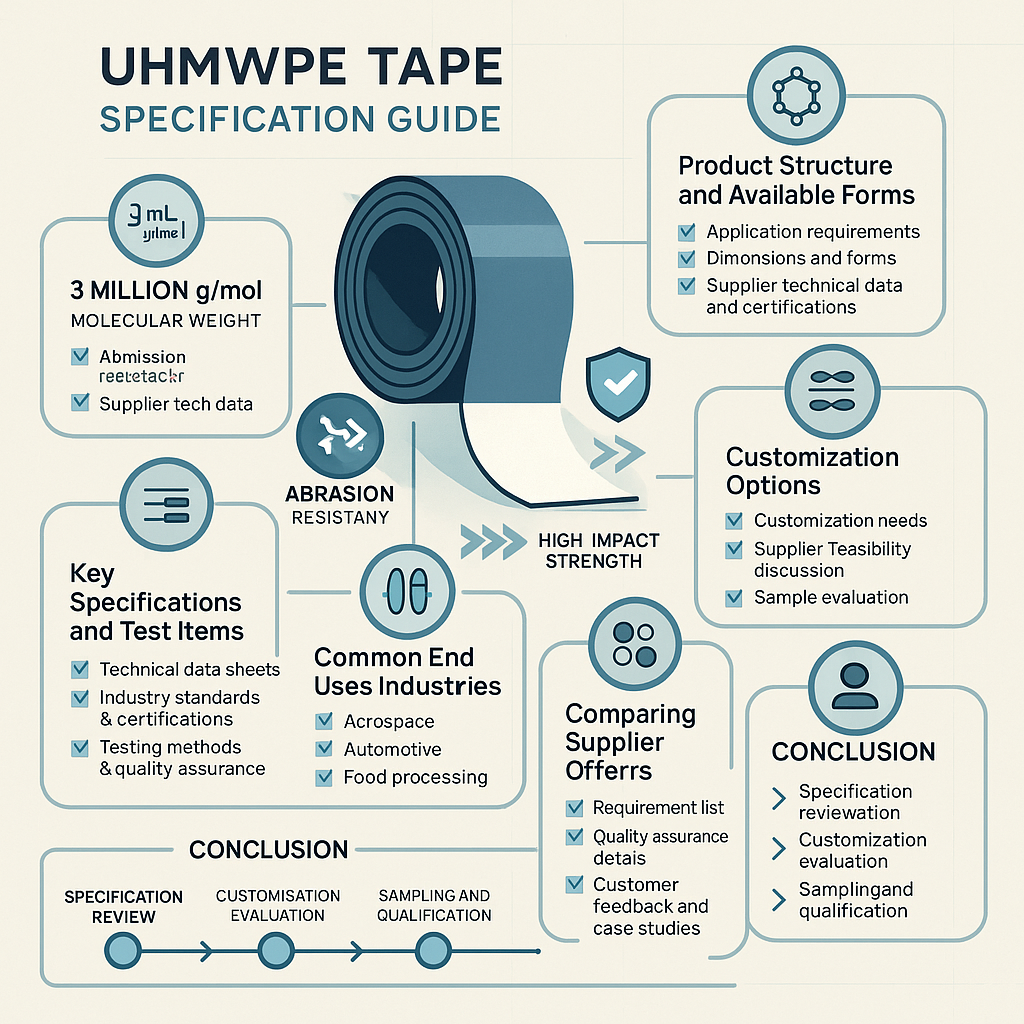
Product Structure and Available Forms
Understanding the structure and forms of UHMWPE (Ultra High Molecular Weight Polyethylene) tape is crucial for making informed decisions in various applications. UHMWPE tape is known for its exceptional abrasion resistance, low friction, and high impact strength, making it a preferred choice in many industrial settings.
Key Technical Points
- Molecular Weight: UHMWPE has a molecular weight of over 3 million g/mol, contributing to its superior mechanical properties.
- Thickness and Width: Available in various thicknesses and widths, UHMWPE tape can be tailored to specific applications, from thin films to thicker, more robust options.
- Adhesive Backing: Many UHMWPE tapes come with adhesive backing, enhancing their usability in different environments.
Application and Sourcing Considerations
When sourcing UHMWPE tape, consider the specific requirements of your application. Factors such as temperature resistance, chemical exposure, and mechanical load should guide your selection. Additionally, the availability of different forms, such as rolls or sheets, can influence your sourcing strategy.
Buyer Checklist Before Sampling
- Define the application requirements, including load, environment, and durability.
- Determine the necessary dimensions and forms for your specific use case.
- Assess the supplier’s ability to provide technical data and certifications.
Key Specifications and Test Items
Understanding the key specifications and test items for UHMWPE tape is vital for ensuring it meets your application needs. These specifications can significantly impact performance and longevity.
Key Technical Points
- Tensile Strength: Typically measured in MPa, this indicates the maximum stress the tape can withstand before failure.
- Coefficient of Friction: UHMWPE tape generally exhibits a low coefficient of friction, making it suitable for sliding applications.
- Temperature Range: Knowing the operational temperature range is essential for applications exposed to extreme conditions.
Application and Sourcing Considerations
When evaluating specifications, consider how they align with the intended application. For instance, high tensile strength may be critical for load-bearing applications, while low friction is essential for sliding surfaces. Ensure that the specifications are validated through relevant testing standards.
Buyer Checklist Before Sampling
- Review the technical data sheets provided by the supplier.
- Confirm that the tape meets industry-specific standards and certifications.
- Evaluate the supplier’s testing methods and quality assurance processes.
Common End Uses and Industries
UHMWPE tape finds applications across various industries due to its unique properties. Understanding these applications can help in making informed sourcing decisions.
Typical Industries Using This Material
- Aerospace: Used for surface protection and reducing friction in moving parts.
- Automotive: Applied in components requiring high wear resistance.
- Food Processing: Utilized for its non-toxic properties and ease of cleaning.
Why Engineers and Buyers Choose It
Engineers and buyers often select UHMWPE tape for its durability, low maintenance requirements, and versatility in various applications. Its ability to withstand harsh environments and resist wear makes it a reliable choice in demanding settings.
When Another Material May Be Better
While UHMWPE tape offers many advantages, there are scenarios where alternative materials may be more suitable. For example, if high-temperature resistance is a priority, materials like PTFE may outperform UHMWPE. Understanding the specific demands of your application is key to making the right choice.
Customization Options
Customization can enhance the performance of UHMWPE tape in specific applications. Knowing the available options can help tailor the product to meet unique requirements.
Key Technical Points
- Custom Thickness: Tailoring the thickness can optimize performance for specific load requirements.
- Adhesive Types: Different adhesives can be selected based on the surface and environmental conditions.
- Color and Finish: Custom colors and finishes can be beneficial for branding or aesthetic purposes.
Application and Sourcing Considerations
When considering customization, evaluate how these options align with your application needs. Custom thickness may be crucial for load-bearing applications, while specific adhesive types may enhance performance in challenging environments.
Buyer Checklist Before Sampling
- Identify the specific customization needs for your application.
- Discuss customization options with potential suppliers to understand feasibility.
- Request samples to evaluate the performance of customized products.
Sampling, Qualification, and Order Workflow
A structured approach to sampling and qualification can streamline the sourcing process for UHMWPE tape. Understanding this workflow is essential for ensuring product suitability.
Key Technical Points
- Sampling Process: Request samples based on defined specifications to evaluate performance.
- Qualification Testing: Conduct necessary tests to validate that the tape meets application requirements.
- Order Workflow: Establish a clear process for placing orders, including lead times and delivery expectations.
Application and Sourcing Considerations
During the sampling and qualification phase, consider how the tape performs under real-world conditions. Testing in the actual application environment can provide valuable insights into its suitability.
Buyer Checklist Before Sampling
- Define the testing criteria based on application needs.
- Ensure that the supplier can provide sufficient samples for evaluation.
- Document the results of qualification tests for future reference.
How to Compare Offers from Different Suppliers
When evaluating different suppliers for UHMWPE tape, a systematic approach can help ensure you make an informed decision. Understanding key factors can guide your comparison.
Key Technical Points
- Specifications Comparison: Compare technical specifications to ensure compatibility with your application.
- Quality Assurance: Assess the quality control measures each supplier employs.
- Customer Support: Evaluate the level of support offered during the sourcing process.
Application and Sourcing Considerations
Consider how each supplier’s offerings align with your specific needs. Factors such as lead times, customization options, and after-sales support can significantly impact your decision.
Buyer Checklist Before Sampling
- Compile a list of specifications and requirements for comparison.
- Request detailed information on quality assurance processes from each supplier.
- Evaluate customer feedback and case studies to gauge supplier reliability.
Conclusion
In summary, understanding the specifications, applications, and sourcing considerations for UHMWPE tape is essential for making informed decisions. By focusing on key technical points, evaluating customization options, and following a structured sampling and qualification process, engineers and decision-makers can select the right UHMWPE tape for their needs. A thorough comparison of suppliers can further enhance the decision-making process, ensuring that the chosen tape meets both performance and application requirements.
As you navigate the complexities of material selection, keep this UHMWPE tape specification guide as a reference to aid in your decision-making process.