
Product Structure and Available Forms
UHMWPE (Ultra High Molecular Weight Polyethylene) tape is a versatile material known for its exceptional strength, low friction, and chemical resistance. Understanding its structure and available forms is essential for identifying potential defects and ensuring optimal performance in various applications.
Key Technical Points
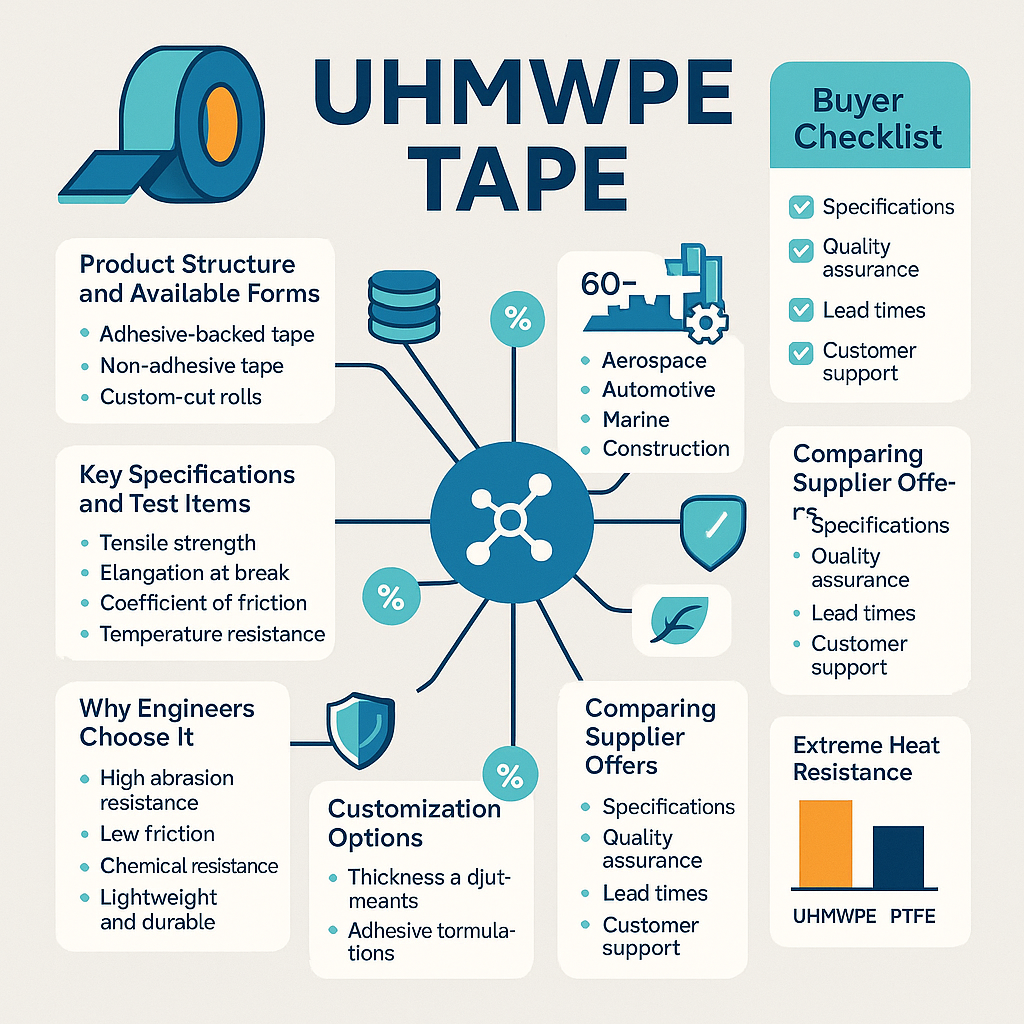
UHMWPE tape is characterized by its long molecular chains, which contribute to its high tensile strength and impact resistance. The tape is typically available in various thicknesses and widths, catering to different industrial needs. Common forms include:
- Adhesive-backed tape for easy application
- Non-adhesive tape for specialized applications
- Custom-cut rolls for specific dimensions
Each form has unique properties that can affect performance, making it crucial to select the right type based on application requirements.
Application and Sourcing Considerations
When sourcing UHMWPE tape, consider the specific application requirements, such as load-bearing capacity, environmental conditions, and compatibility with other materials. Different suppliers may offer variations in quality and performance, so it’s important to evaluate their specifications carefully.
Buyer Checklist Before Sampling
- Define the application requirements (e.g., load, temperature, exposure to chemicals).
- Request technical data sheets from potential suppliers.
- Inquire about the manufacturing process and quality control measures.
- Consider the supplier’s reputation and experience in the industry.
Key Specifications and Test Items
Understanding the key specifications and test items for UHMWPE tape is vital for identifying common defects and ensuring product reliability.
Key Technical Points
Specifications to consider include:
- Tensile strength: Indicates the maximum load the tape can withstand.
- Elongation at break: Measures the tape’s ability to stretch before breaking.
- Coefficient of friction: Affects the tape’s performance in sliding applications.
- Temperature resistance: Determines the tape’s suitability for high-heat environments.
Testing these specifications can help identify potential defects that may compromise performance.
Application and Sourcing Considerations
Different applications may require specific performance characteristics. For example, a tape used in a high-friction environment may need a lower coefficient of friction, while one exposed to extreme temperatures must have high thermal stability. Sourcing from reputable suppliers who provide detailed specifications can mitigate the risk of defects.
Buyer Checklist Before Sampling
- Assess the required specifications for your application.
- Verify the supplier’s testing protocols and certifications.
- Request samples to evaluate performance in real-world conditions.
- Consider the supplier’s ability to provide ongoing support and technical assistance.
Common End Uses and Industries
UHMWPE tape is utilized across various industries due to its unique properties. Understanding the common end uses can help identify potential defects and application fit.
Typical Industries Using This Material
- Aerospace
- Automotive
- Marine
- Construction
- Food processing
Each industry has specific requirements that can influence the choice of UHMWPE tape, making it essential to understand the context of use.
Why Engineers and Buyers Choose It
Engineers and buyers often select UHMWPE tape for its:
- High abrasion resistance
- Low friction properties
- Excellent chemical resistance
- Lightweight and durable nature
These properties make it suitable for applications where performance and longevity are critical.
When Another Material May Be Better
While UHMWPE tape has many advantages, there are scenarios where alternative materials may be more appropriate. For example, if extreme heat resistance is required, materials like PTFE may be a better choice. Understanding the specific requirements of your application can help in making informed decisions.
Customization Options
Customization can play a significant role in optimizing the performance of UHMWPE tape for specific applications.
Key Technical Points
Customization options may include:
- Thickness adjustments to enhance load-bearing capabilities.
- Adhesive formulations tailored for specific surfaces.
- Color coding for easy identification in complex applications.
These options can help mitigate common defects by ensuring the tape is tailored to the specific demands of the application.
Application and Sourcing Considerations
When considering customization, it’s important to communicate your specific needs to potential suppliers. Custom solutions may involve longer lead times and additional costs, so it’s essential to weigh these factors against the benefits of enhanced performance.
Buyer Checklist Before Sampling
- Clearly define your customization requirements.
- Discuss potential impacts on lead times and costs with suppliers.
- Request prototypes to evaluate performance before full-scale production.
- Ensure that the supplier has experience with custom solutions.
Sampling, Qualification, and Order Workflow
A structured approach to sampling and qualification is essential for ensuring the quality and performance of UHMWPE tape.
Key Technical Points
Establishing a clear workflow can help streamline the process:
- Define the criteria for qualification based on application requirements.
- Request samples from multiple suppliers for comparative analysis.
- Conduct rigorous testing to evaluate performance against specifications.
Application and Sourcing Considerations
Consider the implications of lead times and availability when planning your workflow. Engaging with suppliers early in the process can help ensure that your requirements are met without delays.
Buyer Checklist Before Sampling
- Establish clear qualification criteria based on application needs.
- Engage with suppliers to understand their sampling processes.
- Document testing results for future reference.
- Communicate any issues or defects encountered during testing.
How to Compare Offers from Different Suppliers
Comparing offers from different suppliers requires a systematic approach to ensure you select the best option for your needs.
Key Technical Points
When evaluating offers, consider the following:
- Specifications: Ensure that the offered tape meets your application requirements.
- Quality assurance: Inquire about the supplier’s quality control processes.
- Lead times: Assess the supplier’s ability to meet your timeline.
- Customer support: Evaluate the level of technical assistance provided.
Application and Sourcing Considerations
Understanding the nuances of each supplier’s offering can help you make a more informed decision. Look for suppliers who are willing to provide detailed information and support throughout the selection process.
Buyer Checklist Before Sampling
- Compare specifications and performance data from multiple suppliers.
- Assess the supplier’s reputation and customer feedback.
- Inquire about warranty and return policies.
- Evaluate the overall value proposition, including support and service.
Conclusion
Understanding the common defects associated with UHMWPE tape is essential for making informed decisions in material selection and application fit. By considering key specifications, customization options, and supplier comparisons, buyers can mitigate risks and enhance performance. A structured approach to sourcing, sampling, and qualification will further ensure that the selected tape meets the specific demands of the application. Ultimately, thoughtful evaluation of these factors can lead to successful outcomes in various industrial applications.