
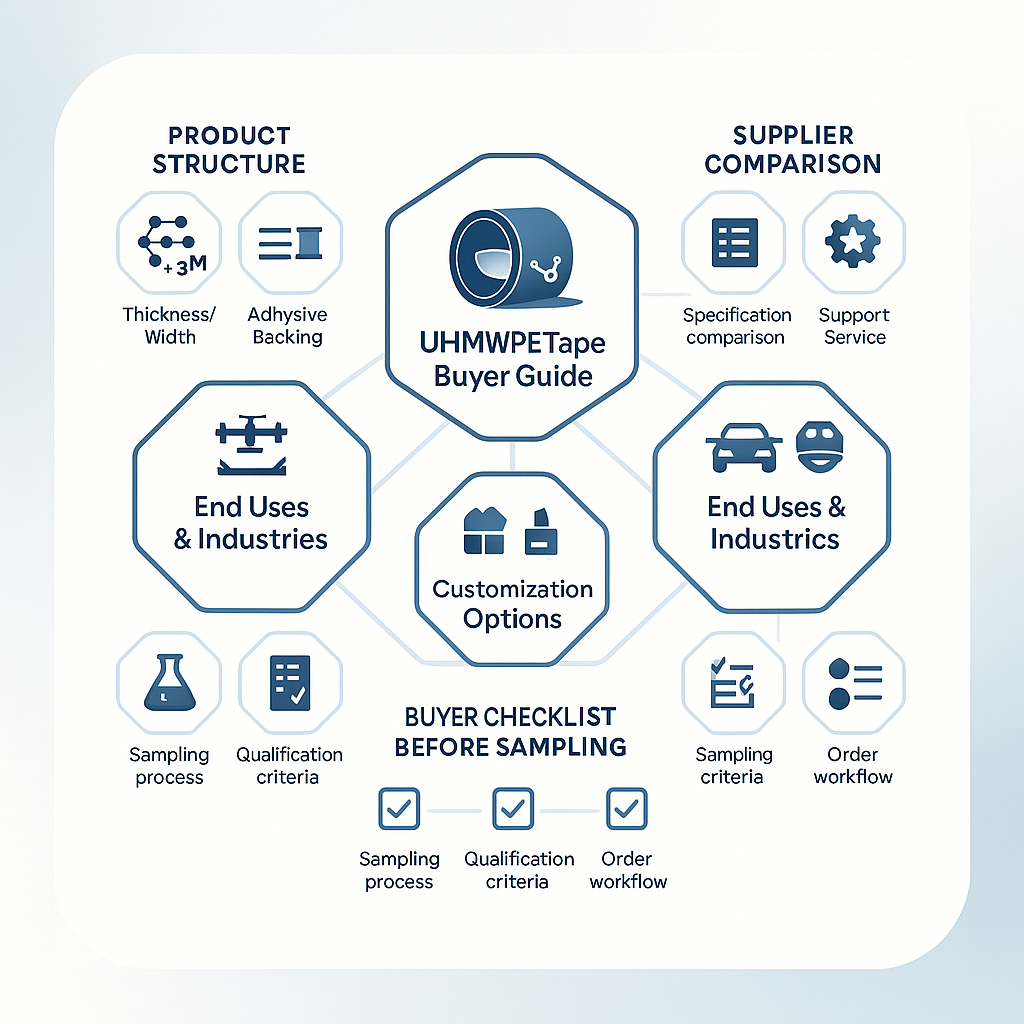
Product Structure and Available Forms
Understanding the structure of UHMWPE (Ultra-High Molecular Weight Polyethylene) tape is crucial for making informed purchasing decisions. UHMWPE tape is known for its exceptional strength-to-weight ratio, chemical resistance, and low friction properties. It is typically available in various forms, including rolls, sheets, and custom-cut pieces, depending on the specific application needs.
Key Technical Points
- Molecular Weight: UHMWPE has a molecular weight exceeding 3 million g/mol, contributing to its high impact resistance and durability.
- Thickness and Width: Available in various thicknesses and widths, allowing for customization based on application requirements.
- Adhesive Backing: Some UHMWPE tapes come with adhesive backing for easy application, while others may require additional bonding methods.
Application and Sourcing Considerations
When sourcing UHMWPE tape, consider the specific application requirements, such as load-bearing capacity, environmental conditions, and compatibility with other materials. Understanding the end-use will guide you in selecting the right specifications.
Buyer Checklist Before Sampling
- Define the application and performance requirements.
- Assess the environmental conditions the tape will be exposed to.
- Determine the necessary dimensions and forms needed.
- Research potential suppliers and their product offerings.
Key Specifications and Test Items
Specifications play a vital role in determining the suitability of UHMWPE tape for specific applications. Understanding these specifications can help buyers make informed decisions.
Key Technical Points
- Tensile Strength: Look for tapes with high tensile strength to ensure durability under stress.
- Coefficient of Friction: A low coefficient of friction is essential for applications requiring smooth movement.
- Temperature Resistance: Ensure the tape can withstand the temperatures it will encounter in its application.
Application and Sourcing Considerations
Different applications may require different specifications. For instance, a tape used in a high-friction environment may need a lower coefficient of friction compared to one used for protective purposes.
Buyer Checklist Before Sampling
- Identify the critical specifications for your application.
- Verify the testing standards used by suppliers.
- Request samples to assess performance in real-world conditions.
Common End Uses and Industries
UHMWPE tape has a wide range of applications across various industries, making it a versatile material choice.
Typical Industries Using This Material
- Aerospace: Used for lightweight, high-strength applications.
- Automotive: Employed in protective applications and as a friction-reducing layer.
- Manufacturing: Commonly used in conveyor systems and machinery to reduce wear.
Why Engineers and Buyers Choose It
Engineers and buyers often opt for UHMWPE tape due to its unique combination of properties, including high abrasion resistance, low moisture absorption, and excellent chemical resistance. These characteristics make it suitable for demanding applications.
When Another Material May Be Better
While UHMWPE tape offers many advantages, there are scenarios where alternative materials may be more suitable. For instance, in applications requiring high-temperature resistance, materials like PTFE might be a better choice.
Customization Options
Customization can enhance the performance of UHMWPE tape for specific applications, making it essential for buyers to understand their options.
Key Technical Points
- Custom Sizes: Many suppliers offer custom sizes to meet unique application needs.
- Adhesive Types: Various adhesive options are available, depending on the surface and application.
- Color and Finish: Custom colors and finishes can be specified for branding or aesthetic purposes.
Application and Sourcing Considerations
Customization should align with the specific requirements of the application. For example, if the tape is used in a visible area, color matching may be important.
Buyer Checklist Before Sampling
- Define the customization requirements based on application needs.
- Discuss options with potential suppliers to understand feasibility.
- Request samples of customized products to evaluate performance.
Sampling, Qualification, and Order Workflow
The process of sampling and qualification is critical in ensuring that the selected UHMWPE tape meets all necessary specifications and performance criteria.
Key Technical Points
- Sampling Process: Establish a clear process for requesting and evaluating samples from suppliers.
- Qualification Criteria: Define the criteria for qualification based on application-specific requirements.
- Order Workflow: Understand the workflow from sampling to ordering to ensure a smooth transition.
Application and Sourcing Considerations
Consider the lead times and logistics involved in the sampling and ordering process. Effective communication with suppliers can help mitigate delays.
Buyer Checklist Before Sampling
- Outline the sampling process and qualification criteria.
- Communicate clearly with suppliers about expectations.
- Document findings from sample evaluations for future reference.
How to Compare Offers from Different Suppliers
When evaluating offers from various suppliers, a structured approach can help ensure that you select the best option for your needs.
Key Technical Points
- Specification Comparison: Compare technical specifications side by side to identify the best fit.
- Supplier Reputation: Research supplier backgrounds and customer reviews to gauge reliability.
- Support and Service: Evaluate the level of customer support and service offered by each supplier.
Application and Sourcing Considerations
Consider the long-term relationship potential with suppliers. A supplier that offers excellent support may be more valuable than the lowest price.
Buyer Checklist Before Sampling
- Gather and compare specifications from different suppliers.
- Assess supplier reputation and customer feedback.
- Evaluate the level of support and service provided.
Conclusion
Choosing the right UHMWPE tape requires a comprehensive understanding of its properties, applications, and sourcing considerations. By following the outlined buyer checklist and evaluating specifications, buyers can make informed decisions that align with their operational needs. Remember to consider customization options and the importance of supplier relationships in the decision-making process. This approach will not only ensure the right material selection but also foster long-term partnerships with suppliers, ultimately enhancing operational efficiency.