
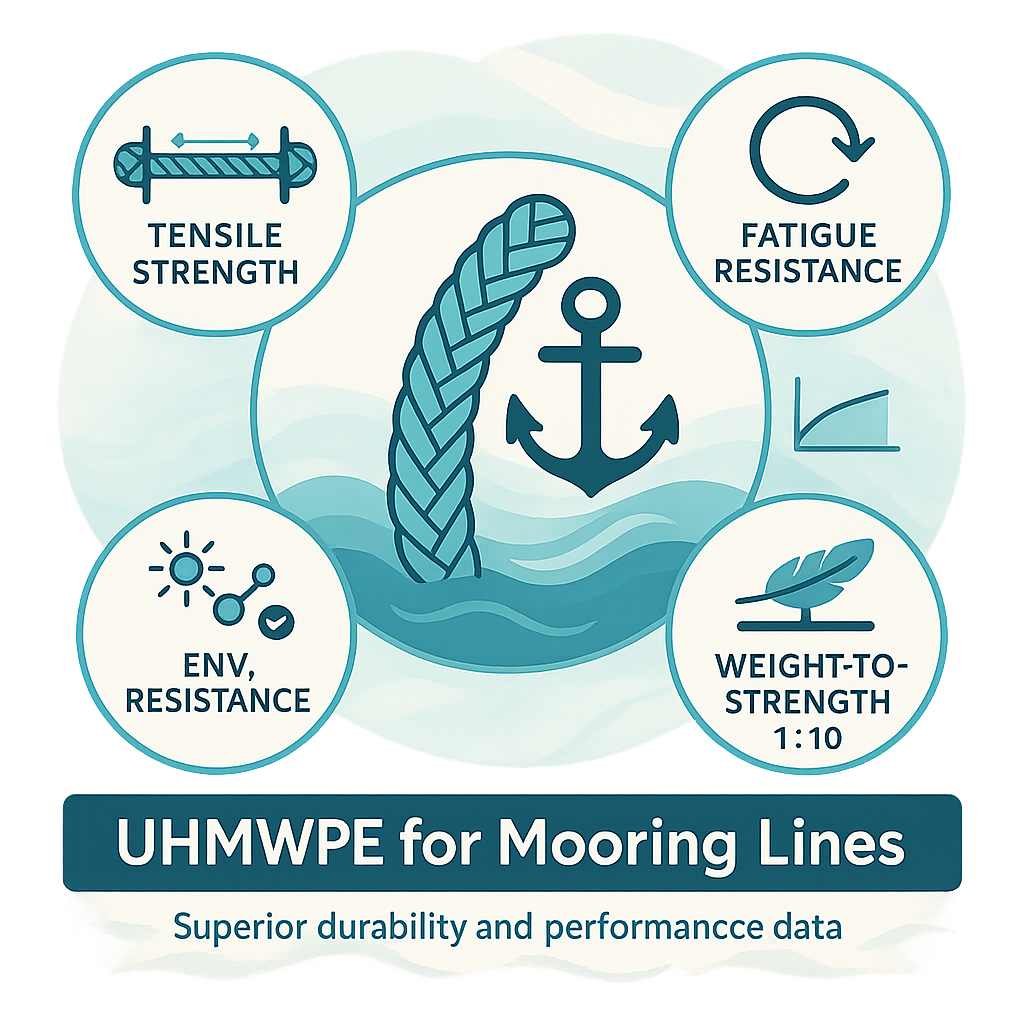
Why UHMWPE is Used in Mooring Line
Ultra-high molecular weight polyethylene (UHMWPE) has gained significant traction in various marine applications, particularly in mooring lines. Its unique properties make it an ideal choice for demanding environments where strength, durability, and performance are critical. Understanding why UHMWPE is favored in mooring lines can help stakeholders make informed decisions regarding material selection and application.
Key Technical Points
- High Strength-to-Weight Ratio: UHMWPE offers exceptional tensile strength while remaining lightweight, which is crucial for mooring lines that need to withstand heavy loads without adding unnecessary weight to the vessel.
- Low Friction Coefficient: The low friction properties of UHMWPE reduce wear and tear on both the line and the associated hardware, prolonging the lifespan of the mooring system.
- Resistance to Environmental Factors: UHMWPE is highly resistant to UV radiation, chemicals, and abrasion, making it suitable for long-term use in harsh marine environments.
Application and Sourcing Considerations
When considering UHMWPE for mooring lines, it’s essential to evaluate both the application requirements and sourcing options. Factors such as the specific marine environment, load requirements, and compatibility with existing systems should be assessed. Additionally, sourcing UHMWPE from reputable suppliers ensures that the material meets the necessary performance standards.
Buyer Checklist Before Sampling
- Define the specific application and load requirements.
- Research potential suppliers and their material certifications.
- Evaluate the supplier’s experience in marine applications.
- Request samples to assess material properties and performance.
Key Performance Requirements
Understanding the key performance requirements for mooring lines made from UHMWPE is essential for ensuring reliability and safety in marine operations.
Key Technical Points
- Tensile Strength: The mooring line must withstand significant forces without breaking. UHMWPE typically exhibits high tensile strength, making it suitable for this purpose.
- Elongation at Break: A certain degree of elasticity is necessary to absorb shock loads. UHMWPE provides adequate elongation, which helps in reducing the risk of line failure.
- Fatigue Resistance: Repeated loading and unloading cycles can weaken materials over time. UHMWPE’s fatigue resistance is a significant advantage in mooring applications.
Application and Sourcing Considerations
In addition to performance metrics, consider the specific application context. Factors such as water depth, wave conditions, and vessel type can influence the choice of mooring line material. Sourcing from suppliers with a proven track record in marine applications can enhance confidence in the material’s performance.
Buyer Checklist Before Sampling
- Assess the environmental conditions where the mooring line will be used.
- Determine the required performance metrics based on application needs.
- Review supplier certifications and quality assurance processes.
- Request detailed specifications and test results for the UHMWPE material.
Material Construction and Specification Options
Different construction methods and specifications can influence the performance of UHMWPE mooring lines. Understanding these options is crucial for making informed decisions.
Key Technical Points
- Single vs. Multi-Strand Construction: Multi-strand constructions can provide enhanced flexibility and strength, while single-strand options may offer simplicity and cost-effectiveness.
- Diameter and Length: The diameter and length of the mooring line should be tailored to the specific application, considering factors such as load requirements and installation constraints.
- Coating Options: Some UHMWPE lines come with protective coatings that enhance abrasion resistance and UV protection.
Application and Sourcing Considerations
When selecting construction options, consider how the mooring line will be used. Different configurations may be better suited for specific applications, such as offshore platforms or harbor moorings. Collaborating with knowledgeable suppliers can facilitate the selection of the most appropriate construction method.
Buyer Checklist Before Sampling
- Identify the preferred construction method based on application needs.
- Evaluate the impact of diameter and length on performance.
- Consider any additional features, such as coatings, that may enhance performance.
- Request samples in various configurations to assess suitability.
Processing, Lamination, or Fabrication Considerations
Processing methods can significantly affect the performance and suitability of UHMWPE mooring lines. Understanding these methods is essential for optimizing material properties.
Common Processing Methods
- Extrusion: A common method for producing UHMWPE fibers, ensuring uniformity and consistency in material properties.
- Braiding: Often used to create multi-strand lines, braiding enhances flexibility and strength.
- Lamination: In some cases, lamination can be used to enhance abrasion resistance and overall durability.
Design and Fabrication Limitations
While UHMWPE offers many advantages, there are limitations to consider. For example, certain processing methods may not be suitable for all applications, and the design must accommodate the specific environmental conditions.
Implications for Sourcing and Customization
Understanding processing methods can inform sourcing decisions. Suppliers with expertise in UHMWPE processing can provide valuable insights into customization options that meet specific performance requirements.
Common Standards, Testing, or Buyer Concerns
Compliance with industry standards and testing protocols is crucial for ensuring the reliability of UHMWPE mooring lines.
Relevant Test Methods
- Tensile Testing: Evaluates the strength and elongation properties of the material.
- Fatigue Testing: Assesses how the material performs under repeated loading conditions.
- Environmental Resistance Testing: Tests the material’s resilience against UV exposure, chemicals, and abrasion.
Standards Buyers Often Ask About
Buyers frequently inquire about compliance with standards such as ISO 9001 for quality management and ASTM standards for material testing. Familiarity with these standards can enhance confidence in the sourcing process.
How to Verify Compliance with Suppliers
- Request documentation of compliance with relevant standards.
- Ask for test results from accredited laboratories.
- Inquire about the supplier’s quality assurance processes.
How to Evaluate Samples Before Bulk Order
Evaluating samples is a critical step before committing to a bulk order of UHMWPE mooring lines. This process ensures that the selected material meets the necessary performance criteria.
Key Technical Points
- Assess Physical Properties: Evaluate the tensile strength, elongation, and overall feel of the material.
- Conduct Performance Tests: If feasible, perform tests to simulate real-world conditions.
- Check for Consistency: Ensure that the samples exhibit uniform properties throughout.
Application and Sourcing Considerations
Consider how the sample performs in the intended application. Engaging with suppliers during this phase can provide additional insights into the material’s suitability.
Buyer Checklist Before Sampling
- Define the performance criteria that the samples must meet.
- Request multiple samples to compare different specifications.
- Document observations and test results for future reference.
- Communicate with suppliers about any concerns or questions regarding the samples.
In conclusion, understanding the properties and applications of UHMWPE for mooring lines is essential for making informed decisions. By considering technical specifications, performance requirements, and sourcing options, stakeholders can select the most suitable materials for their marine applications. This knowledge not only enhances operational efficiency but also contributes to safety and reliability in marine environments.