
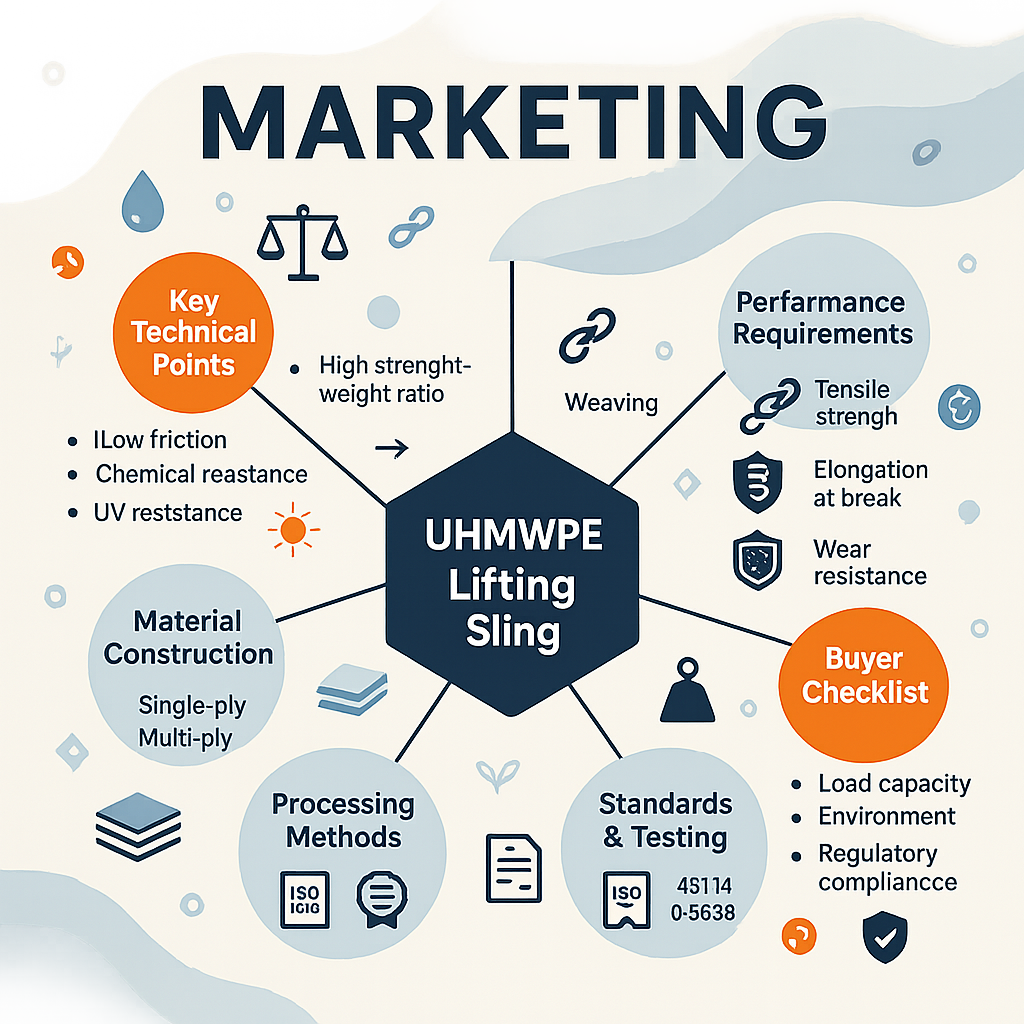
Why UHMWPE is Used in Lifting Sling
Ultra-high molecular weight polyethylene (UHMWPE) has gained significant traction in various industrial applications, particularly in lifting slings. Understanding why UHMWPE is favored in this context can help businesses make informed decisions about material selection. This article delves into the key technical points, application considerations, and essential buyer checklists to guide sourcing decisions.
Key Technical Points
UHMWPE is characterized by its high molecular weight, which contributes to its exceptional properties:
- High Strength-to-Weight Ratio: UHMWPE slings are lightweight yet incredibly strong, making them ideal for lifting applications.
- Low Friction: The low coefficient of friction reduces wear and tear, enhancing the longevity of the sling.
- Chemical Resistance: UHMWPE is resistant to many chemicals, making it suitable for diverse environments.
- UV Resistance: This material can withstand UV exposure, ensuring durability in outdoor applications.
Application and Sourcing Considerations
When considering UHMWPE for lifting slings, it’s crucial to evaluate the specific application requirements:
- Load Capacity: Assess the maximum load the sling will need to support.
- Environment: Consider factors such as exposure to chemicals, temperature variations, and UV light.
- Regulatory Compliance: Ensure that the material meets industry standards relevant to your application.
Buyer Checklist Before Sampling
Before requesting samples, buyers should prepare a checklist to streamline the sourcing process:
- Define the specific application and load requirements.
- Research potential suppliers and their certifications.
- Inquire about the material’s performance data and compliance with industry standards.
Key Performance Requirements
Understanding the performance requirements of UHMWPE in lifting slings is essential for ensuring safety and efficiency.
Key Technical Points
Performance metrics to consider include:
- Tensile Strength: The ability of the sling to withstand pulling forces without breaking.
- Elongation at Break: A measure of how much the sling can stretch before failure.
- Wear Resistance: The material’s ability to resist abrasion during use.
Application and Sourcing Considerations
When evaluating performance requirements, consider the specific conditions under which the sling will be used:
- Will the sling be used in a high-abrasion environment?
- What are the temperature extremes it will face?
- Are there specific industry regulations that must be adhered to?
Buyer Checklist Before Sampling
To ensure that the selected UHMWPE meets performance requirements, buyers should:
- Request detailed performance data from suppliers.
- Ask for samples that reflect the intended application.
- Verify that the material complies with relevant industry standards.
Material Construction and Specification Options
The construction of UHMWPE slings can vary based on application needs. Understanding these options is crucial for making informed decisions.
Key Technical Points
Common construction types include:
- Single-Ply: Offers lightweight and flexibility, suitable for lighter loads.
- Multi-Ply: Provides additional strength and durability, ideal for heavy lifting.
Application and Sourcing Considerations
When selecting material construction, consider:
- The specific load requirements of your application.
- The environment in which the sling will be used.
Buyer Checklist Before Sampling
Before sampling, buyers should:
- Clarify the required construction type based on application needs.
- Discuss customization options with potential suppliers.
Processing, Lamination, or Fabrication Considerations
Understanding processing methods is vital for ensuring the performance and longevity of UHMWPE slings.
Common Processing Methods
Common methods include:
- Weaving: Creates a flexible and strong sling.
- Lamination: Enhances durability and resistance to environmental factors.
Design and Fabrication Limitations
Consider potential limitations in design and fabrication:
- Complex designs may require specialized manufacturing processes.
- Thickness and width can affect load capacity and flexibility.
Implications for Sourcing and Customization
When sourcing, consider how processing methods impact customization options:
- Discuss specific design needs with suppliers to ensure feasibility.
- Evaluate the supplier’s capabilities in processing UHMWPE.
Common Standards, Testing, or Buyer Concerns
Familiarity with industry standards and testing methods is essential for ensuring quality and compliance.
Relevant Test Methods
Common testing methods for UHMWPE slings include:
- Tensile testing to measure strength and elongation.
- Abrasion testing to evaluate wear resistance.
Standards Buyers Often Ask About
Buyers should be aware of relevant standards such as:
- ISO 4878 for synthetic slings.
- ASTM D6638 for performance specifications.
How to Verify Compliance with Suppliers
To ensure compliance, buyers can:
- Request certification documents from suppliers.
- Ask for test results that demonstrate compliance with industry standards.
How to Evaluate Samples Before Bulk Order
Evaluating samples is a critical step before committing to bulk orders of UHMWPE slings.
Key Technical Points
When evaluating samples, consider:
- Performing tensile tests to assess strength.
- Conducting wear tests to evaluate durability.
Application and Sourcing Considerations
Ensure that the samples align with the intended application:
- Test the samples in conditions similar to actual use.
- Assess how the material performs under load.
Buyer Checklist Before Sampling
Before finalizing a bulk order, buyers should:
- Review the performance of the samples thoroughly.
- Discuss any concerns with the supplier.
In conclusion, understanding the properties and applications of UHMWPE for lifting slings is essential for making informed material choices. By considering performance requirements, material specifications, and processing methods, businesses can ensure they select the right lifting sling material for their needs. A thoughtful approach to sourcing and evaluation can lead to enhanced safety and efficiency in lifting operations.