
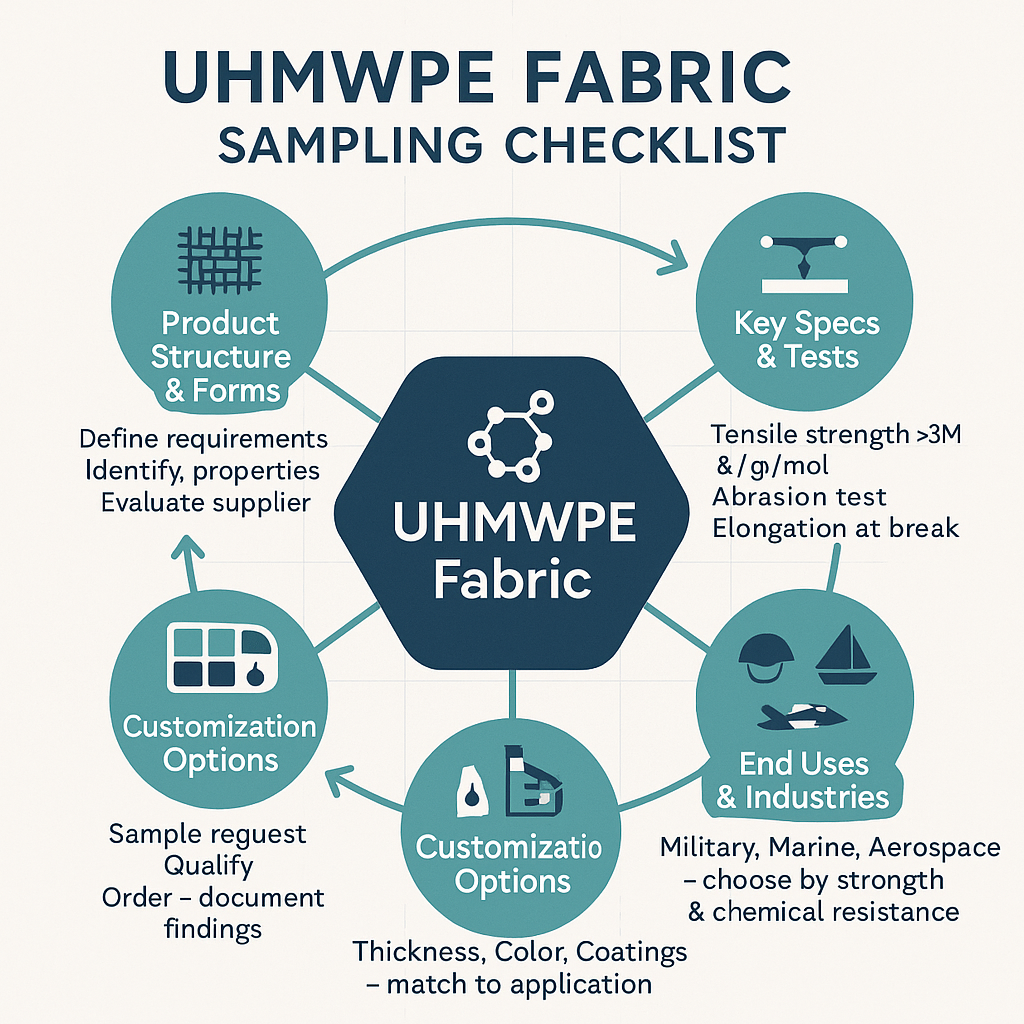
Product Structure and Available Forms
Understanding the structure and forms of UHMWPE (Ultra High Molecular Weight Polyethylene) fabric is crucial for making informed decisions in material selection. This high-performance textile is known for its exceptional strength-to-weight ratio, chemical resistance, and durability, making it suitable for a wide range of applications.
Key Technical Points
- Molecular Weight: UHMWPE fabrics typically have a molecular weight exceeding 3 million g/mol, contributing to their high tensile strength and abrasion resistance.
- Weave Types: Available in various weaves, including plain, twill, and satin, each offering different properties suited to specific applications.
- Coatings and Treatments: Fabrics can be treated with coatings to enhance properties such as UV resistance, water repellency, or flame retardancy.
Application and Sourcing Considerations
When sourcing UHMWPE fabric, it is essential to consider its intended application. Different industries may require specific properties, such as enhanced abrasion resistance for industrial applications or lightweight characteristics for military uses.
Buyer Checklist Before Sampling
- Define the application requirements clearly.
- Identify the necessary physical and chemical properties.
- Consider the environmental conditions the fabric will be exposed to.
- Evaluate the supplier’s expertise and experience in UHMWPE fabrics.
Key Specifications and Test Items
To ensure the selected UHMWPE fabric meets performance expectations, it is vital to understand the key specifications and test items that should be evaluated during the sampling process.
Key Technical Points
- Tensile Strength: Measure the fabric’s ability to withstand tension without breaking.
- Elongation at Break: Assess how much the fabric can stretch before failure.
- Abrasion Resistance: Test the fabric’s durability against wear and tear.
Application and Sourcing Considerations
Different applications may prioritize different specifications. For example, in the marine industry, abrasion resistance may be paramount, while in personal protective equipment, flexibility and comfort could be more critical.
Buyer Checklist Before Sampling
- Ensure specifications align with application needs.
- Request test results and certifications from suppliers.
- Consider the fabric’s performance under various environmental conditions.
Common End Uses and Industries
UHMWPE fabric is utilized across various industries due to its unique properties. Understanding these applications can help buyers make informed decisions.
Typical Industries Using This Material
- Military and Defense: Used in body armor and tactical gear.
- Marine: Employed in sails, ropes, and protective covers.
- Aerospace: Utilized in lightweight components and protective gear.
Why Engineers and Buyers Choose It
Engineers and buyers often select UHMWPE fabric due to its lightweight nature, high strength, and excellent chemical resistance, making it ideal for demanding applications.
When Another Material May Be Better
While UHMWPE has many advantages, there are scenarios where other materials may be more suitable. For example, if flexibility and softness are paramount, fabrics like nylon or polyester might be preferred.
Customization Options
Customization can enhance the performance of UHMWPE fabric for specific applications. Understanding available options is essential for buyers.
Key Technical Points
- Fabric Thickness: Customizable thickness can affect weight and durability.
- Color and Pattern: Custom colors and patterns can be specified for branding or aesthetic purposes.
- Coatings: Different coatings can be applied to enhance specific properties.
Application and Sourcing Considerations
Customization should align with the intended application. For instance, a thicker fabric may be required for high-abrasion environments, while a lighter option may be better for applications requiring mobility.
Buyer Checklist Before Sampling
- Identify necessary custom features based on application needs.
- Discuss customization options with potential suppliers.
- Evaluate the impact of customization on lead times and costs.
Sampling, Qualification, and Order Workflow
A structured approach to sampling and qualification is essential to ensure the selected UHMWPE fabric meets all requirements.
Key Technical Points
- Sampling Process: Establish a clear process for requesting and evaluating samples.
- Qualification Criteria: Define criteria for evaluating samples based on performance and specifications.
- Order Workflow: Develop a streamlined workflow for placing orders once samples are approved.
Application and Sourcing Considerations
Consider the timeline for sampling and qualification, as this can impact project schedules. Ensure that the workflow accommodates any necessary adjustments based on sample performance.
Buyer Checklist Before Sampling
- Establish a timeline for the sampling and qualification process.
- Communicate clearly with suppliers about expectations and requirements.
- Document findings and decisions throughout the sampling process.
How to Compare Offers from Different Suppliers
When evaluating offers from various UHMWPE fabric suppliers, a systematic approach is essential for making informed decisions.
Key Technical Points
- Specifications Comparison: Ensure that the specifications offered by different suppliers align with your requirements.
- Quality Assurance: Assess the quality assurance processes each supplier employs.
- Lead Times: Compare lead times and their impact on your project timeline.
Application and Sourcing Considerations
Consider how each supplier’s offerings align with your specific application needs. Some suppliers may excel in certain areas, such as customization or rapid delivery, while others may focus on cost-effectiveness.
Buyer Checklist Before Sampling
- Compile a comparison matrix to evaluate supplier offers.
- Engage in discussions with suppliers to clarify any uncertainties.
- Consider long-term relationships and support when selecting a supplier.
Conclusion
In summary, a thorough UHMWPE fabric sampling checklist is essential for making informed decisions in material selection. By understanding the product structure, key specifications, common applications, customization options, and supplier evaluation criteria, decision-makers can navigate the complexities of sourcing high-performance textiles effectively. This structured approach not only aids in selecting the right material but also ensures that the chosen fabric meets the specific needs of the application, ultimately leading to successful project outcomes.