
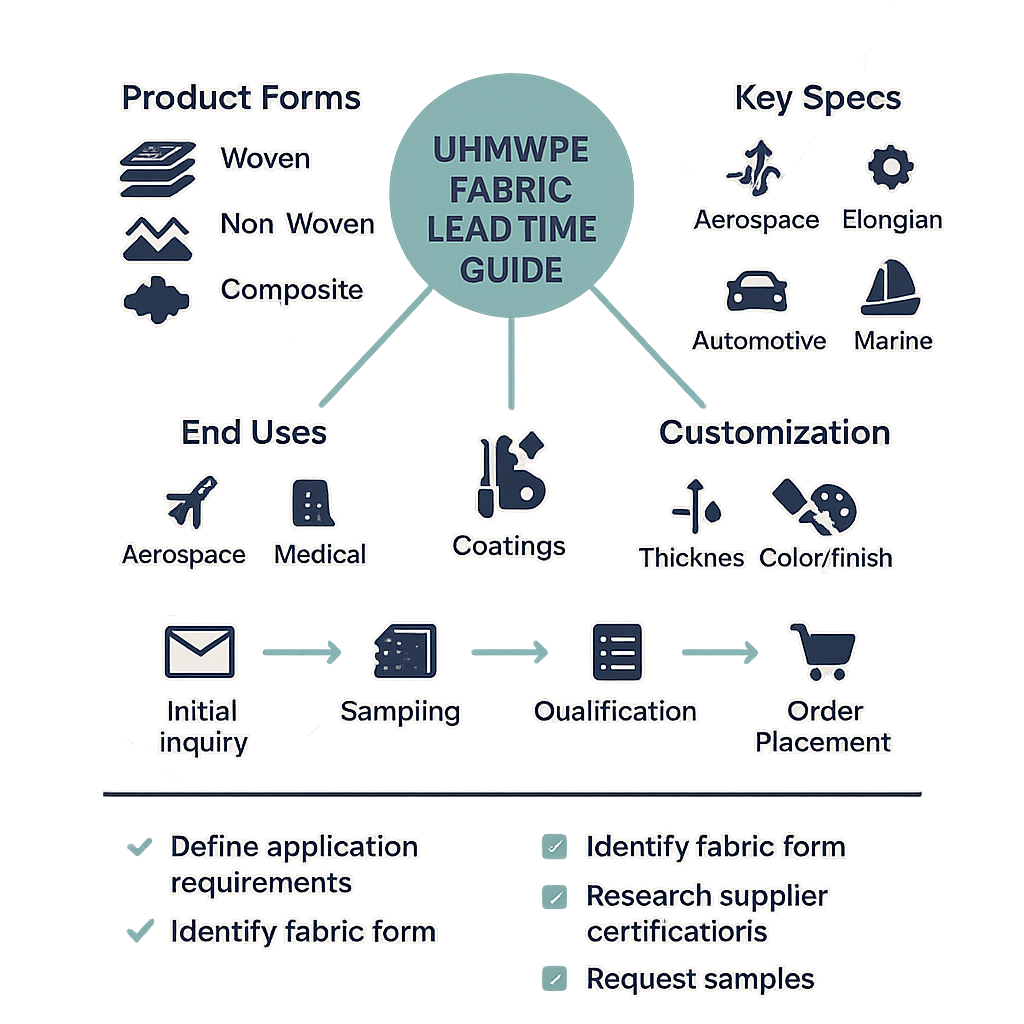
Product Structure and Available Forms
Understanding the structure and forms of UHMWPE (Ultra High Molecular Weight Polyethylene) fabric is essential for making informed decisions regarding its applications and sourcing. UHMWPE is characterized by its high molecular weight, which contributes to its exceptional strength, durability, and resistance to wear and abrasion.
Key Technical Points
UHMWPE fabric is available in various forms, including woven, non-woven, and composite structures. Each form offers distinct advantages depending on the intended application:
- Woven UHMWPE: Known for its high tensile strength and flexibility, making it suitable for applications requiring durability and lightweight properties.
- Non-woven UHMWPE: Offers excellent barrier properties and is often used in medical and protective applications.
- Composite UHMWPE: Combines UHMWPE with other materials to enhance specific properties, such as fire resistance or chemical stability.
Application and Sourcing Considerations
When considering UHMWPE fabric for a project, it is vital to evaluate the specific requirements of the application. Factors such as load-bearing capacity, environmental conditions, and exposure to chemicals can influence the choice of fabric type. Additionally, sourcing from a reliable UHMWPE fabric supplier can ensure quality and consistency in material properties.
Buyer Checklist Before Sampling
- Define the application requirements (e.g., strength, flexibility, chemical resistance).
- Identify the appropriate fabric form (woven, non-woven, composite).
- Research potential suppliers and their certifications.
- Request samples to evaluate performance in real-world conditions.
Key Specifications and Test Items
Understanding the key specifications and test items for UHMWPE fabric is crucial for ensuring it meets the necessary performance standards for your application.
Key Technical Points
Some critical specifications to consider include:
- Tensile Strength: Indicates the maximum stress the fabric can withstand without breaking.
- Elongation at Break: Measures the fabric’s ability to stretch before failure, which is important for applications requiring flexibility.
- Abrasion Resistance: Evaluates how well the fabric can withstand wear and tear, a vital consideration for high-friction applications.
Application and Sourcing Considerations
When assessing specifications, it is essential to align them with the specific demands of your application. For instance, high tensile strength may be critical for load-bearing applications, while abrasion resistance may be more relevant for protective gear.
Buyer Checklist Before Sampling
- Review the specifications relevant to your application.
- Ensure the supplier provides test results and certifications.
- Consider the environmental conditions the fabric will face.
Common End Uses and Industries
UHMWPE fabric is utilized across a variety of industries due to its unique properties. Understanding these applications can help in making informed sourcing decisions.
Typical Industries Using This Material
- Aerospace: Used for lightweight components and protective gear.
- Medical: Employed in surgical instruments and protective clothing.
- Automotive: Utilized in components requiring high strength-to-weight ratios.
- Marine: Common in applications requiring resistance to saltwater and UV exposure.
Why Engineers and Buyers Choose It
Engineers and buyers often select UHMWPE fabric for its combination of lightweight properties, high strength, and excellent abrasion resistance. These characteristics make it suitable for demanding applications where performance is critical.
When Another Material May Be Better
While UHMWPE offers numerous advantages, there are scenarios where other materials may be more appropriate. For example, if high-temperature resistance is required, aramid fibers may be a better choice. Understanding the specific requirements of your application is key to making the right material selection.
Customization Options
Customization can enhance the performance of UHMWPE fabric for specific applications. It is essential to understand the available options to meet unique project requirements.
Key Technical Points
Customization options may include:
- Thickness: Varying the thickness can impact strength and flexibility.
- Coatings: Adding coatings can improve chemical resistance or add other protective features.
- Color and Finish: Custom colors and finishes can be specified for branding or aesthetic purposes.
Application and Sourcing Considerations
When considering customization, it is crucial to evaluate how these changes will impact the fabric’s performance in your specific application. Collaborating with a knowledgeable UHMWPE fabric supplier can facilitate this process.
Buyer Checklist Before Sampling
- Identify specific customization needs based on application requirements.
- Discuss options with potential suppliers to understand feasibility.
- Request samples of customized fabrics to evaluate performance.
Sampling, Qualification, and Order Workflow
Establishing a clear workflow for sampling, qualification, and ordering can streamline the procurement process for UHMWPE fabric.
Key Technical Points
A well-defined workflow should include:
- Initial Inquiry: Gather information on available fabrics and specifications.
- Sampling: Request samples for testing in real-world conditions.
- Qualification: Evaluate samples against performance criteria.
- Order Placement: Finalize specifications and place an order with the selected supplier.
Application and Sourcing Considerations
Each step in the workflow should be aligned with the specific needs of your application. For instance, if rapid delivery is critical, ensure that the supplier can meet your timeline.
Buyer Checklist Before Sampling
- Define the timeline for sampling and ordering.
- Ensure all specifications are clearly communicated to the supplier.
- Establish criteria for evaluating samples.
How to Compare Offers from Different Suppliers
When sourcing UHMWPE fabric, comparing offers from different suppliers is essential for ensuring you make the best decision for your project.
Key Technical Points
Consider the following factors when comparing offers:
- Specifications: Ensure that the fabric meets your technical requirements.
- Lead Time: Evaluate the supplier’s ability to meet your timeline.
- Pricing: Compare costs while considering the quality of the fabric.
Application and Sourcing Considerations
Different suppliers may offer varying levels of service, quality, and lead times. Understanding these differences can help you make a more informed decision.
Buyer Checklist Before Sampling
- List your key criteria for comparison.
- Engage with suppliers to clarify any uncertainties.
- Document your findings to facilitate decision-making.
Conclusion
Understanding the lead time for UHMWPE fabric is crucial for businesses looking to leverage its unique properties in various applications. By considering the technical specifications, customization options, and sourcing strategies outlined in this guide, decision-makers can navigate the complexities of procurement more effectively. A thorough evaluation process, including a well-defined sampling and qualification workflow, will ultimately lead to better material selection and project outcomes.