
Product Structure and Available Forms
Understanding the structure of UHMWPE (Ultra High Molecular Weight Polyethylene) fabric is crucial for effective lamination. This material is known for its exceptional strength-to-weight ratio, chemical resistance, and low friction properties, making it ideal for various industrial applications.
Key Technical Points
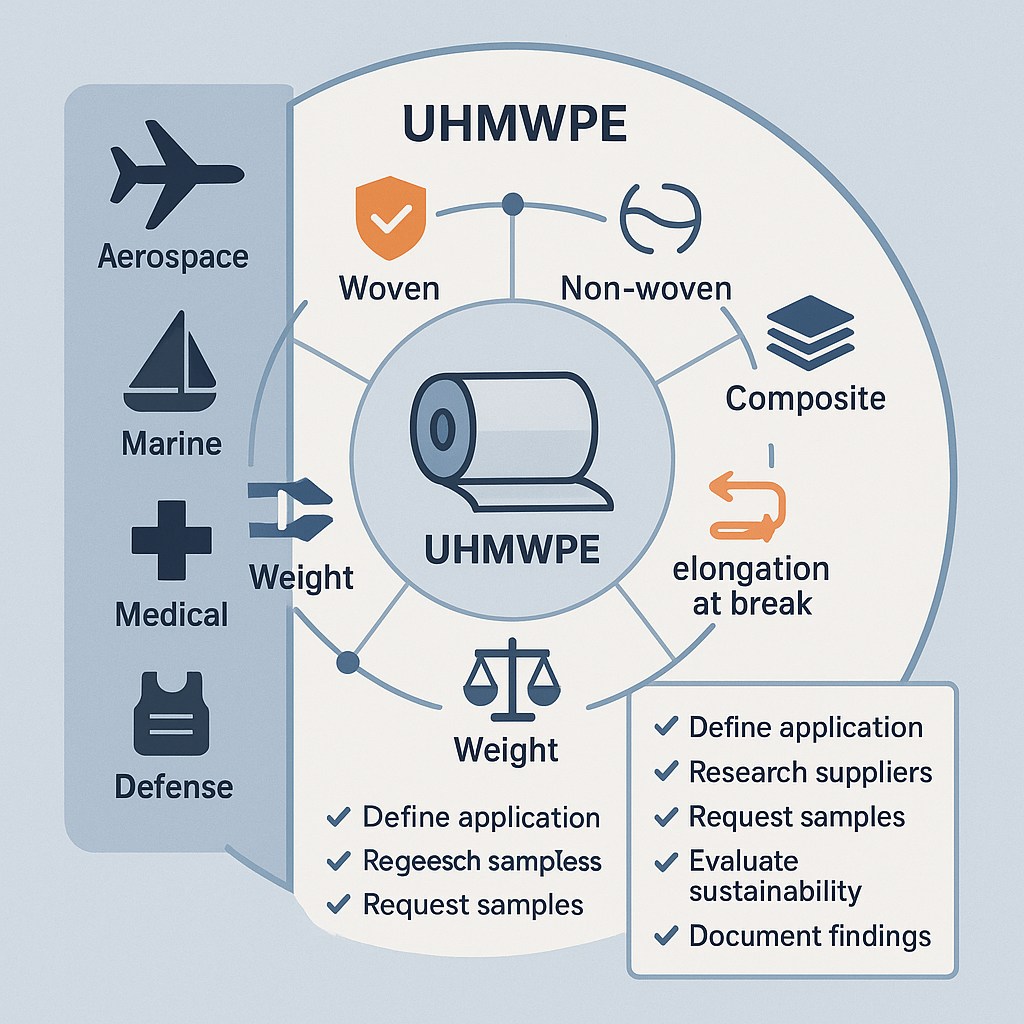
UHMWPE fabric typically comes in various forms, including woven, non-woven, and composite structures. Each form has unique characteristics:
- Woven UHMWPE: Offers high tensile strength and is often used in applications requiring durability.
- Non-woven UHMWPE: Provides flexibility and is suitable for applications where drapability is essential.
- Composite UHMWPE: Combines UHMWPE with other materials to enhance specific properties, such as thermal resistance or impact absorption.
Application and Sourcing Considerations
When considering UHMWPE fabric for lamination, it’s essential to evaluate the intended application. For example, in the automotive industry, the fabric may need to withstand high temperatures and mechanical stress. Sourcing from a reputable UHMWPE fabric supplier ensures that the material meets industry standards and specifications.
Buyer Checklist Before Sampling
- Define the specific application and performance requirements.
- Research potential suppliers and their certifications.
- Request samples to evaluate material properties and compatibility.
- Consider the environmental impact and sustainability of the sourcing process.
Key Specifications and Test Items
Understanding the specifications of UHMWPE fabric is vital for ensuring it meets the necessary performance criteria for your application.
Key Technical Points
Key specifications to consider include:
- Tensile Strength: Indicates the maximum stress the fabric can withstand while being stretched.
- Elongation at Break: Measures how much the fabric can stretch before breaking, which is critical for applications requiring flexibility.
- Weight: Impacts the overall performance and handling of the final product.
Application and Sourcing Considerations
Different applications may require specific tests to validate the fabric’s performance. For instance, ballistic applications necessitate rigorous testing for impact resistance. Ensure that your supplier can provide test results and certifications relevant to your industry.
Buyer Checklist Before Sampling
- Identify the key specifications relevant to your application.
- Request documentation of test results and certifications from suppliers.
- Evaluate the consistency of material properties across different batches.
Common End Uses and Industries
UHMWPE fabric is utilized across various industries due to its unique properties. Understanding these applications can help in making informed sourcing decisions.
Typical Industries Using This Material
- Aerospace: For lightweight and durable components.
- Marine: In applications such as sails and protective gear.
- Medical: For surgical and protective garments.
- Defense: In ballistic vests and protective gear.
Why Engineers and Buyers Choose It
Engineers and buyers often select UHMWPE fabric for its high performance and reliability. Its resistance to abrasion and chemicals makes it suitable for demanding environments, while its lightweight nature contributes to overall efficiency in design.
When Another Material May Be Better
While UHMWPE fabric has many advantages, there are scenarios where alternative materials may be more suitable. For example, if cost is a primary concern, other polymers may offer a more economical solution, albeit with trade-offs in performance.
Customization Options
Customization can enhance the performance of UHMWPE fabric for specific applications. Understanding the available options is essential for making the right choice.
Key Technical Points
Customization options may include:
- Coatings: Adding chemical or UV-resistant coatings can enhance durability.
- Thickness: Varying the thickness can impact strength and flexibility.
- Color and Finish: Custom colors and finishes can be important for branding or aesthetic purposes.
Application and Sourcing Considerations
When considering customization, it’s crucial to communicate your specific needs to your supplier. Ensure they have the capability to meet your requirements without compromising the fabric’s inherent properties.
Buyer Checklist Before Sampling
- Clearly define your customization needs.
- Discuss potential impacts on performance with your supplier.
- Evaluate the cost implications of customized solutions.
Sampling, Qualification, and Order Workflow
A well-structured sampling and qualification process is essential for ensuring that the UHMWPE fabric meets your specifications before placing a larger order.
Key Technical Points
During the sampling phase, consider the following:
- Request multiple samples to assess consistency across batches.
- Conduct preliminary tests to evaluate performance against your requirements.
- Engage in discussions with your supplier about any concerns or observations from the samples.
Application and Sourcing Considerations
Ensure that your supplier has a clear process for qualification and can provide documentation of compliance with relevant standards. This can save time and resources in the long run.
Buyer Checklist Before Sampling
- Establish clear criteria for evaluation during the sampling phase.
- Document all findings and observations for future reference.
- Maintain open communication with your supplier throughout the process.
How to Compare Offers from Different Suppliers
When evaluating offers from various UHMWPE fabric suppliers, a systematic approach can help ensure you make the best decision for your needs.
Key Technical Points
Consider the following factors when comparing offers:
- Material Specifications: Ensure that the specifications align with your requirements.
- Supplier Reputation: Research the supplier’s history and customer feedback.
- Lead Times: Assess the supplier’s ability to meet your timeline.
Application and Sourcing Considerations
Different suppliers may offer varying levels of service and support. Consider how these factors align with your operational needs and long-term goals.
Buyer Checklist Before Sampling
- Compile a comparison chart of specifications and offers.
- Evaluate the total cost of ownership, including shipping and handling.
- Consider the potential for long-term partnerships with suppliers.
Conclusion
Understanding the nuances of UHMWPE fabric lamination is essential for making informed decisions in material selection. By considering technical specifications, application fit, and supplier capabilities, you can ensure that your choice aligns with your project requirements. Utilize the provided checklists to guide your evaluation process, and remember that thorough research and communication with suppliers can lead to successful outcomes.