
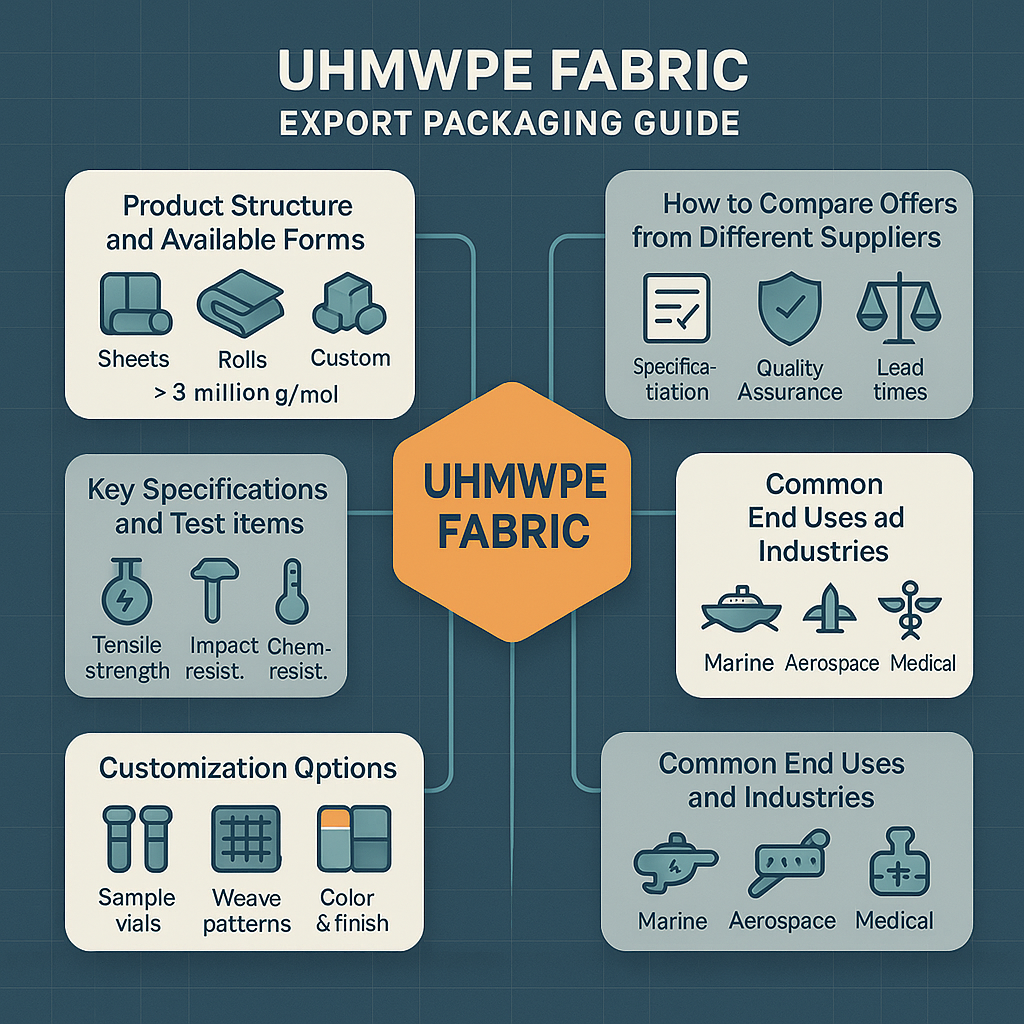
Product Structure and Available Forms
Understanding the structure and forms of UHMWPE (Ultra-High Molecular Weight Polyethylene) fabric is crucial for effective export packaging. This material is known for its exceptional strength-to-weight ratio, chemical resistance, and durability, making it a preferred choice in various industrial applications.
Key Technical Points
- Molecular Weight: UHMWPE typically has a molecular weight exceeding 3 million g/mol, contributing to its superior mechanical properties.
- Fabric Forms: Available in sheets, rolls, and custom shapes, UHMWPE fabric can be tailored to meet specific application needs.
- Surface Treatments: Various treatments can enhance properties such as UV resistance and anti-static characteristics.
Application and Sourcing Considerations
When sourcing UHMWPE fabric, consider the specific application requirements. For instance, the thickness and weave pattern can significantly influence performance in end-use scenarios.
Buyer Checklist Before Sampling
- Define the application requirements clearly.
- Evaluate the supplier’s capabilities and certifications.
- Request samples to assess material properties and performance.
Key Specifications and Test Items
To ensure that UHMWPE fabric meets the necessary standards for export, it is essential to understand the key specifications and test items that should be evaluated.
Key Technical Points
- Tensile Strength: High tensile strength is crucial for applications involving heavy loads.
- Impact Resistance: The ability to withstand sudden forces is vital in many industrial applications.
- Chemical Resistance: Evaluate resistance to specific chemicals based on the intended application.
Application and Sourcing Considerations
Different applications may require different specifications. For example, a fabric used in marine applications may need enhanced UV resistance, while one used in food processing may require compliance with specific health standards.
Buyer Checklist Before Sampling
- Identify the testing standards relevant to your industry.
- Ensure the supplier can provide test results for the required specifications.
- Consider the implications of any certifications on your sourcing strategy.
Common End Uses and Industries
UHMWPE fabric is utilized across various industries due to its unique properties. Understanding these applications can help buyers make informed decisions.
Typical Industries Using This Material
- Marine: Used for fenders, mooring lines, and protective gear.
- Aerospace: Applied in lightweight structural components.
- Medical: Employed in surgical instruments and prosthetics.
Why Engineers and Buyers Choose It
Engineers often select UHMWPE fabric for its high performance under extreme conditions. Its lightweight nature combined with high strength makes it suitable for applications where weight savings are critical.
When Another Material May Be Better
While UHMWPE has many advantages, there are scenarios where alternatives may be more suitable. For example, if cost is a primary concern, other materials like polyester or nylon may provide adequate performance at a lower price point.
Customization Options
Customization can significantly enhance the performance of UHMWPE fabric for specific applications. Understanding available options is essential for buyers.
Key Technical Points
- Thickness Variations: Custom thickness can improve durability and performance.
- Weave Patterns: Different weaves can affect flexibility and strength.
- Color and Finish: Custom colors and finishes can be important for branding or functional purposes.
Application and Sourcing Considerations
When considering customization, evaluate how specific modifications will impact the performance and cost of the material. Engage with suppliers to understand the feasibility of your requirements.
Buyer Checklist Before Sampling
- Clearly define your customization needs.
- Discuss potential impacts on lead times and costs with suppliers.
- Request prototypes to assess the effectiveness of customizations.
Sampling, Qualification, and Order Workflow
A well-defined workflow for sampling and qualification can streamline the sourcing process for UHMWPE fabric.
Key Technical Points
- Sampling Strategy: Develop a strategy that includes multiple samples to assess variations in performance.
- Qualification Criteria: Establish clear criteria for evaluating samples based on application needs.
- Order Workflow: Create a structured workflow that includes timelines for sampling, evaluation, and ordering.
Application and Sourcing Considerations
Consider the implications of your sampling strategy on overall project timelines. Ensure that your workflow allows for adequate testing and evaluation before finalizing orders.
Buyer Checklist Before Sampling
- Define your sampling strategy and criteria for evaluation.
- Ensure that your workflow accommodates necessary testing timelines.
- Communicate clearly with suppliers about your expectations and requirements.
How to Compare Offers from Different Suppliers
When sourcing UHMWPE fabric, comparing offers from different suppliers can be challenging. A structured approach can help simplify this process.
Key Technical Points
- Specification Alignment: Ensure that the specifications offered align with your application needs.
- Quality Assurance: Evaluate the quality assurance processes of each supplier.
- Lead Times: Consider lead times and their impact on your project timelines.
Application and Sourcing Considerations
Different suppliers may offer varying levels of service and support. Assess how these factors align with your sourcing strategy and project needs.
Buyer Checklist Before Sampling
- Compare specifications and performance data from multiple suppliers.
- Evaluate the quality assurance practices of each supplier.
- Consider the overall value offered, not just the price.
Conclusion
Understanding the intricacies of UHMWPE fabric export packaging is essential for making informed sourcing decisions. By considering the technical specifications, application fit, and customization options, buyers can better navigate the complexities of this material. A structured approach to sampling and supplier comparison will further enhance decision-making. As you engage with suppliers, keep in mind the importance of aligning their offerings with your specific needs and project requirements.