
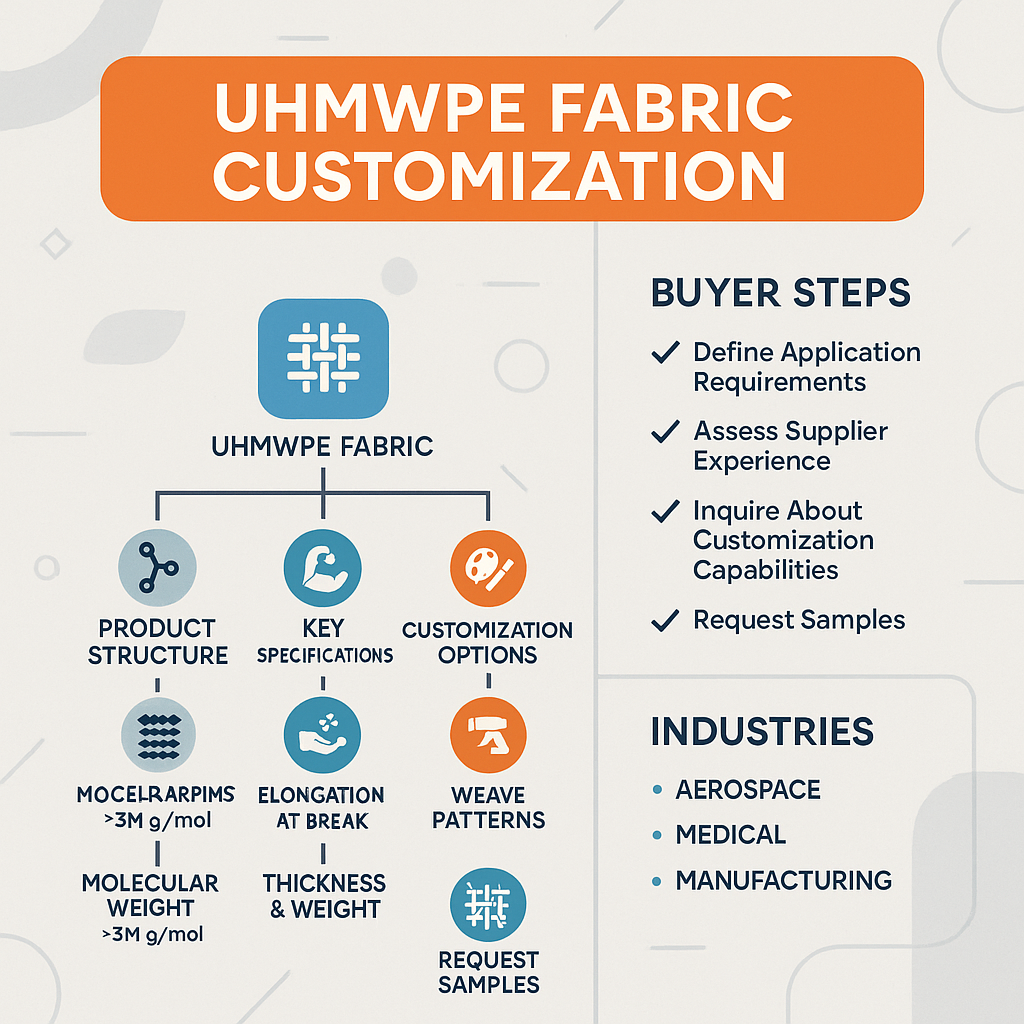
Product Structure and Available Forms
Understanding the structure and forms of UHMWPE (Ultra High Molecular Weight Polyethylene) fabric is crucial for making informed decisions about its customization options. This material is renowned for its exceptional strength-to-weight ratio, chemical resistance, and low friction properties, making it suitable for a wide range of industrial applications.
Key Technical Points
- Molecular Weight: UHMWPE typically has a molecular weight exceeding 3 million g/mol, contributing to its unique mechanical properties.
- Fabric Forms: Available in various forms, including woven, non-woven, and laminated structures, each offering distinct performance characteristics.
- Thickness and Weight: Customization can include varying thicknesses and weights, tailored to specific application requirements.
Application and Sourcing Considerations
When considering UHMWPE fabric customization options, it is essential to evaluate the intended application. For instance, the fabric’s resistance to abrasion and impact makes it ideal for protective gear, while its low friction properties are advantageous in conveyor systems. Sourcing considerations should include the supplier’s ability to meet specific customization needs, such as color, finish, and structural integrity.
Buyer Checklist Before Sampling
- Define the specific application and performance requirements.
- Assess the supplier’s experience with UHMWPE fabric.
- Inquire about customization capabilities and lead times.
- Request samples to evaluate material properties and performance.
Key Specifications and Test Items
Understanding the key specifications and test items for UHMWPE fabric is vital for ensuring it meets the necessary performance standards for your application.
Key Technical Points
- Tensile Strength: A critical measurement that indicates the fabric’s ability to withstand pulling forces.
- Elongation at Break: This property measures how much the fabric can stretch before breaking, which is essential for applications requiring flexibility.
- Impact Resistance: Testing for this property ensures the fabric can endure sudden forces without failing.
Application and Sourcing Considerations
Different applications may require specific tests to ensure the UHMWPE fabric meets industry standards. For example, fabrics used in medical applications may need to pass stringent biocompatibility tests. Sourcing from a reputable UHMWPE fabric supplier who understands these requirements is essential.
Buyer Checklist Before Sampling
- Identify the relevant specifications for your application.
- Confirm the supplier’s testing capabilities and certifications.
- Request documentation of test results for similar applications.
Common End Uses and Industries
UHMWPE fabric is utilized across various industries due to its versatile properties. Understanding the common end uses can help in selecting the right customization options.
Typical Industries Using This Material
- Aerospace: Used in lightweight components and protective gear.
- Medical: Employed in surgical instruments and protective clothing.
- Manufacturing: Commonly found in conveyor belts and wear pads.
Why Engineers and Buyers Choose It
Engineers and buyers often select UHMWPE fabric for its superior performance characteristics, including high abrasion resistance, low moisture absorption, and excellent chemical resistance. These properties make it a reliable choice for demanding applications.
When Another Material May Be Better
While UHMWPE fabric offers numerous advantages, there are scenarios where alternative materials may be more suitable. For example, in applications requiring high-temperature resistance, materials like aramid fibers may outperform UHMWPE.
Customization Options
Customization options for UHMWPE fabric can significantly influence its performance in specific applications. Understanding these options is essential for making informed decisions.
Key Technical Points
- Color and Finish: Custom colors and finishes can enhance visibility and aesthetic appeal.
- Coatings: Various coatings can be applied to enhance properties such as water resistance or UV stability.
- Weave Patterns: Different weave patterns can affect the fabric’s strength and flexibility.
Application and Sourcing Considerations
When customizing UHMWPE fabric, consider how each option aligns with your application’s requirements. For example, a specific coating may be necessary for outdoor applications to ensure UV resistance. Collaborating with a knowledgeable supplier can help navigate these options effectively.
Buyer Checklist Before Sampling
- Determine the specific customization needs based on application requirements.
- Evaluate the supplier’s ability to meet these customization requests.
- Request samples of customized options to assess performance.
Sampling, Qualification, and Order Workflow
The process of sampling, qualification, and ordering UHMWPE fabric is critical for ensuring that the selected material meets all necessary specifications.
Key Technical Points
- Sampling Process: Ensure that samples accurately represent the final product to avoid discrepancies.
- Qualification Testing: Conduct necessary tests to confirm that the material meets performance requirements.
- Order Workflow: Establish a clear workflow for placing orders, including timelines and documentation.
Application and Sourcing Considerations
Understanding the sampling and qualification process can help streamline the workflow. It is essential to communicate clearly with the supplier about expectations and requirements to avoid delays.
Buyer Checklist Before Sampling
- Outline the sampling requirements and performance criteria.
- Confirm the supplier’s timeline for sampling and qualification.
- Review the order process and documentation requirements.
How to Compare Offers from Different Suppliers
When evaluating offers from various UHMWPE fabric suppliers, a systematic approach can help ensure you make the best choice.
Key Technical Points
- Specifications Comparison: Ensure that the specifications offered by different suppliers align with your requirements.
- Customization Capabilities: Assess each supplier’s ability to meet your customization needs.
- Testing and Certifications: Verify the testing protocols and certifications each supplier can provide.
Application and Sourcing Considerations
Comparing offers should not only focus on price but also on the overall value provided by each supplier. This includes evaluating their expertise, responsiveness, and ability to support your specific application needs.
Buyer Checklist Before Sampling
- Gather offers from multiple suppliers for comparison.
- Evaluate each offer against your defined criteria.
- Consider long-term relationships and support capabilities.
Conclusion
Understanding UHMWPE fabric customization options is essential for making informed decisions in various industrial applications. By considering the material’s specifications, common uses, and available customization options, decision-makers can effectively navigate the complexities of sourcing and application fit. A thorough evaluation of suppliers and their capabilities will further enhance the likelihood of selecting the right material for your needs. Ultimately, a well-informed approach will lead to better performance and satisfaction in your applications.