
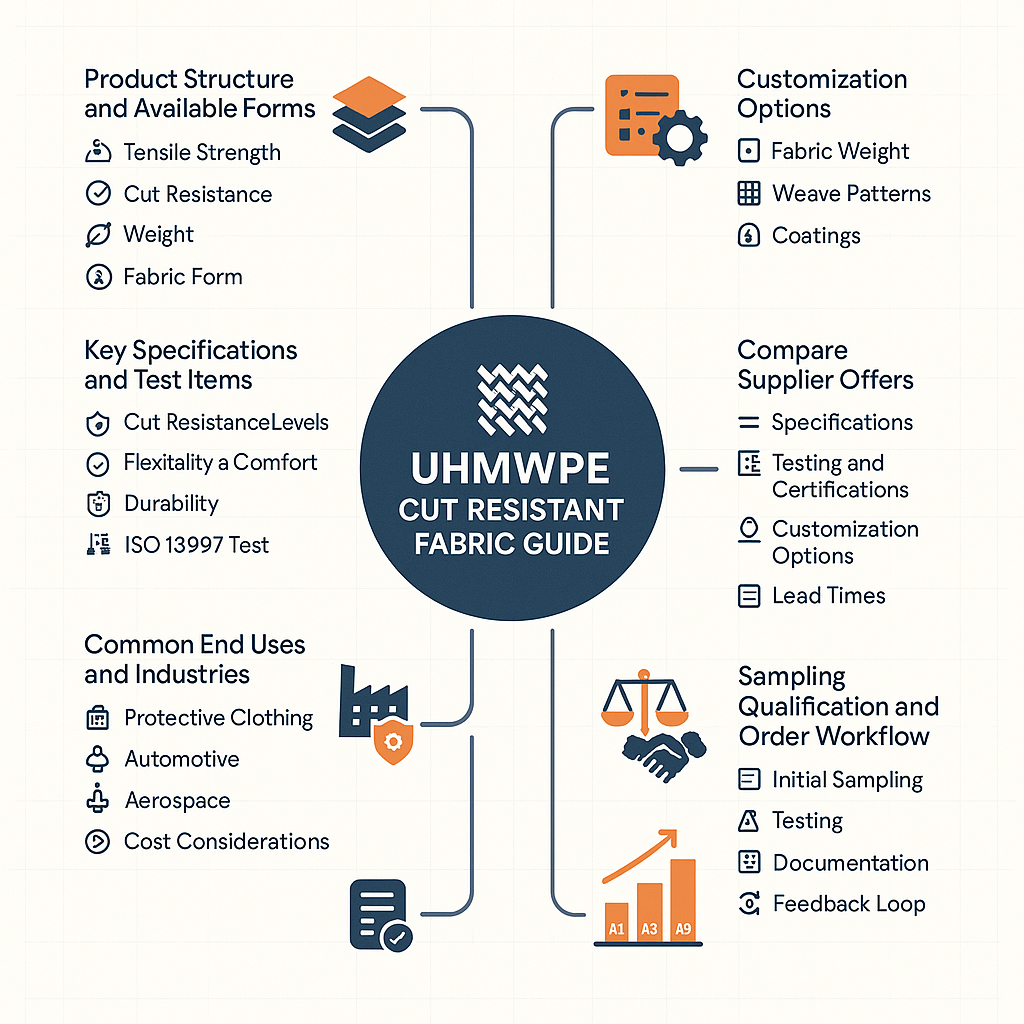
Product Structure and Available Forms
Understanding the structure and forms of UHMWPE cut resistant fabric is crucial for making informed decisions in material selection. This fabric is known for its exceptional strength-to-weight ratio and resistance to abrasion, making it a preferred choice in various applications.
Key Technical Points
UHMWPE (Ultra High Molecular Weight Polyethylene) cut resistant fabric is engineered through a process that aligns the polymer chains, resulting in a material that exhibits remarkable tensile strength and cut resistance. Key technical points to consider include:
- Tensile Strength: UHMWPE fabrics can withstand significant forces, making them suitable for high-stress environments.
- Cut Resistance: The fabric’s ability to resist cuts is measured using standardized tests, often expressed in terms of the ASTM cut resistance levels.
- Weight: UHMWPE is lightweight compared to other cut-resistant materials, which enhances comfort and usability in applications such as protective clothing.
Application and Sourcing Considerations
When sourcing UHMWPE cut resistant fabric, consider the specific application requirements. Different industries may have varying standards and needs:
- Industry Standards: Familiarize yourself with the relevant industry standards that apply to your application, such as EN 388 for protective clothing.
- Fabric Form: UHMWPE is available in various forms, including woven, non-woven, and laminated fabrics, each suited for different applications.
- Supplier Capabilities: Assess the capabilities of potential suppliers to ensure they can meet your specific requirements, including customizations and certifications.
Buyer Checklist Before Sampling
Before requesting samples, consider the following checklist to ensure you are prepared:
- Define the specific application and performance requirements.
- Identify the relevant standards and certifications needed for your industry.
- Research potential suppliers and their product offerings.
- Prepare questions regarding the sourcing process, lead times, and customization options.
Key Specifications and Test Items
Understanding the key specifications and test items for UHMWPE cut resistant fabric is essential for evaluating its suitability for specific applications.
Key Technical Points
Key specifications to consider include:
- Cut Resistance Levels: Fabrics are often tested for cut resistance using standardized methods such as the ISO 13997 test, which provides a clear indication of performance.
- Flexibility and Comfort: The fabric’s flexibility can impact user comfort, especially in applications requiring prolonged wear.
- Durability: Assess the fabric’s resistance to wear and tear, particularly in high-abrasion environments.
Application and Sourcing Considerations
When evaluating specifications, consider how they align with your application needs:
- End-Use Requirements: Different applications may require varying levels of cut resistance, so ensure the fabric meets the specific needs of your project.
- Environmental Factors: Consider how environmental conditions, such as exposure to chemicals or extreme temperatures, may affect the fabric’s performance.
- Supplier Testing Capabilities: Ensure that suppliers conduct rigorous testing to validate their fabric’s specifications.
Buyer Checklist Before Sampling
Before moving forward with sampling, ensure you have addressed the following:
- Confirm the cut resistance level meets your application requirements.
- Verify that the supplier has conducted appropriate testing and can provide documentation.
- Assess the fabric’s comfort and flexibility for the intended use.
Common End Uses and Industries
UHMWPE cut resistant fabric is utilized across various industries due to its unique properties. Understanding these applications can help in making informed sourcing decisions.
Typical Industries Using This Material
Industries that commonly use UHMWPE cut resistant fabric include:
- Protective Clothing: Used in the manufacturing of gloves, vests, and other protective gear.
- Automotive: Applied in components that require high durability and cut resistance.
- Aerospace: Utilized in applications where weight and strength are critical.
Why Engineers and Buyers Choose It
Engineers and buyers often select UHMWPE cut resistant fabric for several reasons:
- Performance: Its superior cut resistance and durability make it ideal for demanding applications.
- Weight Savings: The lightweight nature of UHMWPE enhances comfort without compromising safety.
- Versatility: The fabric can be tailored for various applications, making it a flexible choice for many industries.
When Another Material May Be Better
While UHMWPE offers many advantages, there are scenarios where other materials may be more suitable:
- Cost Considerations: In applications where budget constraints are significant, alternative materials may provide adequate protection at a lower cost.
- Specific Environmental Conditions: If exposure to extreme temperatures or chemicals is a concern, other materials may offer better performance.
- Weight Requirements: In applications where weight is less of a concern, heavier materials may provide additional benefits.
Customization Options
Customization can enhance the performance of UHMWPE cut resistant fabric for specific applications. Understanding the available options is essential for making informed decisions.
Key Technical Points
Customization options may include:
- Fabric Weight: Adjusting the weight can impact cut resistance and flexibility.
- Weave Patterns: Different weave patterns can enhance specific properties, such as breathability or stretch.
- Coatings: Applying coatings can improve resistance to chemicals or moisture.
Application and Sourcing Considerations
When considering customization, evaluate the following:
- Performance Requirements: Ensure that any customization aligns with the performance needs of your application.
- Supplier Capabilities: Confirm that your supplier can accommodate your customization requests.
- Lead Times: Understand how customization may affect lead times and sourcing timelines.
Buyer Checklist Before Sampling
Before requesting customized samples, consider the following:
- Define your specific customization needs clearly.
- Discuss potential impacts on performance with your supplier.
- Ensure that any changes align with industry standards.
Sampling, Qualification, and Order Workflow
Understanding the sampling and qualification process is vital for ensuring that the selected UHMWPE cut resistant fabric meets your requirements.
Key Technical Points
The sampling process should involve:
- Initial Sampling: Request samples that reflect the specifications and customization options you are considering.
- Testing: Conduct thorough testing to validate performance against your application requirements.
- Documentation: Ensure that all test results and certifications are documented for future reference.
Application and Sourcing Considerations
During the qualification phase, consider the following:
- Supplier Communication: Maintain open communication with your supplier regarding any concerns or questions during the qualification process.
- Performance Validation: Validate that the fabric performs as expected in real-world conditions.
- Feedback Loop: Establish a feedback loop to address any issues that may arise during testing.
Buyer Checklist Before Sampling
Before proceeding with sampling and qualification, ensure you have:
- Defined your testing criteria and performance expectations.
- Communicated your needs clearly to the supplier.
- Documented all requirements for future reference.
How to Compare Offers from Different Suppliers
When evaluating offers from various suppliers, a systematic approach can help ensure you select the best option for your needs.
Key Technical Points
Consider the following when comparing offers:
- Specifications: Ensure that the specifications provided by each supplier align with your application requirements.
- Testing and Certifications: Verify that suppliers have conducted appropriate testing and can provide relevant certifications.
- Customization Options: Assess the flexibility of each supplier in accommodating customization requests.
Application and Sourcing Considerations
When comparing offers, keep in mind:
- Supplier Reputation: Research the reputation of each supplier in the industry.
- Lead Times: Consider how lead times may impact your project timelines.
- Support and Communication: Evaluate the level of support and communication offered by each supplier.
Buyer Checklist Before Sampling
Before finalizing your decision, ensure you have:
- Documented all specifications and requirements for comparison.
- Engaged with suppliers to clarify any uncertainties.
- Considered the long-term relationship potential with each supplier.
Conclusion
In summary, understanding the specifications and applications of UHMWPE cut resistant fabric is essential for making informed sourcing decisions. By considering technical points, application needs, and supplier capabilities, you can navigate the complexities of material selection effectively. A thoughtful approach to sampling, qualification, and comparison will further enhance your decision-making process, ensuring that you choose the right fabric for your specific requirements.