
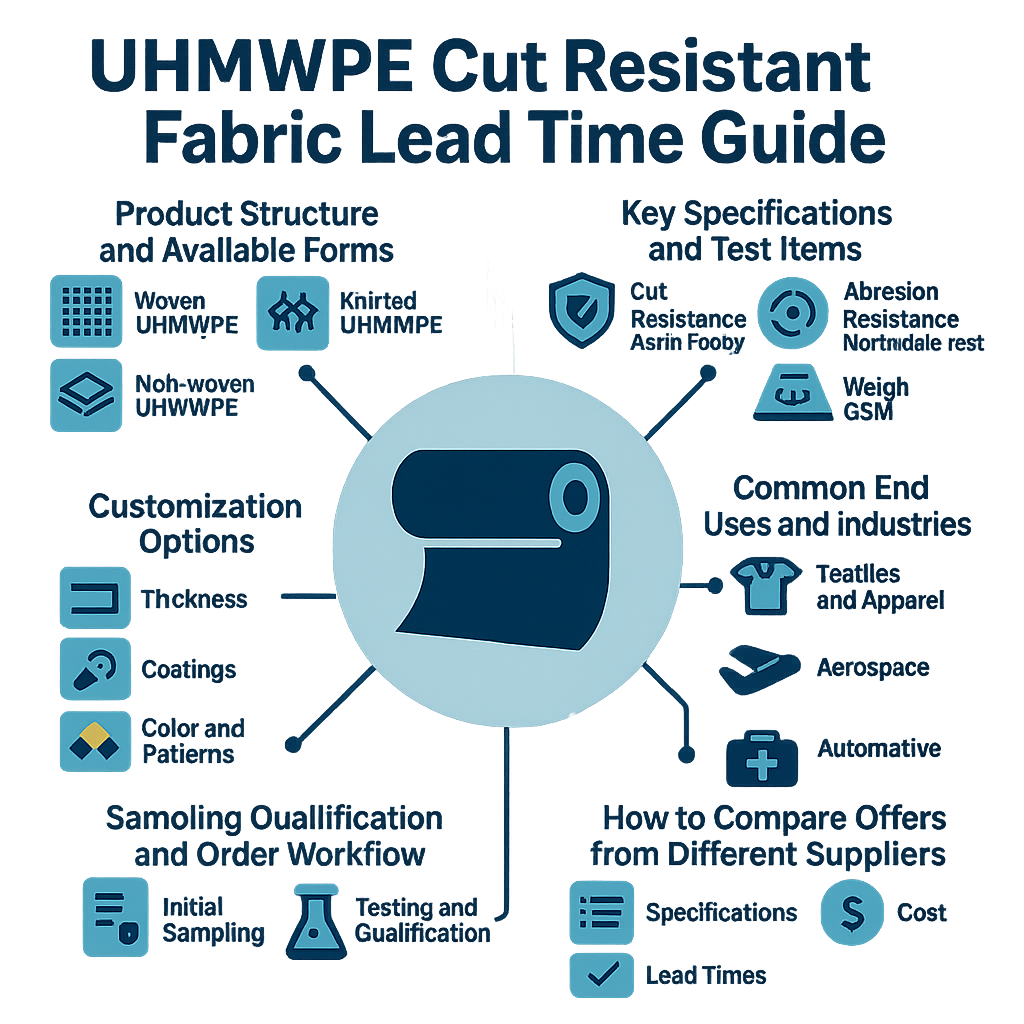
Product Structure and Available Forms
Understanding the structure and available forms of UHMWPE (Ultra High Molecular Weight Polyethylene) cut resistant fabric is crucial for making informed decisions regarding its applications and sourcing. This material is known for its exceptional strength-to-weight ratio and outstanding cut resistance, making it a preferred choice in various industries.
Key Technical Points
UHMWPE cut resistant fabric is characterized by its high molecular weight, which contributes to its durability and resistance to abrasion. The fabric is typically available in several forms, including woven, knitted, and non-woven structures. Each form has unique properties that can affect performance in specific applications.
- Woven UHMWPE: Offers excellent tensile strength and is often used in protective clothing.
- Knitted UHMWPE: Provides flexibility and comfort, making it suitable for applications requiring mobility.
- Non-woven UHMWPE: Typically used for applications where a softer feel is required, such as in liners or padding.
Application and Sourcing Considerations
When considering UHMWPE cut resistant fabric, it’s essential to evaluate the specific application requirements. Factors such as environmental conditions, exposure to chemicals, and the level of cut resistance needed will influence the choice of fabric type. Additionally, sourcing considerations, including lead times and supplier reliability, play a critical role in ensuring timely project completion.
Buyer Checklist Before Sampling
- Define the specific application and performance requirements.
- Evaluate potential suppliers based on their reliability and lead times.
- Consider the fabric form that best suits your application needs.
- Request samples to assess the material’s performance in real-world conditions.
Key Specifications and Test Items
Understanding the key specifications and test items for UHMWPE cut resistant fabric is vital for ensuring it meets the necessary performance standards. Various tests can assess the fabric’s cut resistance, abrasion resistance, and overall durability.
Key Technical Points
Common specifications include:
- Cut Resistance: Measured using standardized tests such as the ASTM F2992.
- Abrasion Resistance: Evaluated through tests like the Martindale abrasion test.
- Weight: Typically measured in grams per square meter (GSM), affecting the fabric’s application suitability.
Application and Sourcing Considerations
When evaluating specifications, consider how each property aligns with your application needs. For instance, higher cut resistance may be necessary for industrial applications, while lighter weights may be preferred in consumer products.
Buyer Checklist Before Sampling
- Identify the key specifications relevant to your application.
- Ensure that the supplier can provide test results and certifications.
- Assess the trade-offs between weight, cut resistance, and flexibility.
Common End Uses and Industries
UHMWPE cut resistant fabric is utilized across various industries due to its unique properties. Understanding the common end uses can help in identifying the right applications for your needs.
Typical Industries Using This Material
- Textiles and Apparel: Used in protective clothing for workers in hazardous environments.
- Aerospace: Employed in lightweight components that require high strength.
- Automotive: Utilized in protective gear and components that demand durability.
- Medical: Used in surgical gloves and other protective equipment.
Why Engineers and Buyers Choose It
Engineers and buyers often select UHMWPE cut resistant fabric for its combination of lightweight properties and high durability. Its resistance to cuts and abrasions makes it ideal for applications where safety and performance are paramount.
When Another Material May Be Better
While UHMWPE offers numerous advantages, there are scenarios where alternative materials may be more suitable. For instance, if flexibility and comfort are prioritized over cut resistance, materials like aramid fibers may be a better choice. Understanding the specific requirements of your application will guide material selection.
Customization Options
Customization can enhance the performance of UHMWPE cut resistant fabric for specific applications. Various options are available to tailor the material to meet unique needs.
Key Technical Points
Customization options may include:
- Thickness: Adjusting the thickness can influence cut resistance and flexibility.
- Coatings: Applying coatings can enhance chemical resistance or add waterproof properties.
- Color and Patterns: Custom colors or patterns may be required for branding or aesthetic purposes.
Application and Sourcing Considerations
When considering customization, evaluate how these options align with your application needs. Custom thickness or coatings may be essential for specific environments, while aesthetic considerations may be secondary.
Buyer Checklist Before Sampling
- Identify the necessary customization options for your application.
- Discuss potential lead times for customized orders with suppliers.
- Assess the impact of customization on performance and cost.
Sampling, Qualification, and Order Workflow
A clear understanding of the sampling, qualification, and order workflow is essential for ensuring that the UHMWPE cut resistant fabric meets your requirements.
Key Technical Points
The workflow typically includes:
- Initial Sampling: Request samples to evaluate material properties.
- Testing and Qualification: Conduct tests to ensure the fabric meets specifications.
- Order Placement: Finalize the order based on successful qualification.
Application and Sourcing Considerations
Be mindful of lead times associated with each stage of the workflow. Understanding the timeline for sampling and qualification can help in planning your project effectively.
Buyer Checklist Before Sampling
- Clarify the sampling process and timeline with suppliers.
- Ensure that testing aligns with your application requirements.
- Confirm order lead times based on your project schedule.
How to Compare Offers from Different Suppliers
When sourcing UHMWPE cut resistant fabric, comparing offers from different suppliers is crucial for making informed decisions. A structured approach can help in evaluating options effectively.
Key Technical Points
Consider the following when comparing offers:
- Specifications: Ensure that the fabric meets your technical requirements.
- Lead Times: Evaluate the supplier’s ability to meet your timeline.
- Cost: Compare pricing while considering the value of quality and performance.
Application and Sourcing Considerations
Assess how each supplier’s offerings align with your application needs. A lower price may not always equate to better value if the material does not meet performance standards.
Buyer Checklist Before Sampling
- Compile a list of specifications and requirements for comparison.
- Evaluate supplier reliability based on past performance and reviews.
- Consider the total cost of ownership, including potential testing and qualification expenses.
Conclusion
In summary, understanding the lead time considerations for UHMWPE cut resistant fabric involves a thorough evaluation of product structure, specifications, applications, and supplier capabilities. By following the outlined checklists and decision frameworks, buyers can make informed choices that align with their specific needs. This approach not only aids in selecting the right material but also ensures that projects are completed on time and within budget.