
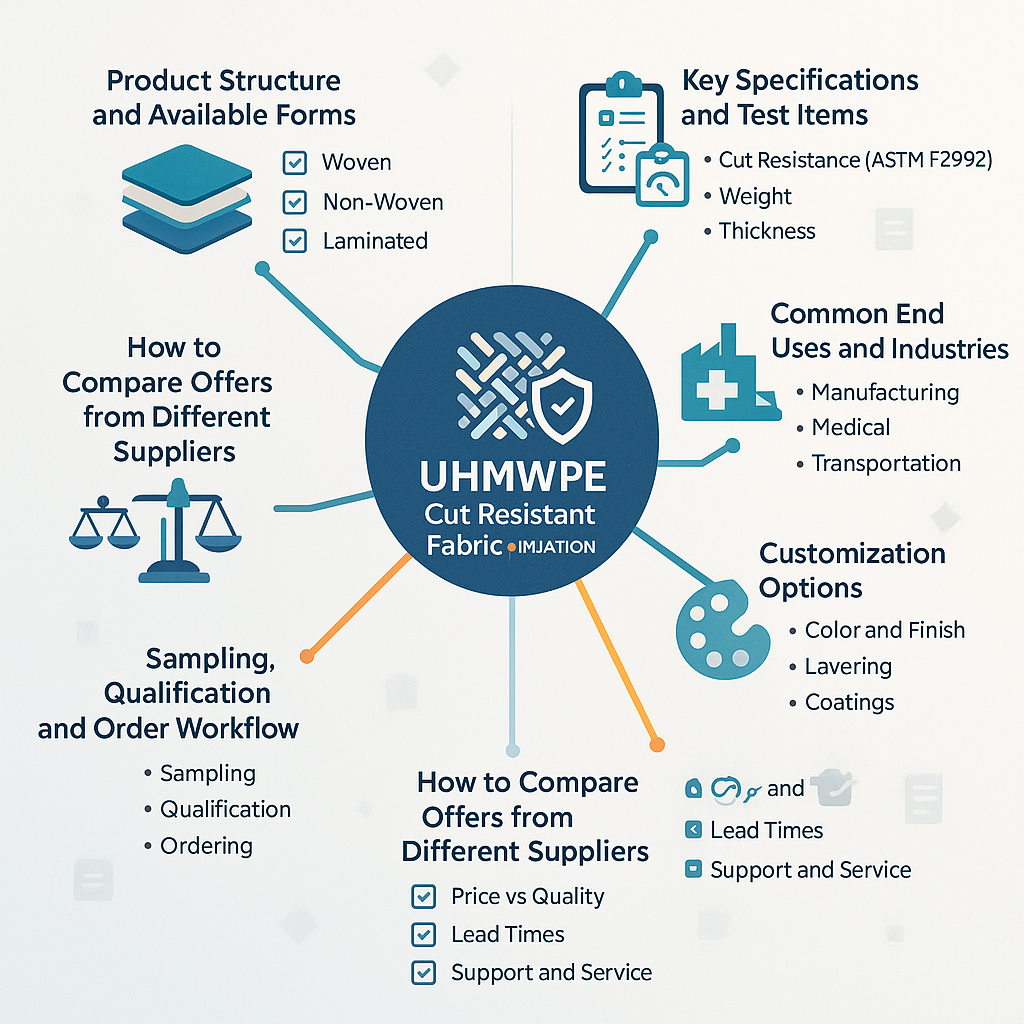
Product Structure and Available Forms
Understanding the structure and forms of UHMWPE (Ultra High Molecular Weight Polyethylene) cut resistant fabric is crucial for selecting the right material for specific applications. This fabric is known for its exceptional strength-to-weight ratio, high abrasion resistance, and low friction properties, making it a popular choice in various industries.
Key Technical Points
UHMWPE cut resistant fabric is typically available in several forms, including woven, non-woven, and laminated structures. Each form has distinct characteristics that influence its performance:
- Woven UHMWPE: Offers excellent tensile strength and flexibility, making it suitable for applications requiring durability and comfort.
- Non-Woven UHMWPE: Provides a lightweight option with good cut resistance, often used in applications where breathability is essential.
- Laminated UHMWPE: Combines multiple layers of fabric, enhancing cut resistance and providing additional benefits such as waterproofing or chemical resistance.
Application and Sourcing Considerations
When sourcing UHMWPE cut resistant fabric, consider the specific requirements of your application. Factors such as environmental conditions, required durability, and comfort levels will influence your choice. Additionally, sourcing from a reliable supplier ensures that you receive high-quality materials that meet industry standards.
Buyer Checklist Before Sampling
- Define the specific application and performance requirements.
- Research potential suppliers and their product offerings.
- Request samples to evaluate fabric properties and performance.
- Assess the supplier’s certifications and quality assurance processes.
Key Specifications and Test Items
Understanding the key specifications and test items for UHMWPE cut resistant fabric is essential for ensuring that the material meets your needs.
Key Technical Points
Important specifications to consider include:
- Cut Resistance: Measured using standardized tests such as ASTM F2992, which evaluates the fabric’s ability to withstand cutting forces.
- Weight: The weight of the fabric can affect its comfort and usability in various applications.
- Thickness: Thicker fabrics generally offer better cut resistance but may sacrifice flexibility.
Application and Sourcing Considerations
When evaluating specifications, consider how they align with your application requirements. For instance, a higher cut resistance may be necessary for protective gear, while lighter fabrics may be preferable for wearables.
Buyer Checklist Before Sampling
- Identify the key specifications that align with your application.
- Review test results from potential suppliers.
- Ensure that the fabric meets relevant industry standards.
- Consider the long-term performance of the fabric in your application.
Common End Uses and Industries
UHMWPE cut resistant fabric is utilized across various industries due to its unique properties. Understanding the common applications can help in making informed decisions.
Typical Industries Using This Material
- Manufacturing: Used in protective clothing and gear for workers handling sharp materials.
- Medical: Employed in surgical gowns and gloves where cut resistance is crucial.
- Transportation: Applied in protective covers for vehicles and equipment.
Why Engineers and Buyers Choose It
Engineers and buyers often select UHMWPE cut resistant fabric for its combination of lightweight properties, high durability, and excellent cut resistance. These attributes make it an ideal choice for applications where safety and performance are paramount.
When Another Material May Be Better
While UHMWPE is highly effective, there are scenarios where alternative materials may be more suitable. For instance, if flexibility and breathability are prioritized over cut resistance, other fabrics such as aramid may be a better fit.
Customization Options
Customization can enhance the performance of UHMWPE cut resistant fabric for specific applications. Understanding available options is essential for optimizing material selection.
Key Technical Points
Customization options may include:
- Color and Finish: Fabrics can be dyed or finished to meet aesthetic or functional requirements.
- Layering: Additional layers can be added to enhance specific properties such as waterproofing or thermal insulation.
- Coatings: Specialized coatings can improve resistance to chemicals or enhance durability.
Application and Sourcing Considerations
When considering customization, evaluate how these options align with your application needs. Customization may involve additional costs and lead times, so it’s important to discuss these factors with your supplier.
Buyer Checklist Before Sampling
- Determine the necessary customizations for your application.
- Discuss customization options with potential suppliers.
- Request samples to evaluate the impact of customizations on performance.
Sampling, Qualification, and Order Workflow
Establishing a clear workflow for sampling, qualification, and ordering is crucial for ensuring that the selected UHMWPE cut resistant fabric meets your requirements.
Key Technical Points
A structured workflow can help streamline the process:
- Sampling: Request samples from multiple suppliers to compare performance and quality.
- Qualification: Evaluate samples against your specifications and application needs.
- Ordering: Once qualified, place orders with clear specifications and delivery timelines.
Application and Sourcing Considerations
Consider the lead times and logistics involved in sourcing UHMWPE cut resistant fabric. Ensure that your supplier can meet your timelines and quality requirements.
Buyer Checklist Before Sampling
- Establish a clear timeline for sampling and qualification.
- Communicate your specifications and requirements to suppliers.
- Document the evaluation process for future reference.
How to Compare Offers from Different Suppliers
Comparing offers from different suppliers is essential for making informed purchasing decisions. Understanding the nuances of each offer can help you select the best option for your needs.
Key Technical Points
When comparing offers, consider the following:
- Price vs. Quality: Assess whether the price reflects the quality and performance of the fabric.
- Lead Times: Evaluate the supplier’s ability to meet your delivery timelines.
- Support and Service: Consider the level of customer support and service provided by the supplier.
Application and Sourcing Considerations
Each supplier may have unique strengths and weaknesses. Understanding these can help you make a more informed decision based on your specific needs.
Buyer Checklist Before Sampling
- Gather offers from multiple suppliers for comparison.
- Evaluate each offer based on key specifications and requirements.
- Consult with your team to discuss preferences and priorities.
Conclusion
In summary, understanding the intricacies of UHMWPE cut resistant fabric and its lamination process is essential for making informed decisions in sourcing and application. By considering the technical specifications, customization options, and supplier comparisons, you can ensure that you select the right material for your needs. A thorough evaluation process, including sampling and qualification, will further enhance your decision-making framework.
As you navigate the complexities of material selection, keep in mind the importance of aligning your choices with application requirements and performance expectations. This approach will not only optimize your material use but also contribute to the overall success of your projects.