
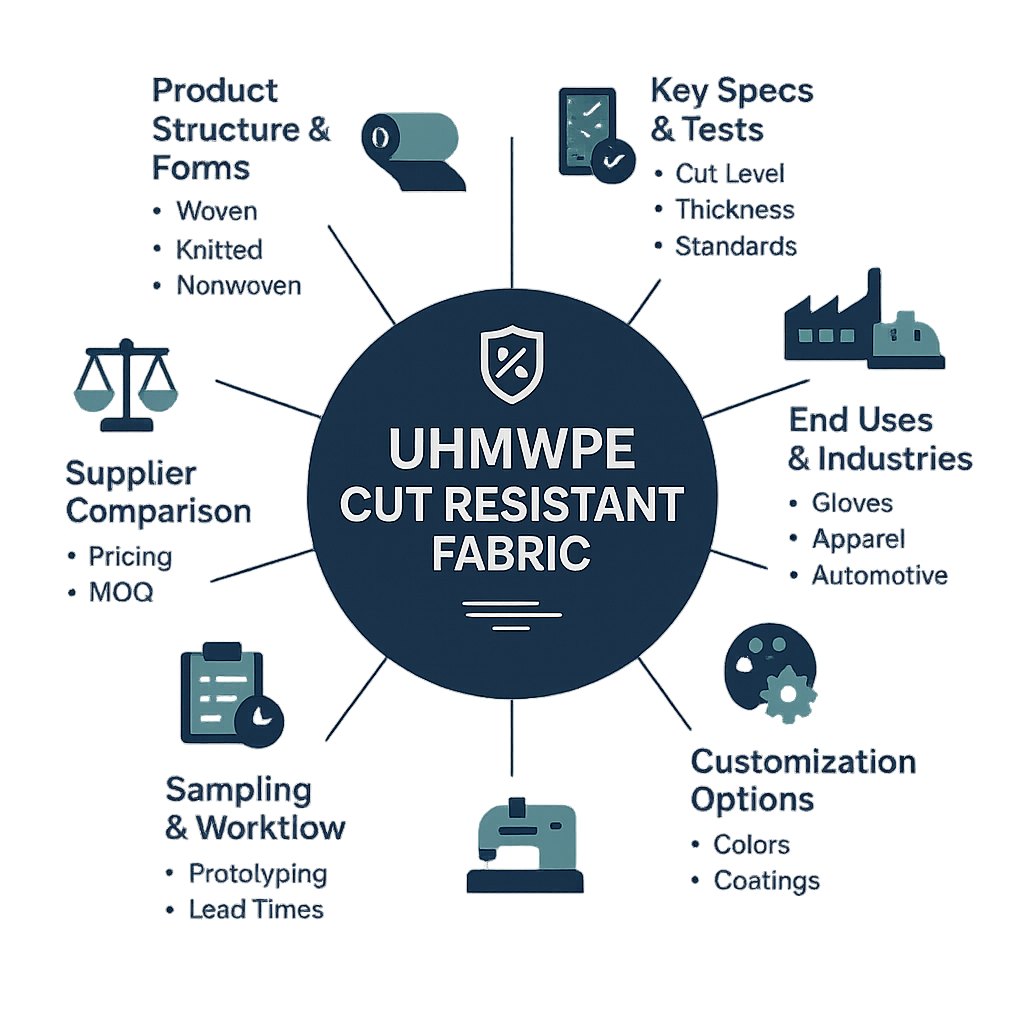
Product Structure and Available Forms
Understanding the structure and forms of UHMWPE (Ultra-High Molecular Weight Polyethylene) cut resistant fabric is crucial for making informed decisions in sourcing and application. This material is known for its exceptional strength-to-weight ratio and cut resistance, making it a preferred choice in various industrial applications.
Key Technical Points
UHMWPE fibers are characterized by their high molecular weight, which contributes to their superior mechanical properties. The fabric can be produced in various forms, including woven, knitted, and non-woven structures. Each form offers unique benefits depending on the intended application:
- Woven Fabrics: These provide excellent tensile strength and are often used in protective clothing.
- Knitted Fabrics: More flexible and breathable, suitable for applications requiring comfort.
- Non-Woven Fabrics: Typically used for disposable applications, offering ease of use and cost-effectiveness.
Application and Sourcing Considerations
When sourcing UHMWPE cut resistant fabric, consider the specific application requirements such as cut resistance levels, abrasion resistance, and environmental factors. Different applications may necessitate different fabric forms, so it’s essential to evaluate the end-use context thoroughly.
Buyer Checklist Before Sampling
- Define the specific application and performance requirements.
- Identify the necessary certifications and compliance standards.
- Evaluate the supplier’s reputation and experience in the industry.
- Request samples to assess fabric properties and performance.
Key Specifications and Test Items
Understanding the key specifications and test items for UHMWPE cut resistant fabric is essential for ensuring the material meets performance expectations.
Key Technical Points
Specifications typically include:
- Cut Resistance: Measured using standardized tests such as ASTM F2992.
- Weight: The weight of the fabric can influence its performance and comfort.
- Thickness: Affects durability and cut resistance levels.
Application and Sourcing Considerations
Different applications may require varying specifications. For example, a fabric used in heavy-duty industrial gloves will have different requirements compared to one used in lightweight protective clothing. Understanding these nuances can guide sourcing decisions.
Buyer Checklist Before Sampling
- Review the testing methods used for certifications.
- Understand the implications of weight and thickness on performance.
- Ensure the supplier can provide detailed specifications and test results.
Common End Uses and Industries
UHMWPE cut resistant fabric is utilized across various industries due to its unique properties.
Typical Industries Using This Material
- Manufacturing: Used in protective clothing and gloves for workers handling sharp materials.
- Construction: Provides cut resistance for workers in high-risk environments.
- Aerospace: Employed in applications requiring lightweight yet strong materials.
Why Engineers and Buyers Choose It
Engineers and buyers favor UHMWPE cut resistant fabric for its combination of lightweight properties and high cut resistance. This balance allows for enhanced mobility and comfort without compromising safety.
When Another Material May Be Better
While UHMWPE has many advantages, there are scenarios where alternative materials might be more suitable. For instance, if extreme heat resistance is required, aramid fibers may be a better choice. Understanding the specific requirements of your application is key to making the right decision.
Customization Options
Customization can play a significant role in meeting specific application needs.
Key Technical Points
Customization options may include:
- Fabric Weight: Adjusting the weight can enhance performance for specific applications.
- Color and Finish: Custom colors or finishes can be important for branding or visibility.
Application and Sourcing Considerations
When considering customization, it’s important to communicate your specific needs to the supplier. This ensures that the final product aligns with your application requirements.
Buyer Checklist Before Sampling
- Clarify your customization requirements with the supplier.
- Request samples of customized options to evaluate performance.
- Discuss lead times and potential costs associated with customization.
Sampling, Qualification, and Order Workflow
A well-defined workflow for sampling and qualification is essential for ensuring that the selected fabric meets all necessary criteria.
Key Technical Points
The sampling process should involve:
- Requesting samples that reflect the final product specifications.
- Conducting tests to verify performance against application requirements.
Application and Sourcing Considerations
Consider the time frame for sampling and qualification in relation to your project deadlines. Ensure that the supplier can meet your timeline without compromising quality.
Buyer Checklist Before Sampling
- Establish a clear timeline for sampling and qualification.
- Define the testing criteria that samples must meet.
- Communicate any specific requirements to the supplier upfront.
How to Compare Offers from Different Suppliers
When evaluating offers from various suppliers, a systematic approach can help ensure that you make the best choice.
Key Technical Points
Consider the following when comparing offers:
- Specifications: Ensure that the specifications align with your requirements.
- Testing Certifications: Verify that the supplier provides valid testing certifications.
Application and Sourcing Considerations
Different suppliers may offer varying levels of service and expertise. Assess their ability to meet your specific needs beyond just price.
Buyer Checklist Before Sampling
- Compile a comparison chart of specifications, prices, and services.
- Evaluate the supplier’s experience and reputation in the industry.
- Consider the long-term relationship potential with the supplier.
Conclusion
In summary, understanding the nuances of UHMWPE cut resistant fabric export packaging is essential for making informed sourcing decisions. By focusing on material properties, application fit, and supplier capabilities, buyers can effectively navigate the complexities of this market. A thorough evaluation process, including a clear checklist for sampling and comparison, will aid in selecting the right fabric for your specific needs.