
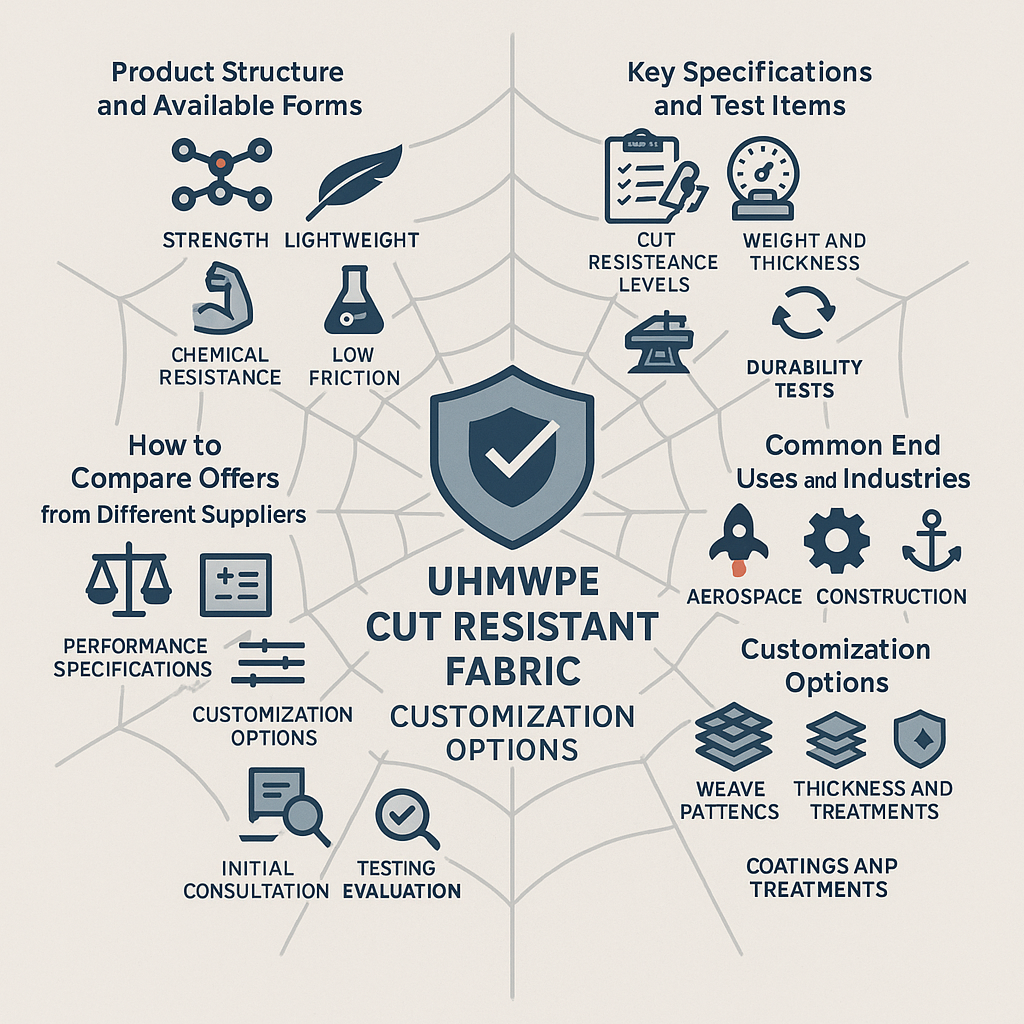
Product Structure and Available Forms
Understanding the structure and forms of UHMWPE cut resistant fabric is crucial for making informed decisions in various industrial applications. This high-performance textile is renowned for its exceptional strength-to-weight ratio and cut resistance, making it a preferred choice in safety gear, industrial applications, and more.
Key Technical Points
UHMWPE, or Ultra-High Molecular Weight Polyethylene, is characterized by its long molecular chains, which contribute to its outstanding mechanical properties. Key technical points to consider include:
- Strength: UHMWPE fibers are significantly stronger than steel, providing superior cut resistance.
- Lightweight: The low density of UHMWPE makes it ideal for applications requiring lightweight materials.
- Chemical Resistance: UHMWPE exhibits excellent resistance to chemicals, enhancing its durability in harsh environments.
- Low Friction: The low coefficient of friction allows for smoother operation in applications involving movement.
Application and Sourcing Considerations
When sourcing UHMWPE cut resistant fabric, it is essential to consider the specific applications it will serve. Common applications include:
- Protective clothing and gear for industrial workers
- Cut-resistant gloves and sleeves
- Ballistic protection
- Ropes and slings in marine applications
Understanding the end-use will guide the customization options required, such as thickness, weave pattern, and additional treatments.
Buyer Checklist Before Sampling
Before requesting samples, potential buyers should consider the following checklist:
- Define the specific application and performance requirements.
- Assess the environmental conditions the fabric will face.
- Determine the necessary certifications or compliance standards.
- Evaluate the supplier’s experience and reputation in the industry.
Key Specifications and Test Items
Understanding the specifications and testing protocols for UHMWPE cut resistant fabric is vital for ensuring it meets the required performance standards.
Key Technical Points
Key specifications to consider include:
- Cut Resistance Levels: Fabrics are often tested according to ASTM or ISO standards, indicating their cut resistance performance.
- Weight and Thickness: The weight per square meter and thickness can affect both performance and comfort.
- Durability Tests: Assessing the fabric’s performance under repeated use and exposure to elements.
Application and Sourcing Considerations
When evaluating specifications, consider how they align with the intended application. For instance, a fabric used in protective clothing may require higher cut resistance than one used in general industrial applications.
Buyer Checklist Before Sampling
Before requesting samples based on specifications, buyers should ensure they:
- Understand the relevant testing standards.
- Clarify the performance metrics that matter most for their application.
- Confirm the supplier’s ability to provide documentation for testing results.
Common End Uses and Industries
UHMWPE cut resistant fabric is utilized across various industries, each with distinct requirements and applications.
Typical Industries Using This Material
- Aerospace: Used in protective gear and components.
- Construction: Worn by workers to prevent cuts and abrasions.
- Manufacturing: Employed in gloves and protective clothing.
- Marine: Utilized in ropes and safety equipment.
Why Engineers and Buyers Choose It
Engineers and buyers often select UHMWPE cut resistant fabric for its:
- Exceptional cut resistance and durability.
- Lightweight nature, which enhances user comfort.
- Versatility across various applications.
When Another Material May Be Better
While UHMWPE offers numerous advantages, there are scenarios where alternative materials may be more suitable. For example, if a higher level of heat resistance is required, aramid fibers may be a better choice. Additionally, cost considerations may lead buyers to explore other options.
Customization Options
Customization is a key aspect of sourcing UHMWPE cut resistant fabric, allowing buyers to tailor the material to specific needs.
Key Technical Points
Customization options can include:
- Weave Patterns: Different weaves can enhance flexibility or strength.
- Thickness Variations: Adjusting thickness can impact cut resistance and weight.
- Coatings and Treatments: Additional treatments can improve water resistance or chemical protection.
Application and Sourcing Considerations
When considering customization, it is essential to align the options with the intended application. For instance, a fabric used in a wet environment may benefit from water-resistant coatings, while one used in high-abrasion scenarios may require enhanced durability treatments.
Buyer Checklist Before Sampling
Before finalizing customization options, buyers should ensure they:
- Clearly define their performance requirements.
- Consult with technical experts to understand the implications of different customizations.
- Request samples of customized options to evaluate performance.
Sampling, Qualification, and Order Workflow
The process of sampling, qualification, and ordering UHMWPE cut resistant fabric involves several critical steps to ensure the material meets specifications.
Key Technical Points
Key steps in the workflow include:
- Initial Consultation: Discussing requirements with suppliers to clarify needs.
- Sampling: Requesting samples of both standard and customized options.
- Testing and Evaluation: Conducting tests to verify performance against specifications.
Application and Sourcing Considerations
During the qualification phase, it is essential to assess how the fabric performs in real-world conditions. This may involve field testing or pilot programs to evaluate durability and functionality.
Buyer Checklist Before Sampling
Before initiating the sampling process, buyers should consider:
- Defining clear performance metrics for evaluation.
- Understanding the timeline for testing and feedback.
- Confirming the supplier’s ability to meet quality standards.
How to Compare Offers from Different Suppliers
When evaluating offers from various suppliers, a structured approach can help ensure that the selected UHMWPE cut resistant fabric meets all necessary requirements.
Key Technical Points
Consider the following when comparing offers:
- Performance Specifications: Ensure that the technical specifications align with your application needs.
- Customization Options: Evaluate the extent of customization available from each supplier.
- Testing and Certification: Verify that suppliers provide documentation for testing results and compliance with relevant standards.
Application and Sourcing Considerations
Understanding the supplier’s capabilities and reputation is crucial. Look for suppliers with a proven track record in providing UHMWPE cut resistant fabric for your specific industry.
Buyer Checklist Before Sampling
Before making a decision, ensure you:
- Have a clear understanding of your performance requirements.
- Compare the total cost of ownership, including potential long-term durability.
- Assess the supplier’s customer service and support capabilities.
Conclusion
In summary, understanding the customization options available for UHMWPE cut resistant fabric is essential for making informed decisions in various industrial applications. By considering key technical points, application-specific requirements, and a structured approach to sourcing, buyers can effectively navigate the complexities of material selection. A thorough checklist can further streamline the process, ensuring that the selected fabric meets all necessary performance standards.
As you explore your options, keep in mind the importance of aligning material properties with application needs, and don’t hesitate to engage with knowledgeable suppliers who can provide valuable insights and support throughout the decision-making process.