
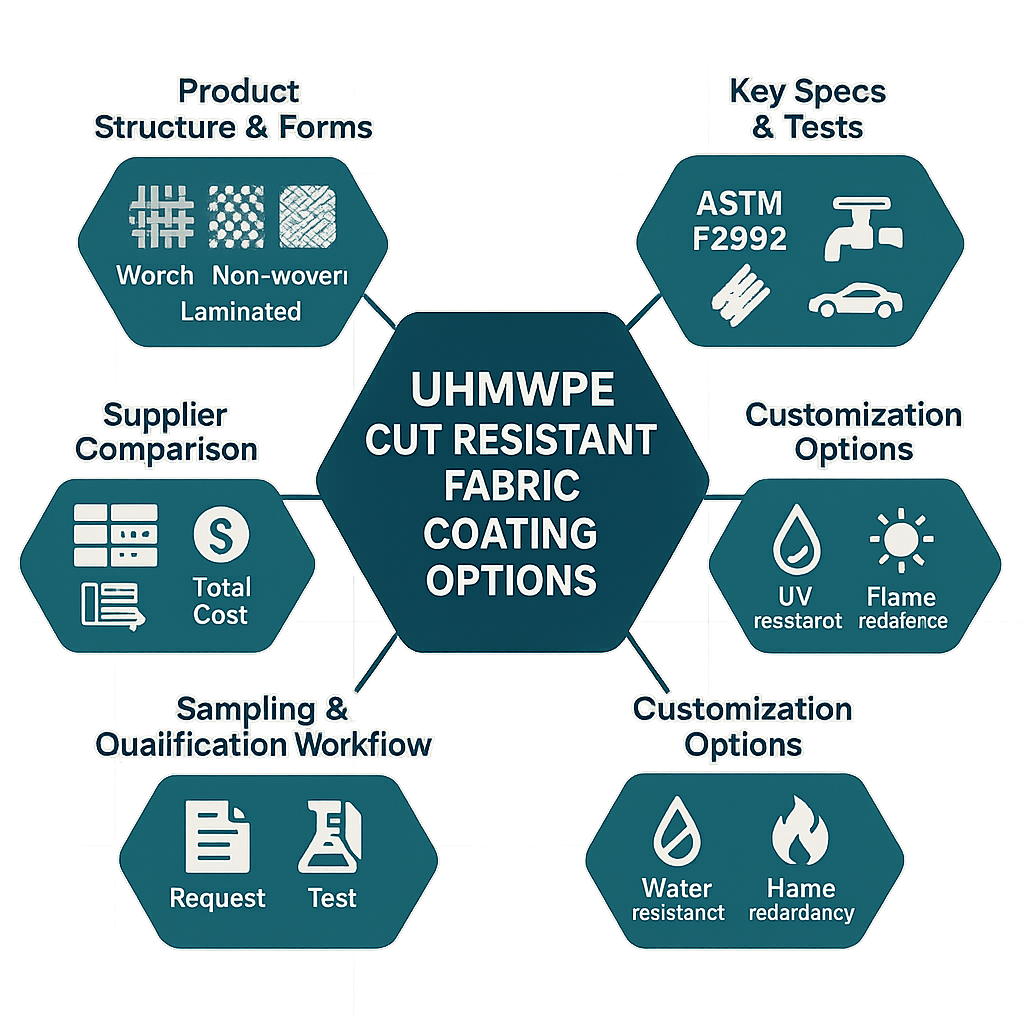
Product Structure and Available Forms
Understanding the structure of UHMWPE (Ultra High Molecular Weight Polyethylene) cut resistant fabric is crucial for selecting the right coating options. This material is known for its exceptional strength-to-weight ratio, making it a preferred choice in various industrial applications. The fabric can be produced in different forms, including woven, non-woven, and laminated structures, each offering unique benefits depending on the intended use.
Key Technical Points
UHMWPE fibers are characterized by their high tensile strength, low friction coefficient, and excellent resistance to abrasion and chemicals. These properties make them suitable for applications requiring durability and cut resistance. The choice of coating can significantly influence the performance of the fabric, affecting its water resistance, UV stability, and overall longevity.
Application and Sourcing Considerations
When selecting a coating for UHMWPE cut resistant fabric, consider the specific application requirements. For instance, fabrics used in outdoor environments may benefit from UV-resistant coatings, while those in wet conditions may require water-repellent finishes. Sourcing from a reputable UHMWPE cut resistant fabric supplier is essential to ensure that the coatings meet industry standards and performance expectations.
Buyer Checklist Before Sampling
- Define the specific application and performance requirements.
- Identify the environmental conditions the fabric will be exposed to.
- Research potential suppliers and their coating options.
- Request samples to evaluate performance in real-world conditions.
Key Specifications and Test Items
Understanding the specifications and test items relevant to UHMWPE cut resistant fabric is vital for making informed decisions. Key specifications often include cut resistance levels, abrasion resistance, and tensile strength.
Key Technical Points
Testing for cut resistance typically follows standards such as ASTM F2992 or ISO 13997. These tests provide a quantifiable measure of the fabric’s ability to withstand cutting forces. Additionally, abrasion resistance tests can help determine how well the fabric will hold up under repeated use.
Application and Sourcing Considerations
Different applications may require varying levels of performance. For example, personal protective equipment (PPE) may necessitate higher cut resistance compared to industrial applications. Understanding these nuances can guide sourcing decisions and ensure that the selected fabric meets the necessary safety standards.
Buyer Checklist Before Sampling
- Review relevant testing standards for your application.
- Assess the fabric’s performance in relation to your specific needs.
- Consider the reputation and reliability of the supplier.
- Evaluate the availability of test reports and certifications.
Common End Uses and Industries
UHMWPE cut resistant fabric is utilized across various industries, each with unique requirements and applications. Understanding these end uses can help buyers make informed decisions about material selection.
Typical Industries Using This Material
- Manufacturing
- Aerospace
- Automotive
- Construction
- Healthcare
Why Engineers and Buyers Choose It
Engineers and buyers often select UHMWPE cut resistant fabric for its superior performance characteristics. The fabric’s lightweight nature combined with high cut resistance makes it ideal for applications where mobility and protection are critical. Additionally, its chemical resistance adds to its versatility across different environments.
When Another Material May Be Better
While UHMWPE offers numerous advantages, there are scenarios where other materials may be more suitable. For instance, if extreme heat resistance is required, aramid fibers may be a better choice. Understanding the specific requirements of the application is key to making the right material selection.
Customization Options
Customization is a significant aspect of sourcing UHMWPE cut resistant fabric. Various coating options can enhance the fabric’s performance for specific applications.
Key Technical Points
Coatings can be tailored to improve properties such as water resistance, flame retardancy, and UV stability. Understanding the technical aspects of these coatings can help buyers select the most appropriate options for their needs.
Application and Sourcing Considerations
When considering customization, it’s essential to communicate specific requirements to suppliers. This ensures that the coatings applied will meet the desired performance criteria and comply with industry regulations.
Buyer Checklist Before Sampling
- Identify the specific performance enhancements needed.
- Discuss customization options with potential suppliers.
- Evaluate the impact of coatings on the fabric’s overall performance.
- Request samples to test the customized fabric in relevant conditions.
Sampling, Qualification, and Order Workflow
The process of sampling, qualification, and ordering UHMWPE cut resistant fabric involves several key steps to ensure that the selected material meets performance expectations.
Key Technical Points
Start by requesting samples from potential suppliers to evaluate the fabric’s performance in real-world applications. This may include testing for cut resistance, durability, and other relevant specifications.
Application and Sourcing Considerations
During the qualification process, consider the supplier’s ability to meet your specific requirements, including lead times and consistency in quality. Establishing a clear communication channel with the supplier can facilitate a smoother workflow.
Buyer Checklist Before Sampling
- Define the testing criteria for the samples.
- Communicate your requirements clearly to the supplier.
- Evaluate the supplier’s track record and reliability.
- Document the results of your testing for future reference.
How to Compare Offers from Different Suppliers
When evaluating offers from various UHMWPE cut resistant fabric suppliers, it’s essential to adopt a structured approach to ensure you make the best decision.
Key Technical Points
Compare specifications, including cut resistance levels, abrasion resistance, and any additional features offered by different suppliers. This will help you identify which options align best with your application needs.
Application and Sourcing Considerations
Consider not only the technical specifications but also the supplier’s reputation, customer service, and ability to meet delivery timelines. A supplier’s responsiveness can be a critical factor in the overall success of your project.
Buyer Checklist Before Sampling
- Compile a comparison matrix of specifications and features.
- Assess the supplier’s customer service and support capabilities.
- Evaluate the total cost of ownership, including potential long-term performance.
- Seek feedback from other customers or industry peers.
Conclusion
Understanding the various uhmwpe cut resistant fabric coating options is essential for making informed decisions in sourcing and application. By considering the technical specifications, application needs, and customization possibilities, buyers can select the right fabric for their specific requirements. A structured approach to sampling, qualification, and supplier comparison will further enhance the decision-making process. Ultimately, the goal is to ensure that the chosen material not only meets performance standards but also aligns with the operational needs of the end user.