
Product Structure and Available Forms
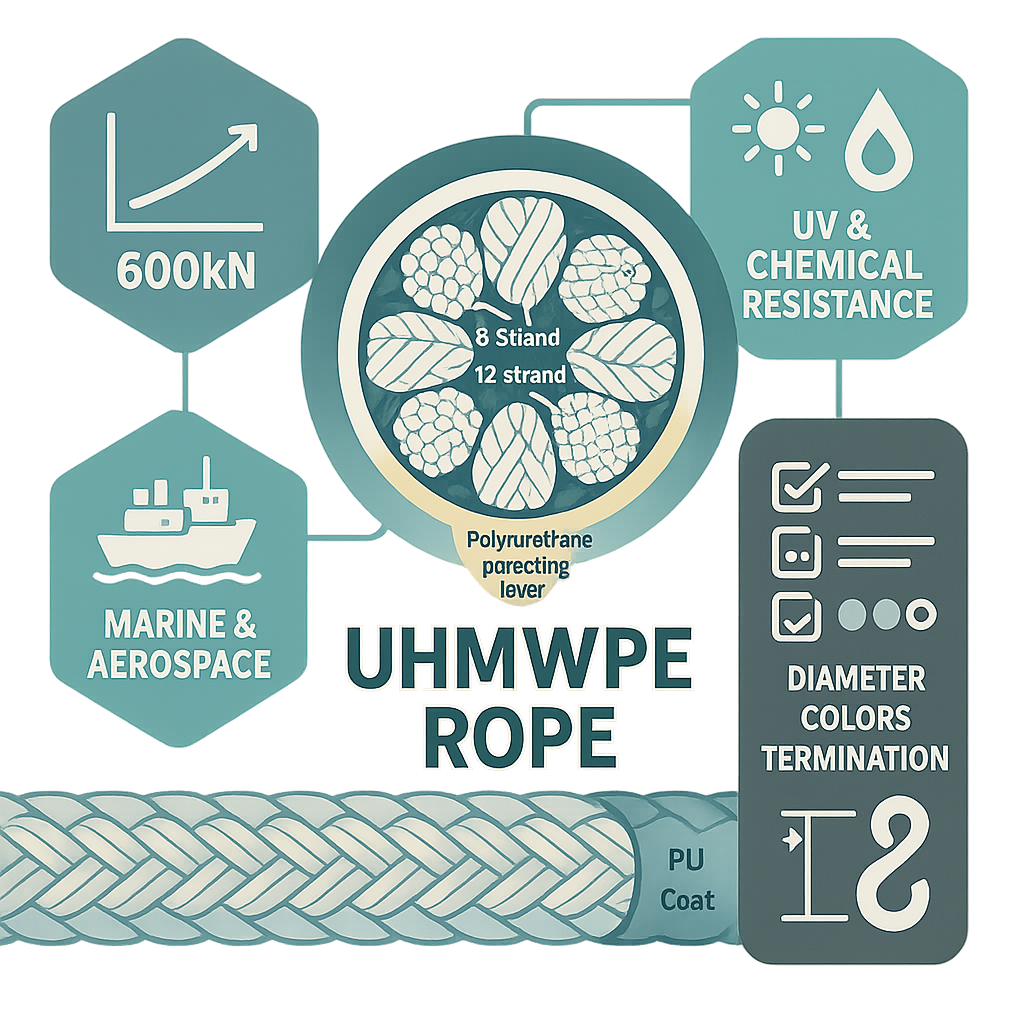
UHMWPE (Ultra-High Molecular Weight Polyethylene) braided rope is recognized for its exceptional strength-to-weight ratio and durability. Understanding its structure is crucial for evaluating its performance in various applications. Typically, UHMWPE braided ropes are constructed from multiple strands of UHMWPE fibers, which are tightly woven to enhance tensile strength and resistance to abrasion.
Key Technical Points
- Material Composition: The fibers used in UHMWPE braided ropes are characterized by their high molecular weight, contributing to their superior mechanical properties.
- Construction Techniques: Braiding techniques can vary, affecting the rope’s flexibility and strength. Common methods include 8-strand and 12-strand braids.
- Coating Options: Some UHMWPE ropes may be coated for additional protection against UV degradation and chemical exposure.
Application and Sourcing Considerations
When sourcing UHMWPE braided rope, it’s essential to consider the specific requirements of your application. Factors such as load capacity, environmental conditions, and required flexibility should guide your selection. Additionally, understanding the supplier’s capabilities in terms of customization and quality assurance can significantly impact the performance of the rope in real-world scenarios.
Buyer Checklist Before Sampling
- Define the specific application and performance requirements.
- Inquire about the rope’s construction and material specifications.
- Request samples to evaluate the rope’s handling and performance characteristics.
- Assess the supplier’s reputation and quality control processes.
Key Specifications and Test Items
Understanding the key specifications and testing standards for UHMWPE braided rope is vital for ensuring that the material meets the necessary performance criteria for its intended use.
Key Technical Points
- Tensile Strength: This is a primary measure of the rope’s ability to withstand pulling forces without breaking.
- Elongation at Break: This indicates how much the rope can stretch before failure, which is crucial for applications requiring flexibility.
- Abrasion Resistance: Testing for resistance to wear and tear is essential, especially in rugged environments.
Application and Sourcing Considerations
Different applications may prioritize various specifications. For instance, marine applications may require higher abrasion resistance, while lifting applications may focus on tensile strength. Understanding these nuances can help in making informed sourcing decisions.
Buyer Checklist Before Sampling
- Identify the critical specifications for your application.
- Request detailed test reports from potential suppliers.
- Evaluate the consistency of the supplier’s testing methods.
- Consider third-party certifications for additional assurance.
Common End Uses and Industries
UHMWPE braided rope is utilized across a variety of industries due to its unique properties. Understanding these applications can help buyers make informed decisions about material selection.
Typical Industries Using This Material
- Marine: Used for mooring lines, towing, and rigging due to its lightweight and high strength.
- Aerospace: Employed in applications requiring lightweight and high-strength materials.
- Construction: Utilized in lifting and rigging applications where durability is essential.
Why Engineers and Buyers Choose It
Engineers and buyers often select UHMWPE braided rope for its combination of lightweight properties and high tensile strength. Its resistance to UV light and chemicals further enhances its appeal in demanding environments.
When Another Material May Be Better
While UHMWPE braided rope offers numerous advantages, there are scenarios where alternative materials may be more suitable. For instance, in applications requiring high heat resistance, aramid fibers may be a better choice. Understanding the specific demands of your application is crucial for selecting the right material.
Customization Options
Customization can play a significant role in optimizing the performance of UHMWPE braided rope for specific applications. Buyers should be aware of the various options available.
Key Technical Points
- Diameter Variations: Ropes can be manufactured in various diameters to meet specific load requirements.
- Color Coding: Custom colors can be used for easy identification in complex rigging setups.
- End Terminations: Different types of end terminations can be designed to suit specific applications.
Application and Sourcing Considerations
When considering customization, it’s important to communicate your specific needs clearly to potential suppliers. This ensures that the final product aligns with the intended application.
Buyer Checklist Before Sampling
- Define your customization requirements.
- Discuss potential impacts on performance with suppliers.
- Request prototypes to evaluate the effectiveness of custom features.
Sampling, Qualification, and Order Workflow
Establishing a clear workflow for sampling, qualification, and ordering is essential for ensuring that the selected UHMWPE braided rope meets your specifications.
Key Technical Points
- Sampling Process: Understand the supplier’s sampling process and timelines.
- Qualification Criteria: Define the criteria for evaluating samples effectively.
- Order Workflow: Familiarize yourself with the supplier’s order process, including lead times and minimum order quantities.
Application and Sourcing Considerations
Establishing a systematic approach to sampling and qualification can help mitigate risks associated with material performance. Ensure that all stakeholders are aligned on the evaluation criteria.
Buyer Checklist Before Sampling
- Clarify your sampling requirements with the supplier.
- Define the qualification criteria for evaluating samples.
- Understand the order process and any associated timelines.
How to Compare Offers from Different Suppliers
Evaluating offers from various suppliers can be challenging, especially when it comes to UHMWPE braided rope. A structured approach can help streamline this process.
Key Technical Points
- Specification Comparison: Ensure that you are comparing like-for-like specifications across different offers.
- Quality Assurance: Investigate the quality assurance processes each supplier employs.
- Customer Support: Assess the level of customer support and responsiveness from each supplier.
Application and Sourcing Considerations
Understanding the nuances of each supplier’s offering can help you make a more informed decision. Consider factors such as lead times, flexibility in order quantities, and the supplier’s ability to meet customization requests.
Buyer Checklist Before Sampling
- Compile a comparison matrix of specifications and services from different suppliers.
- Evaluate the consistency of quality assurance measures.
- Consider the supplier’s reputation and customer feedback.
Conclusion
In summary, understanding UHMWPE braided rope testing standards is essential for making informed decisions in sourcing and application. By considering the material’s specifications, customization options, and supplier capabilities, buyers can ensure that they select the right rope for their specific needs. A structured approach to sampling, qualification, and comparison of offers will further enhance the decision-making process, leading to successful outcomes in various industrial applications.