
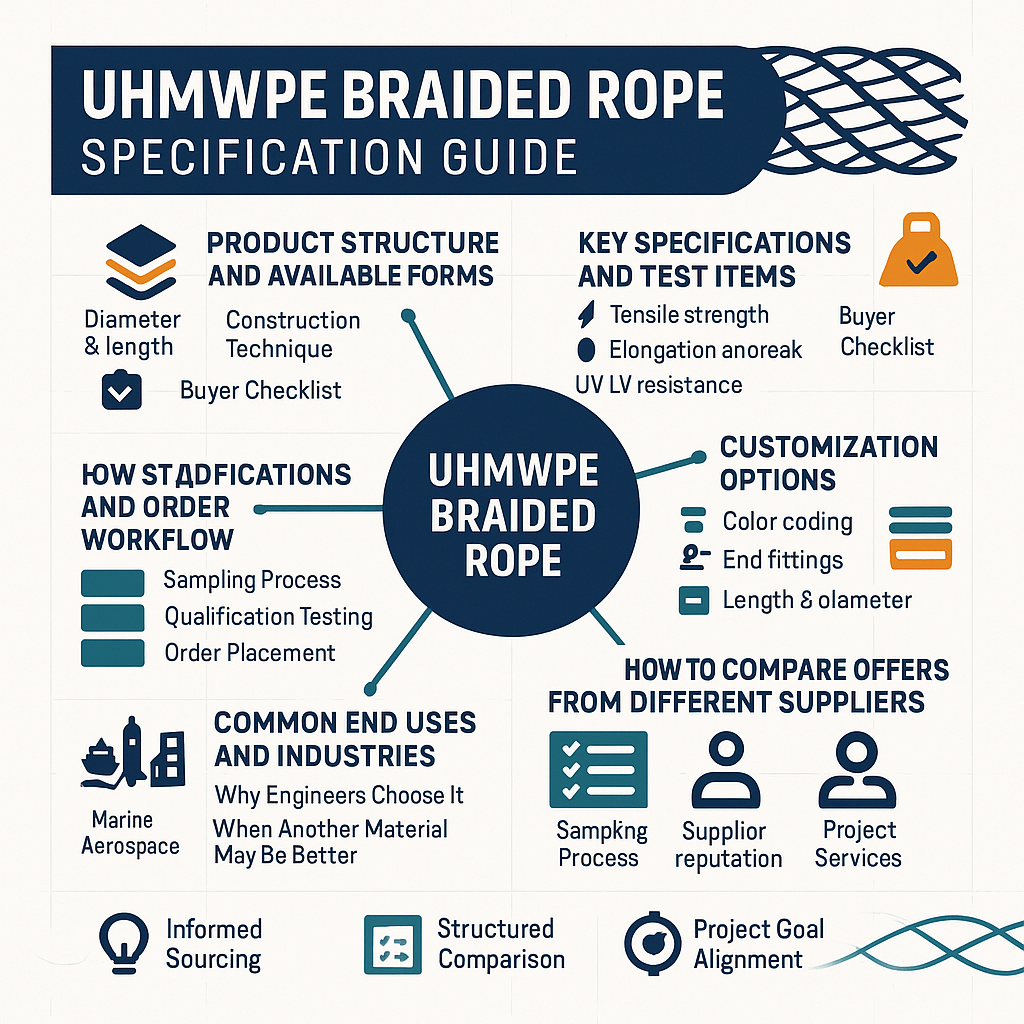
Product Structure and Available Forms
UHMWPE (Ultra-High Molecular Weight Polyethylene) braided rope has gained significant traction in various industries due to its remarkable strength-to-weight ratio and durability. Understanding its structure and available forms is crucial for making informed sourcing decisions.
Key Technical Points
- Material Composition: UHMWPE is known for its high tensile strength, low friction, and resistance to abrasion and chemicals. The braided structure enhances these properties, making it suitable for demanding applications.
- Diameter and Length Variability: UHMWPE braided ropes come in various diameters and lengths, allowing customization based on specific application requirements.
- Construction Techniques: Different braiding techniques can affect the rope’s flexibility and strength. Understanding these techniques can help in selecting the right product for your needs.
Application and Sourcing Considerations
When sourcing UHMWPE braided rope, consider the specific applications it will be used for. Factors such as environmental conditions, load-bearing requirements, and compatibility with other materials are essential. Additionally, identifying reliable suppliers who understand these nuances can streamline the sourcing process.
Buyer Checklist Before Sampling
- Define the application and load requirements.
- Research potential suppliers and their product offerings.
- Request samples to evaluate performance in real-world conditions.
- Assess the supplier’s ability to meet customization needs.
Key Specifications and Test Items
Understanding the specifications and test items associated with UHMWPE braided rope is vital for ensuring it meets the necessary performance criteria.
Key Technical Points
- Tensile Strength: This is a critical specification as it indicates the maximum load the rope can handle before breaking. Different applications may require different tensile strengths.
- Elongation at Break: This measures how much the rope can stretch before failure. A higher elongation percentage can be beneficial in applications where shock absorption is necessary.
- UV Resistance: Since many applications are outdoors, UV resistance is essential to prevent degradation over time.
Application and Sourcing Considerations
When evaluating specifications, consider how they align with your application needs. For instance, a rope with high tensile strength but low elongation may not be suitable for dynamic loads. Collaborating with knowledgeable suppliers can help clarify these specifications.
Buyer Checklist Before Sampling
- Identify the key specifications required for your application.
- Verify the supplier’s testing methods and certifications.
- Request detailed product data sheets for comparison.
Common End Uses and Industries
UHMWPE braided rope is versatile and finds applications across various industries. Understanding these uses can help in making informed decisions about sourcing.
Typical Industries Using This Material
- Marine: Used for mooring lines, towing, and rigging due to its high strength and low water absorption.
- Aerospace: Employed in applications requiring lightweight yet strong materials, such as in parachutes and cargo nets.
- Construction: Utilized in lifting and rigging applications where high strength and low weight are critical.
Why Engineers and Buyers Choose It
Engineers and buyers often select UHMWPE braided rope for its superior performance characteristics. Its lightweight nature reduces handling costs, while its strength ensures safety and reliability in demanding environments.
When Another Material May Be Better
While UHMWPE braided rope has many advantages, there are scenarios where other materials may be more appropriate. For example, if cost is a primary concern, alternatives like polyester or nylon may offer sufficient performance at a lower price point.
Customization Options
Customization can play a significant role in the effectiveness of UHMWPE braided rope for specific applications. Understanding your options is essential for optimal performance.
Key Technical Points
- Color Coding: Custom colors can aid in identification and safety in various applications.
- End Fittings: Custom end fittings can enhance compatibility with existing equipment.
- Length and Diameter: Tailoring these dimensions can ensure the rope meets specific load and handling requirements.
Application and Sourcing Considerations
When considering customization, think about how these options will impact your application. Collaborating with suppliers who offer flexible customization can lead to better performance outcomes.
Buyer Checklist Before Sampling
- Determine the necessary customization features for your application.
- Discuss customization options with potential suppliers.
- Evaluate the impact of customization on lead times and costs.
Sampling, Qualification, and Order Workflow
Understanding the workflow for sampling and qualification is crucial for ensuring that the UHMWPE braided rope meets your specifications before placing a larger order.
Key Technical Points
- Sampling Process: Request samples that reflect the specifications and customization options you require.
- Qualification Testing: Conduct tests to verify that the samples meet your performance criteria.
- Order Placement: Once qualified, ensure that the order process is clear and aligns with your project timelines.
Application and Sourcing Considerations
Consider how the sampling and qualification process may impact your project timelines. Working closely with suppliers can help mitigate delays and ensure that the product meets your needs.
Buyer Checklist Before Sampling
- Define the testing criteria for qualification.
- Communicate your timeline and project requirements to the supplier.
- Prepare for potential adjustments based on sampling outcomes.
How to Compare Offers from Different Suppliers
When evaluating offers from various suppliers, a structured approach can help ensure you select the best option for your needs.
Key Technical Points
- Specification Comparison: Create a matrix to compare key specifications across different suppliers.
- Supplier Reputation: Research supplier backgrounds and customer reviews to gauge reliability.
- Support Services: Evaluate the level of technical support and customer service offered by each supplier.
Application and Sourcing Considerations
Understanding the nuances of each supplier’s offerings can help you make a more informed decision. Consider how each supplier aligns with your specific application needs and project goals.
Buyer Checklist Before Sampling
- Compile a list of specifications and requirements for comparison.
- Assess each supplier’s ability to meet your needs.
- Consider the total cost of ownership, including potential support and service costs.
Conclusion
In summary, selecting the right UHMWPE braided rope involves a thorough understanding of its specifications, applications, and sourcing considerations. By leveraging a structured approach to sampling, qualification, and supplier comparison, decision-makers can ensure they choose a product that meets their operational needs. This guide serves as a foundation for navigating the complexities of UHMWPE braided rope specifications, enabling informed decisions that align with project goals.