
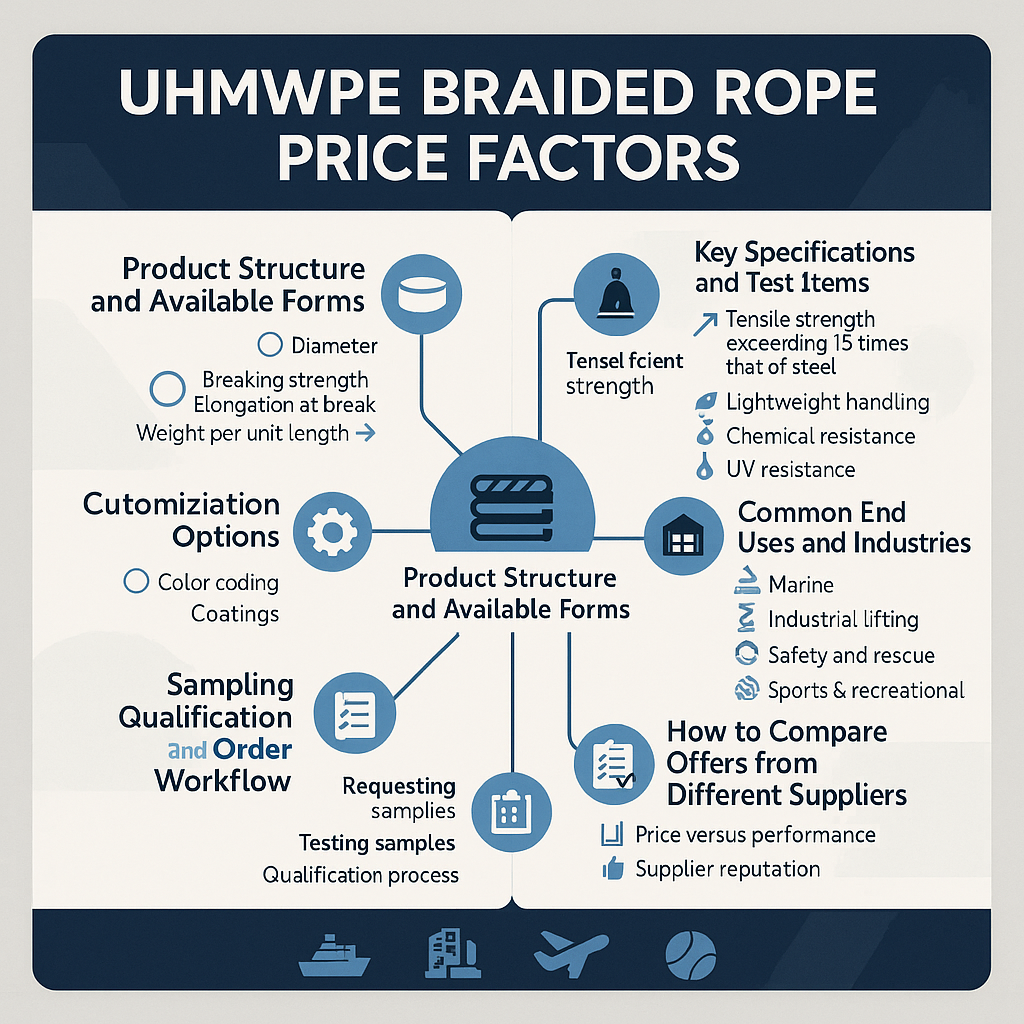
Product Structure and Available Forms
UHMWPE (Ultra High Molecular Weight Polyethylene) braided rope is a high-performance material known for its exceptional strength-to-weight ratio, durability, and resistance to abrasion and chemicals. Understanding the product structure and available forms is essential for making informed decisions regarding its applications and pricing.
Key Technical Points
UHMWPE braided rope is constructed from long-chain polyethylene molecules, which provide superior tensile strength and low stretch. The braiding process enhances the rope’s flexibility and resistance to kinking, making it suitable for various demanding applications. Key technical points to consider include:
- Tensile Strength: UHMWPE ropes can have a tensile strength exceeding 15 times that of steel, making them ideal for heavy-duty applications.
- Weight: The lightweight nature of UHMWPE allows for easier handling and reduced shipping costs.
- Resistance to Chemicals: UHMWPE is resistant to many chemicals, making it suitable for use in harsh environments.
- UV Resistance: While UHMWPE has inherent UV resistance, additional coatings may be necessary for prolonged outdoor use.
Application and Sourcing Considerations
When sourcing UHMWPE braided rope, it is crucial to consider the specific applications it will be used for. Common applications include:
- Marine and boating applications
- Industrial lifting and rigging
- Safety and rescue operations
- Sports and recreational uses
Understanding the intended application can significantly influence pricing, as specialized ropes may require additional features or certifications.
Buyer Checklist Before Sampling
Before requesting samples of UHMWPE braided rope, buyers should consider the following checklist:
- Define the specific application and performance requirements.
- Assess the environmental conditions the rope will be exposed to.
- Determine the required length and diameter of the rope.
- Evaluate any necessary certifications or compliance standards.
- Research potential suppliers and their reputation in the industry.
Key Specifications and Test Items
Understanding the key specifications and test items for UHMWPE braided rope is essential for evaluating its performance and suitability for specific applications.
Key Technical Points
Specifications for UHMWPE braided rope typically include:
- Diameter: Available in various diameters, affecting strength and weight.
- Breaking Strength: A critical specification that indicates the maximum load the rope can withstand before failure.
- Elongation at Break: This measures how much the rope can stretch before breaking, which is important for applications requiring flexibility.
- Weight per Unit Length: Important for applications where weight is a critical factor.
Application and Sourcing Considerations
When evaluating specifications, consider how they align with your application needs. For example, a higher breaking strength may be necessary for lifting applications, while a lower weight may be more beneficial for marine uses.
Buyer Checklist Before Sampling
Before sampling, ensure that you have:
- Identified the key specifications relevant to your application.
- Considered the trade-offs between weight, strength, and flexibility.
- Reviewed any testing standards applicable to your industry.
- Consulted with engineers or technical experts as needed.
Common End Uses and Industries
UHMWPE braided rope is utilized across various industries due to its unique properties. Understanding these end uses can help buyers make informed decisions.
Typical Industries Using This Material
- Marine: Used for mooring lines, anchor lines, and towing.
- Construction: Employed in lifting and rigging applications.
- Aerospace: Used in safety harnesses and other critical applications.
- Sports: Utilized in climbing, sailing, and other recreational activities.
Why Engineers and Buyers Choose It
Engineers and buyers often select UHMWPE braided rope due to its:
- High strength-to-weight ratio
- Durability and resistance to wear
- Low stretch characteristics
- Versatility across various applications
When Another Material May Be Better
While UHMWPE braided rope offers many advantages, there are scenarios where other materials may be more suitable. For example:
- Cost Considerations: For low-budget applications, alternatives like nylon or polypropylene may be more economical.
- Specific Environmental Conditions: In environments with extreme heat, materials like aramid fibers may perform better.
- Specialized Applications: Certain applications may require specific properties that UHMWPE cannot provide.
Customization Options
Customization can play a significant role in the performance and pricing of UHMWPE braided rope. Understanding available options is crucial for meeting specific requirements.
Key Technical Points
Customization options may include:
- Diameter and Length: Custom lengths and diameters can be produced to meet specific application needs.
- Color Coding: Custom colors can aid in identification and safety.
- Coatings: Additional coatings can enhance UV resistance or chemical protection.
Application and Sourcing Considerations
When considering customization, evaluate how these options align with your application requirements. For example, color coding may be essential for safety in specific environments.
Buyer Checklist Before Sampling
Before requesting customized samples, ensure you have:
- Clearly defined your customization needs.
- Considered the impact of customization on pricing.
- Consulted with suppliers about feasibility and lead times.
Sampling, Qualification, and Order Workflow
Understanding the sampling, qualification, and order workflow is essential for ensuring that the UHMWPE braided rope meets your requirements.
Key Technical Points
The workflow typically includes:
- Requesting Samples: Clearly communicate your specifications and application needs to the supplier.
- Testing Samples: Conduct necessary tests to evaluate performance against your requirements.
- Qualification Process: Ensure that the rope meets all relevant standards and specifications.
Application and Sourcing Considerations
During the workflow, consider how the rope will be used in practice. This can inform your testing criteria and qualification process.
Buyer Checklist Before Sampling
Before initiating the sampling and qualification process, ensure you have:
- Defined your testing criteria based on application needs.
- Communicated clearly with suppliers about expectations.
- Considered timelines for testing and qualification.
How to Compare Offers from Different Suppliers
When evaluating offers for UHMWPE braided rope, it is essential to have a structured approach to comparison.
Key Technical Points
Key factors to consider when comparing offers include:
- Price vs. Performance: Ensure that the price aligns with the performance specifications required for your application.
- Supplier Reputation: Research the supplier’s history and customer feedback to gauge reliability.
- Customization Options: Assess whether the supplier can meet your specific needs.
Application and Sourcing Considerations
Consider how each supplier’s offerings align with your application requirements. This can help prioritize which factors are most important in your decision-making process.
Buyer Checklist Before Sampling
Before finalizing a supplier, ensure you have:
- Evaluated all relevant specifications and performance data.
- Considered the total cost of ownership, including shipping and handling.
- Consulted with your team to ensure alignment on supplier selection.
Conclusion
Understanding the price factors associated with UHMWPE braided rope is crucial for making informed decisions in industrial applications. By considering the material’s structure, specifications, common uses, and supplier comparisons, buyers can navigate the complexities of sourcing effectively. A well-structured approach to evaluating offers will ensure that the selected rope meets both performance requirements and budget constraints, ultimately leading to successful project outcomes.