
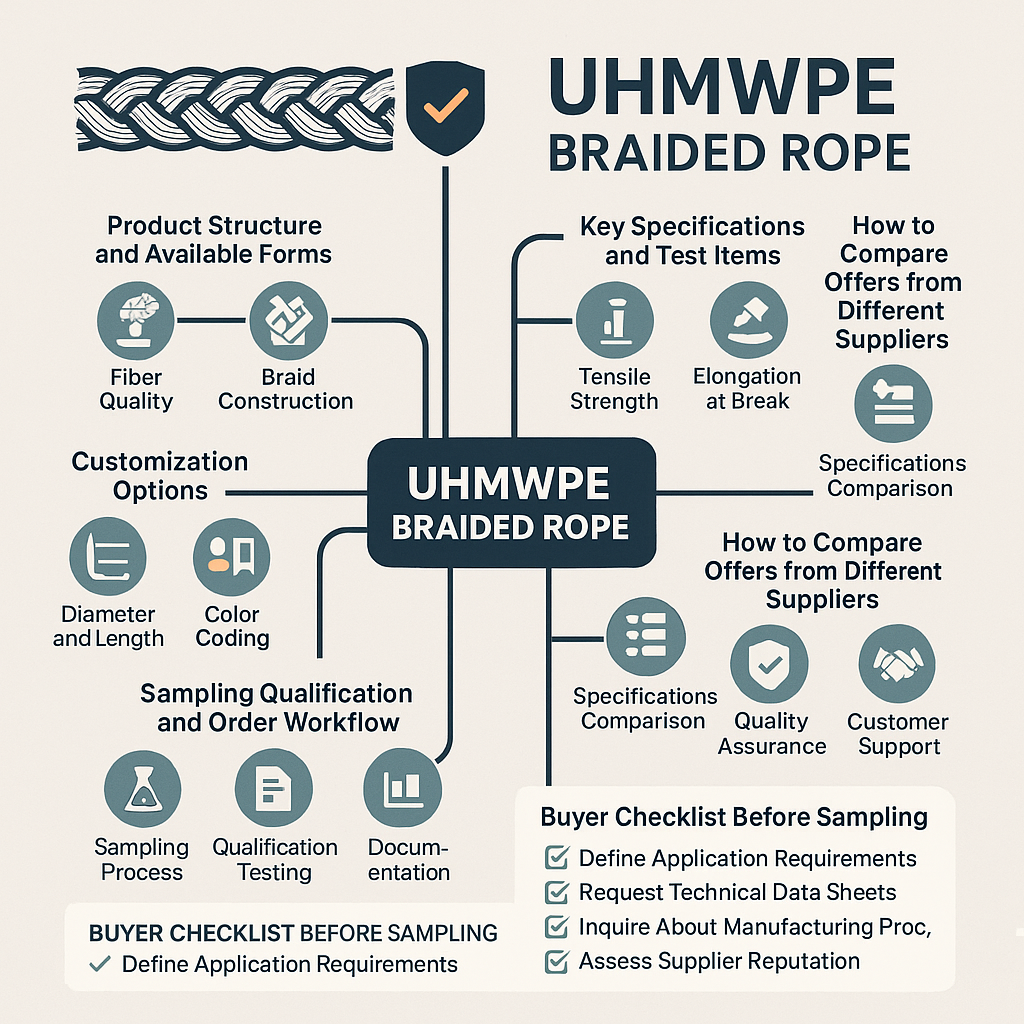
Product Structure and Available Forms
UHMWPE (Ultra-High Molecular Weight Polyethylene) braided rope is renowned for its exceptional strength-to-weight ratio, low stretch, and high resistance to abrasion and chemicals. Understanding the product structure is essential for identifying potential defects and ensuring optimal performance in various applications.
Key Technical Points
The structure of UHMWPE braided rope typically consists of multiple strands of UHMWPE fibers braided together. This construction enhances the rope’s tensile strength and flexibility. Key technical points to consider include:
- Fiber Quality: The quality of the UHMWPE fibers used can significantly impact the rope’s performance. Look for fibers that meet industry standards for tensile strength and elongation.
- Braid Construction: The type of braid (e.g., 8-strand, 12-strand) affects the rope’s flexibility and handling characteristics. Different braiding techniques can lead to variations in strength and durability.
- Coating: Some UHMWPE ropes come with protective coatings that enhance UV resistance and reduce wear. Understanding the coating’s properties is vital for specific applications.
Application and Sourcing Considerations
When sourcing UHMWPE braided rope, consider the specific application requirements. Different industries may have unique needs regarding strength, flexibility, and environmental resistance. Additionally, sourcing from reputable suppliers who can provide detailed product specifications and certifications is crucial.
Buyer Checklist Before Sampling
- Define the application requirements (load capacity, environmental conditions).
- Request technical data sheets and certifications from potential suppliers.
- Inquire about the manufacturing process and quality control measures.
- Assess the supplier’s reputation and experience in the industry.
Key Specifications and Test Items
Understanding the specifications and test items associated with UHMWPE braided rope is essential for ensuring quality and performance. Key specifications include:
Key Technical Points
- Tensile Strength: This is a critical measure of the rope’s ability to withstand pulling forces without breaking. Testing should be conducted according to industry standards.
- Elongation at Break: This indicates how much the rope can stretch before breaking. A lower elongation percentage is often preferred for applications requiring minimal stretch.
- Abrasion Resistance: Testing for abrasion resistance helps determine how well the rope can withstand wear and tear in demanding environments.
Application and Sourcing Considerations
When evaluating specifications, consider how they align with your intended application. For instance, high tensile strength may be critical for marine applications, while abrasion resistance might be more important in industrial settings.
Buyer Checklist Before Sampling
- Verify that the specifications meet your application requirements.
- Request test results from accredited laboratories.
- Ensure that the rope complies with relevant industry standards.
- Discuss potential customization options with suppliers.
Common End Uses and Industries
UHMWPE braided rope is utilized across various industries due to its unique properties. Understanding common end uses can help in selecting the right rope for specific applications.
Typical Industries Using This Material
- Marine: Used for mooring lines, anchor lines, and towing applications.
- Aerospace: Employed in rigging and lifting applications due to its lightweight and high strength.
- Construction: Used in lifting and securing applications where strength and durability are paramount.
- Sports and Recreation: Commonly found in climbing, sailing, and other outdoor activities.
Why Engineers and Buyers Choose It
Engineers and buyers often select UHMWPE braided rope due to its superior performance characteristics, including:
- High strength-to-weight ratio, allowing for lighter and more manageable ropes.
- Excellent resistance to chemicals and UV degradation, extending the rope’s lifespan.
- Low stretch properties, providing better control and safety in critical applications.
When Another Material May Be Better
While UHMWPE braided rope offers numerous advantages, there are scenarios where alternative materials may be more suitable. For example:
- Cost Considerations: In applications where budget constraints are significant, other materials like nylon or polyester may offer a more economical solution.
- Specific Environmental Conditions: In environments with extreme temperatures or specific chemical exposures, other materials may provide better performance.
Customization Options
Customization can enhance the performance of UHMWPE braided rope for specific applications. Understanding available options is essential for making informed decisions.
Key Technical Points
- Diameter and Length: Custom diameters and lengths can be specified to meet unique application requirements.
- Color Coding: Custom colors can aid in identification and safety in various applications.
- End Terminations: Different types of end terminations (e.g., spliced, heat-sealed) can be tailored for specific uses.
Application and Sourcing Considerations
When considering customization, evaluate how these options will impact the rope’s performance in your specific application. Discussing these needs with suppliers can lead to better-suited products.
Buyer Checklist Before Sampling
- Identify specific customization needs based on application requirements.
- Discuss potential lead times for customized products with suppliers.
- Request samples of customized options to evaluate performance.
Sampling, Qualification, and Order Workflow
Understanding the sampling and qualification process is crucial for ensuring that the selected UHMWPE braided rope meets performance expectations.
Key Technical Points
- Sampling Process: Request samples from multiple suppliers to compare quality and performance.
- Qualification Testing: Conduct necessary tests to verify that the samples meet your specifications.
- Documentation: Ensure that all relevant documentation, including test results and certifications, accompanies the samples.
Application and Sourcing Considerations
During the qualification phase, consider how the rope will perform under actual operating conditions. This assessment can prevent costly mistakes later in the procurement process.
Buyer Checklist Before Sampling
- Define the testing criteria for qualification.
- Request a timeline for the sampling and qualification process from suppliers.
- Ensure that the supplier can provide ongoing support and documentation.
How to Compare Offers from Different Suppliers
When evaluating offers from various suppliers, a systematic approach can help ensure that you select the best option for your needs.
Key Technical Points
- Specifications Comparison: Create a comparison chart to evaluate the specifications of each offer side by side.
- Quality Assurance: Inquire about the quality assurance processes each supplier employs.
- Customer Support: Assess the level of customer support and technical assistance offered by each supplier.
Application and Sourcing Considerations
Consider the long-term relationship potential with each supplier. A supplier who understands your needs and offers reliable support can be invaluable.
Buyer Checklist Before Sampling
- Compile a list of must-have specifications and features.
- Evaluate the supplier’s reputation and customer reviews.
- Discuss potential for future collaboration and support.
Conclusion
Understanding the common defects associated with UHMWPE braided rope is essential for making informed decisions in sourcing and application. By considering the product structure, specifications, and customization options, buyers can ensure that they select the right rope for their specific needs. A systematic approach to sampling, qualification, and supplier comparison can further enhance the decision-making process, leading to optimal performance and satisfaction in various industrial applications.