
Product Structure and Available Forms
UHMWPE (Ultra High Molecular Weight Polyethylene) braided rope is renowned for its exceptional strength-to-weight ratio, durability, and resistance to abrasion and chemicals. Understanding the various coating options available for UHMWPE braided rope is crucial for optimizing its performance in specific applications.
Key Technical Points
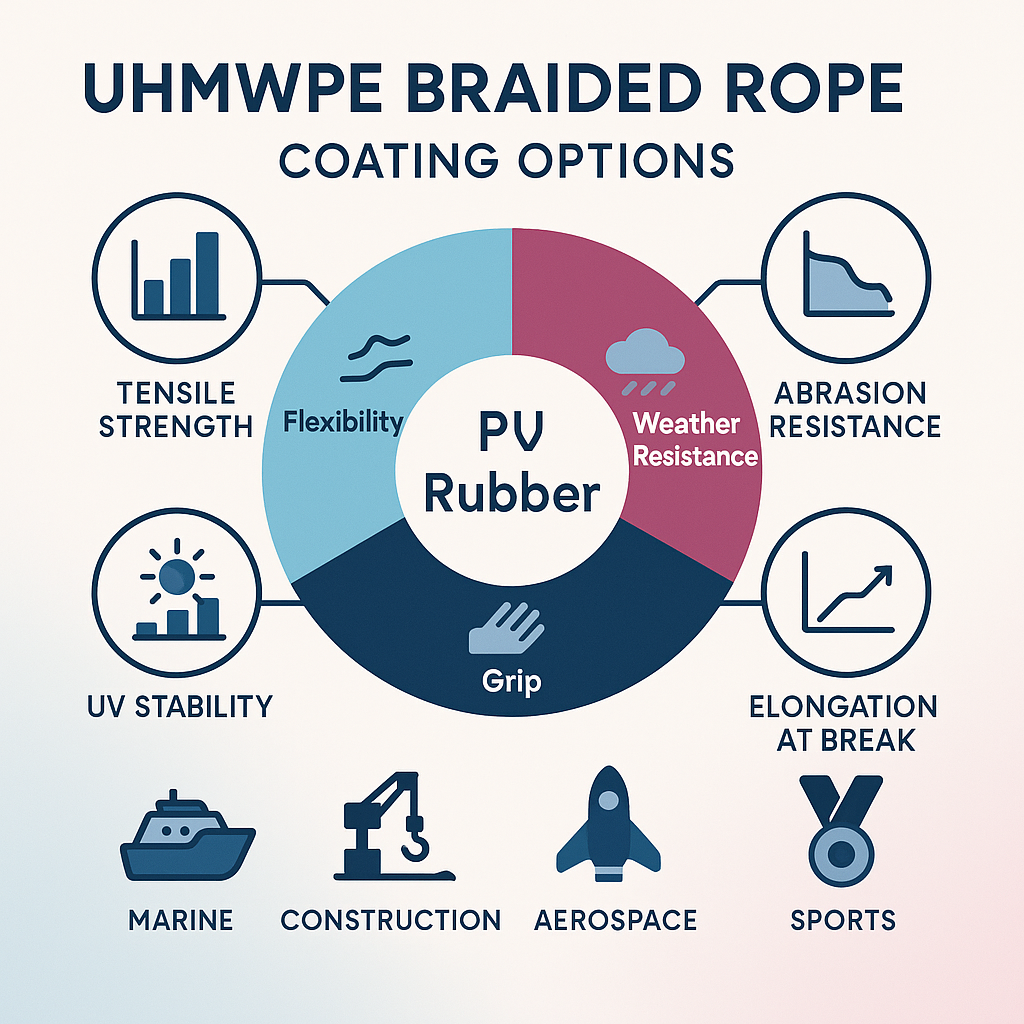
Coatings can significantly enhance the performance characteristics of UHMWPE braided rope. Common coating materials include polyurethane, PVC, and rubber. Each coating type offers unique benefits:
- Polyurethane: Provides excellent abrasion resistance and flexibility, making it suitable for dynamic applications.
- PVC: Offers good weather resistance and is often used in marine applications.
- Rubber: Enhances grip and provides additional cushioning, ideal for applications requiring high friction.
Application and Sourcing Considerations
When selecting a coating for UHMWPE braided rope, consider the specific application requirements:
- Environmental Conditions: Will the rope be exposed to harsh weather, chemicals, or UV radiation?
- Mechanical Demands: What level of abrasion resistance and flexibility is needed?
- Compatibility: Ensure the coating material is compatible with the intended use and other materials involved.
Buyer Checklist Before Sampling
Before requesting samples, buyers should evaluate the following:
- Define the application and performance requirements.
- Research potential suppliers and their coating options.
- Assess the durability and longevity of the coatings offered.
- Understand the sourcing logistics and lead times.
Key Specifications and Test Items
Understanding the specifications and test items for UHMWPE braided rope coatings is essential for ensuring quality and performance.
Key Technical Points
Specifications may include:
- Tensile Strength: The maximum load the rope can withstand before breaking.
- Elongation at Break: The percentage increase in length before failure, indicating flexibility.
- Abrasion Resistance: Measured through standardized tests to determine how well the coating withstands wear.
- UV Stability: The ability of the coating to resist degradation from sunlight exposure.
Application and Sourcing Considerations
Different applications may require specific testing protocols. For example:
- Marine applications may prioritize UV stability and saltwater resistance.
- Industrial applications may focus on abrasion resistance and tensile strength.
Buyer Checklist Before Sampling
Before sampling, consider the following:
- What specifications are critical for your application?
- Have you reviewed the supplier’s testing certifications?
- Are there industry standards relevant to your application?
Common End Uses and Industries
UHMWPE braided rope is utilized across various industries due to its unique properties.
Typical Industries Using This Material
- Marine: Used for mooring lines, towing, and fishing gear.
- Construction: Employed in rigging, lifting, and safety applications.
- Aerospace: Utilized in applications requiring lightweight and high-strength materials.
- Sports: Found in climbing, sailing, and other outdoor activities.
Why Engineers and Buyers Choose It
Engineers and buyers often select UHMWPE braided rope for its:
- High strength-to-weight ratio, allowing for lighter and stronger solutions.
- Resistance to chemicals and UV light, enhancing durability.
- Low moisture absorption, preventing degradation in wet conditions.
When Another Material May Be Better
While UHMWPE braided rope is versatile, there are situations where alternative materials may be more suitable:
- Cost Considerations: For budget-sensitive projects, other materials like nylon or polyester may be more economical.
- Specific Performance Needs: In applications requiring high elasticity, materials like nylon may perform better.
Customization Options
Customization can enhance the performance of UHMWPE braided rope for specific applications.
Key Technical Points
Customization options may include:
- Diameter Variations: Different diameters can affect strength and flexibility.
- Coating Thickness: Thicker coatings may provide better abrasion resistance but can reduce flexibility.
- Color Coding: Custom colors can aid in identification and safety.
Application and Sourcing Considerations
When considering customization, evaluate:
- How will the customization impact performance?
- Are there additional costs associated with custom orders?
- What is the lead time for customized products?
Buyer Checklist Before Sampling
Before proceeding with custom orders, consider:
- Have you defined the specific customization requirements?
- What are the implications of customization on lead times and costs?
- Have you consulted with engineers or end-users for feedback?
Sampling, Qualification, and Order Workflow
Understanding the workflow for sampling and qualification is essential for ensuring the right product fit.
Key Technical Points
The sampling process should include:
- Requesting samples that reflect the desired specifications and coatings.
- Conducting tests to verify performance against application requirements.
- Documenting findings for future reference.
Application and Sourcing Considerations
Consider the following during the sampling process:
- What tests will be conducted to validate performance?
- How will the samples be evaluated in real-world conditions?
- What feedback mechanisms are in place for assessing performance?
Buyer Checklist Before Sampling
Before initiating the sampling process, ensure you have:
- Defined the testing criteria and performance metrics.
- Identified potential suppliers and their sampling policies.
- Established a timeline for evaluation and feedback.
How to Compare Offers from Different Suppliers
When evaluating offers from various suppliers, a systematic approach can help ensure the best choice.
Key Technical Points
Consider the following factors when comparing offers:
- Specifications: Ensure that the specifications meet your application needs.
- Coating Options: Compare the types of coatings available and their performance characteristics.
- Testing Protocols: Review the testing standards used by each supplier.
Application and Sourcing Considerations
When comparing suppliers, consider:
- What is the supplier’s reputation in the industry?
- How responsive are they to inquiries and customization requests?
- What are the lead times and logistics for sourcing?
Buyer Checklist Before Sampling
Before finalizing a supplier, ensure you have:
- Conducted a thorough comparison of specifications and performance.
- Reviewed supplier feedback and testimonials.
- Clarified any uncertainties regarding terms and conditions.
Conclusion
Understanding the various uhmwpe braided rope coating options is essential for making informed decisions in material selection. By considering technical specifications, application needs, and supplier capabilities, buyers can optimize their choices for specific applications. A thorough evaluation process, including sampling and comparison of offers, will help ensure that the selected UHMWPE braided rope meets performance expectations and application requirements.