
Introduction
In the world of high-performance textiles, UHMWPE (Ultra High Molecular Weight Polyethylene) braided rope stands out due to its exceptional strength-to-weight ratio, durability, and resistance to abrasion. As industries increasingly seek materials that can withstand harsh conditions while maintaining performance, understanding the nuances of UHMWPE braided rope becomes essential for engineers, procurement specialists, and decision-makers. This UHMWPE braided rope buyer guide aims to provide a comprehensive overview of the material, its applications, and key considerations for sourcing.
Product Structure and Available Forms
Key Technical Points
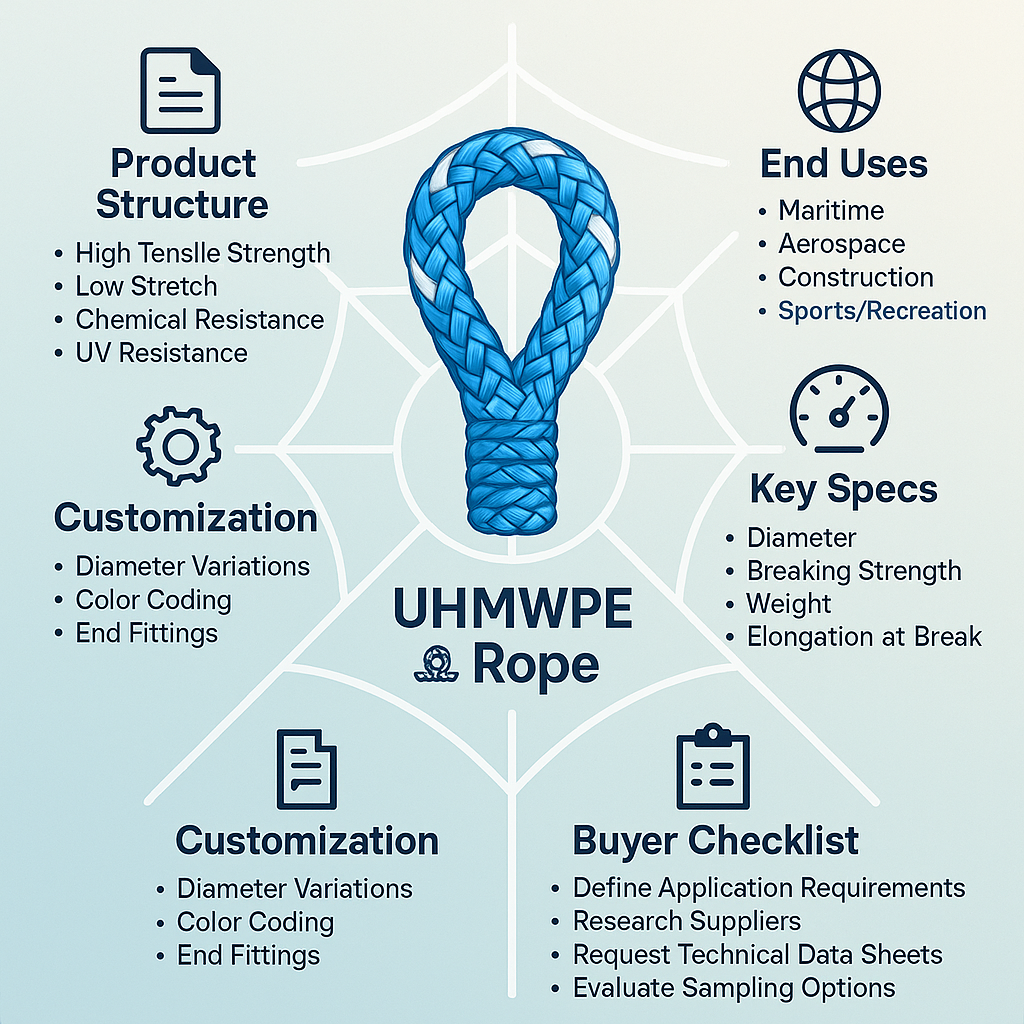
UHMWPE braided rope is constructed from long-chain polyethylene molecules, which contribute to its impressive mechanical properties. The braiding process enhances the rope’s flexibility and strength, making it suitable for various applications. Key technical points include:
- High tensile strength: UHMWPE braided ropes can have a tensile strength exceeding that of steel, making them ideal for heavy-duty applications.
- Low stretch: These ropes exhibit minimal elongation under load, ensuring stability and control in critical situations.
- Chemical resistance: UHMWPE is resistant to a wide range of chemicals, making it suitable for use in diverse environments.
- UV resistance: The material’s inherent UV stability helps prevent degradation when exposed to sunlight.
Application and Sourcing Considerations
When considering UHMWPE braided rope for specific applications, it is crucial to evaluate the operational environment, load requirements, and potential exposure to chemicals or UV light. Sourcing considerations should include:
- Supplier reputation: Look for suppliers with a proven track record in providing high-quality UHMWPE products.
- Material certifications: Ensure that the rope meets relevant industry standards and certifications.
- Customization options: Some suppliers may offer tailored solutions to meet specific application needs.
Buyer Checklist Before Sampling
Before proceeding with sampling, buyers should consider the following checklist:
- Define the application requirements clearly.
- Research potential suppliers and their product offerings.
- Request technical data sheets and material certifications.
- Evaluate the supplier’s ability to provide samples for testing.
Key Specifications and Test Items
Key Technical Points
Understanding the specifications of UHMWPE braided rope is vital for ensuring it meets the demands of your application. Key specifications include:
- Diameter: The diameter of the rope affects its strength and handling characteristics.
- Breaking strength: This is a critical measure of the rope’s load-bearing capacity.
- Weight: The weight of the rope can influence handling and deployment in various applications.
- Elongation at break: This indicates how much the rope can stretch before failing.
Application and Sourcing Considerations
When evaluating specifications, consider how they align with your application’s requirements. For instance, a higher breaking strength may be necessary for lifting applications, while a lighter rope may be preferred for maritime uses. Sourcing considerations should include:
- Availability of specific diameters and strengths.
- Lead times for custom orders.
- Supplier’s ability to provide ongoing support and technical guidance.
Buyer Checklist Before Sampling
Prior to sampling, ensure you have:
- Identified the key specifications required for your application.
- Gathered information on the supplier’s testing protocols.
- Confirmed the availability of the desired specifications.
Common End Uses and Industries
Typical Industries Using This Material
UHMWPE braided rope finds applications across various industries, including:
- Maritime: Used for mooring lines, anchor lines, and towing applications.
- Aerospace: Employed in rigging and other load-bearing applications.
- Construction: Utilized for lifting, securing, and rigging heavy materials.
- Sports and Recreation: Commonly found in climbing, sailing, and other outdoor activities.
Why Engineers and Buyers Choose It
Engineers and buyers often select UHMWPE braided rope due to its unique combination of properties, including:
- Durability: Its resistance to wear and tear makes it suitable for long-term use.
- Lightweight: The low weight facilitates easier handling and transportation.
- Safety: The low stretch characteristics enhance safety in critical applications.
When Another Material May Be Better
While UHMWPE braided rope offers numerous advantages, there are scenarios where alternative materials may be more suitable:
- Cost considerations: For budget-sensitive projects, less expensive materials may be more appropriate.
- Specific environmental conditions: In environments with extreme temperatures, other materials may perform better.
- Application-specific requirements: Certain applications may necessitate properties that UHMWPE does not provide, such as electrical conductivity.
Customization Options
Key Technical Points
Customization of UHMWPE braided rope can enhance its performance for specific applications. Key customization options include:
- Diameter variations: Adjusting the diameter can optimize strength and flexibility.
- Color coding: Custom colors can aid in identification and safety.
- End fittings: Specific end fittings can be designed for compatibility with existing systems.
Application and Sourcing Considerations
When considering customization, evaluate how these options align with your operational needs. Sourcing considerations should include:
- Lead times for custom orders.
- Minimum order quantities for customized products.
- Supplier’s experience with custom solutions.
Buyer Checklist Before Sampling
Before proceeding with custom samples, ensure you have:
- Clearly defined customization requirements.
- Discussed potential impacts on performance and cost with the supplier.
- Confirmed the supplier’s capability to deliver customized solutions.
Sampling, Qualification, and Order Workflow
Key Technical Points
The process of sampling, qualification, and ordering UHMWPE braided rope involves several key steps:
- Initial inquiry: Engage with potential suppliers to discuss your requirements.
- Sample request: Request samples for evaluation in your specific application.
- Testing and qualification: Conduct tests to ensure the rope meets your performance criteria.
- Order placement: Once qualified, place an order based on your needs.
Application and Sourcing Considerations
Throughout this process, consider how testing results align with your application requirements. Sourcing considerations include:
- Supplier’s testing capabilities and standards.
- Flexibility in order quantities and configurations.
- Lead times for delivery based on order size.
Buyer Checklist Before Sampling
Prior to initiating the sampling process, ensure you have:
- A clear understanding of your testing criteria.
- Established communication with the supplier regarding expectations.
- Documented your requirements for future reference.
How to Compare Offers from Different Suppliers
Key Technical Points
When comparing offers for UHMWPE braided rope, consider the following technical points:
- Specifications: Ensure that the specifications align with your application needs.
- Testing protocols: Understand the testing methods used by each supplier to validate their claims.
- Support services: Evaluate the level of technical support and guidance offered by each supplier.
Application and Sourcing Considerations
In addition to technical specifications, consider how each supplier’s offerings align with your operational needs. Sourcing considerations should include:
- Lead times for delivery and flexibility in order quantities.
- Reputation and reliability of the supplier.
- Willingness to provide samples for testing.
Buyer Checklist Before Sampling
Before making a decision, ensure you have:
- Documented comparisons of specifications and pricing.
- Clarified any questions regarding the supplier’s capabilities.
- Established a timeline for decision-making based on your project needs.
Conclusion
Choosing the right UHMWPE braided rope requires careful consideration of various factors, including material properties, application requirements, and supplier capabilities. By utilizing this UHMWPE braided rope buyer guide, decision-makers can navigate the complexities of material selection and sourcing, ensuring they make informed choices that align with their operational needs. A thorough understanding of the specifications, potential applications, and supplier offerings will ultimately lead to successful outcomes in your projects.