
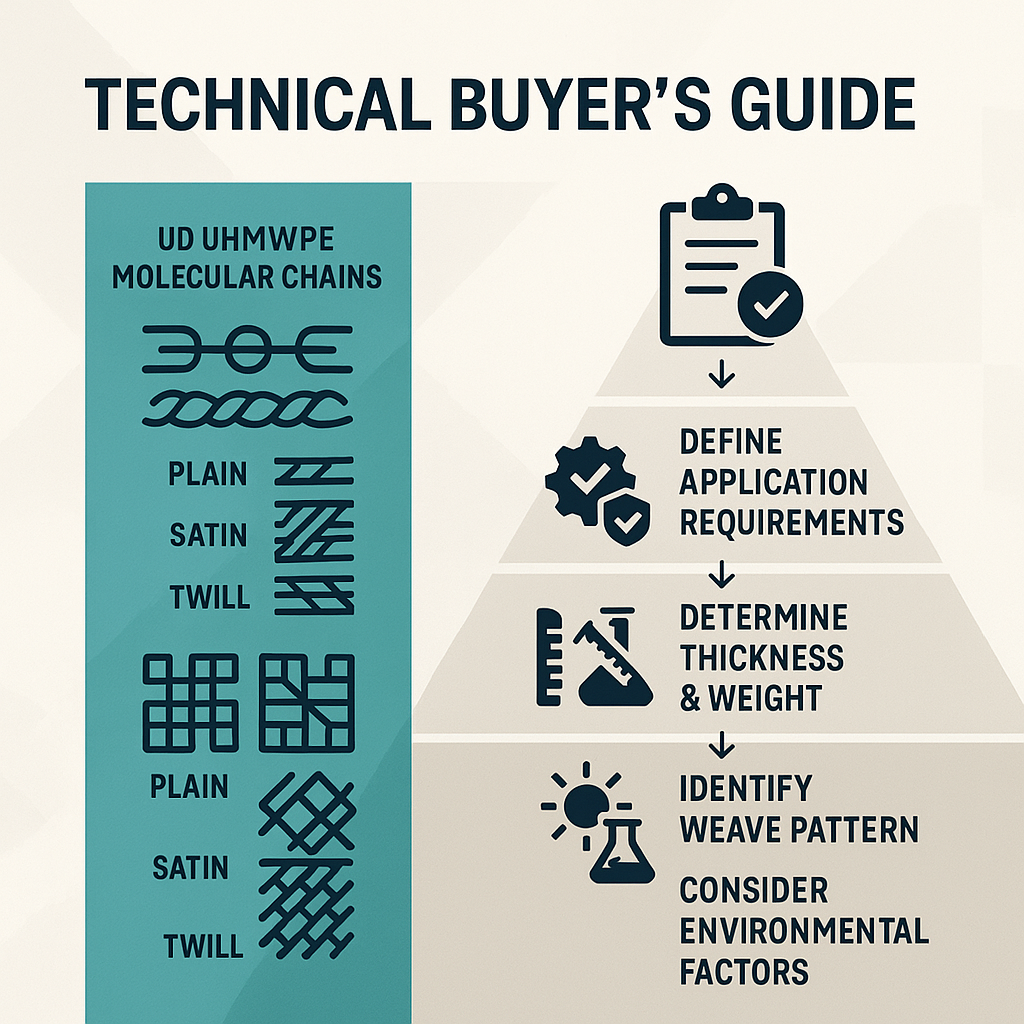
Product Structure and Available Forms
Understanding the structure and forms of UD UHMWPE (Ultra-High Molecular Weight Polyethylene) fabric is essential for making informed decisions in material selection. This fabric is known for its exceptional strength-to-weight ratio, low friction, and high abrasion resistance, making it suitable for various demanding applications.
Key Technical Points
- Material Composition: UD UHMWPE fabric is constructed from long-chain polyethylene molecules, which provide its unique properties.
- Weave Patterns: The fabric can be produced in various weave patterns, including plain, satin, and twill, each offering different mechanical properties.
- Thickness and Weight: Available in multiple thicknesses and weights, the choice will depend on the specific application requirements.
Application and Sourcing Considerations
When sourcing UD UHMWPE fabric, consider the intended application. For instance, the fabric’s strength and durability make it ideal for use in ballistic protection, marine applications, and industrial textiles. Assessing the specific requirements of your project will guide you in selecting the right form and structure.
Buyer Checklist Before Sampling
- Define the application requirements (e.g., load-bearing, abrasion resistance).
- Determine the necessary thickness and weight for your application.
- Identify the required weave pattern based on mechanical property needs.
- Consider environmental factors (e.g., exposure to chemicals, UV light).
Key Specifications and Test Items
Before finalizing your choice of UD UHMWPE fabric, it is crucial to understand the key specifications and test items that will affect performance.
Key Technical Points
- Tensile Strength: Evaluate the fabric’s ability to withstand tension without breaking.
- Elongation at Break: This indicates how much the fabric can stretch before failure.
- Abrasion Resistance: Important for applications where the fabric will experience wear and tear.
Application and Sourcing Considerations
Different applications may require different specifications. For example, fabrics used in ballistic applications will need to meet specific standards for impact resistance, while those used in marine environments may prioritize UV resistance.
Buyer Checklist Before Sampling
- Review the required specifications for your application.
- Request test data from suppliers to verify performance claims.
- Ensure compliance with industry standards relevant to your application.
Common End Uses and Industries
UD UHMWPE fabric is utilized across various industries due to its unique properties. Understanding these applications can help buyers make informed decisions.
Typical Industries Using This Material
- Defense: Used in personal protective equipment and ballistic vests.
- Marine: Ideal for sails, ropes, and other marine applications.
- Industrial: Employed in conveyor belts, protective covers, and wear-resistant components.
Why Engineers and Buyers Choose It
Engineers and buyers often select UD UHMWPE fabric for its superior performance characteristics, including high strength, low weight, and excellent chemical resistance. These attributes make it a versatile choice for demanding applications.
When Another Material May Be Better
While UD UHMWPE fabric offers many advantages, there are scenarios where alternative materials may be more suitable. For instance, if cost is a primary concern, other synthetic fibers may provide adequate performance at a lower price point. Additionally, for applications requiring high-temperature resistance, materials like aramid fibers may be more appropriate.
Customization Options
Customization can enhance the performance of UD UHMWPE fabric for specific applications. Understanding these options is vital for buyers.
Key Technical Points
- Coatings: Various coatings can be applied to improve water resistance, UV stability, or chemical resistance.
- Color and Finish: Custom colors and finishes can be specified for branding or aesthetic purposes.
- Composite Structures: Combining UD UHMWPE with other materials can enhance performance for specific applications.
Application and Sourcing Considerations
Customization can significantly impact the performance of the fabric. It is essential to discuss these options with your supplier to ensure that the final product meets your specific needs.
Buyer Checklist Before Sampling
- Identify any specific customization needs for your application.
- Discuss potential coatings or finishes with suppliers.
- Evaluate the impact of composite structures on performance.
Sampling, Qualification, and Order Workflow
Understanding the workflow for sampling and qualification is crucial for ensuring that the selected UD UHMWPE fabric meets your requirements.
Key Technical Points
- Sampling Process: Request samples that reflect the final product specifications.
- Qualification Testing: Conduct necessary tests to verify that the fabric meets performance criteria.
- Documentation: Ensure that all relevant documentation is provided, including test results and compliance certifications.
Application and Sourcing Considerations
Effective sampling and qualification can prevent costly mistakes down the line. Make sure to establish a clear workflow with your supplier to streamline this process.
Buyer Checklist Before Sampling
- Outline the sampling process with your supplier.
- Define the qualification tests that will be performed.
- Ensure all necessary documentation will be provided with the samples.
How to Compare Offers from Different Suppliers
When evaluating offers from various UD UHMWPE fabric suppliers, a systematic approach can help you make the best decision.
Key Technical Points
- Specifications Comparison: Ensure that you are comparing similar specifications across offers.
- Performance Data: Request performance data to substantiate claims made by suppliers.
- Lead Times and Support: Consider the supplier’s ability to meet your timeline and provide ongoing support.
Application and Sourcing Considerations
Different suppliers may offer varying levels of service and support. Assessing these factors can be as important as comparing prices and specifications.
Buyer Checklist Before Sampling
- Compile a comparison chart of specifications and performance data from each supplier.
- Evaluate the level of customer support offered by each supplier.
- Consider the supplier’s reputation and reliability in the industry.
Conclusion
Choosing the right UD UHMWPE fabric requires careful consideration of various factors, from material properties to supplier capabilities. By following the sampling checklist outlined in this article, buyers can make informed decisions that align with their specific application needs. Understanding the nuances of this high-performance material will ultimately lead to better outcomes in your projects.