
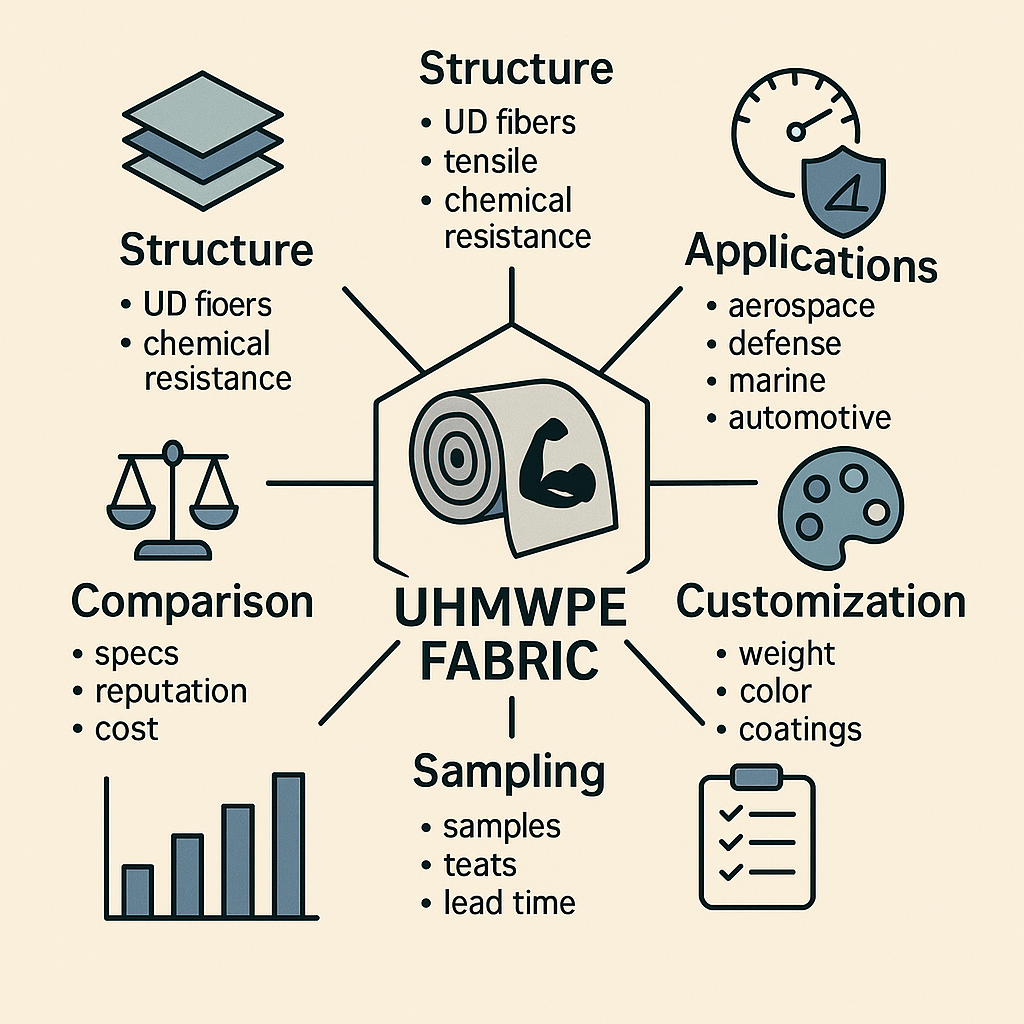
Product Structure and Available Forms
Understanding the structure and available forms of UD UHMWPE (Ultra-High Molecular Weight Polyethylene) fabric is crucial for effective export packaging. This material is known for its exceptional strength-to-weight ratio, chemical resistance, and durability, making it suitable for various industrial applications.
Key Technical Points
UD UHMWPE fabric is typically produced in a unidirectional format, where the fibers are aligned in a single direction. This alignment enhances tensile strength and impact resistance. The fabric can be woven or non-woven, with variations in thickness and weight depending on the intended application. Key technical points to consider include:
- Tensile Strength: The fabric boasts a tensile strength that can exceed 30,000 psi, making it ideal for high-stress applications.
- Weight: Lightweight properties allow for ease of handling and transportation.
- Chemical Resistance: Excellent resistance to a wide range of chemicals, ensuring longevity in harsh environments.
Application and Sourcing Considerations
When sourcing UD UHMWPE fabric, it’s essential to consider the specific applications it will serve. Common applications include:
- Protective gear (e.g., bulletproof vests)
- Marine applications (e.g., ropes, sails)
- Industrial components (e.g., conveyor belts, wear strips)
Understanding the end-use will guide the selection of fabric specifications and sourcing strategies.
Buyer Checklist Before Sampling
Before requesting samples, buyers should evaluate the following:
- Define the specific application and performance requirements.
- Identify potential suppliers and their expertise in UD UHMWPE fabric.
- Check for certifications and compliance with industry standards.
Key Specifications and Test Items
To ensure the UD UHMWPE fabric meets the necessary performance criteria, understanding key specifications and test items is vital.
Key Technical Points
Specifications for UD UHMWPE fabric may include:
- Thickness: Typically ranges from 0.5 mm to 5 mm, depending on the application.
- Weight: Measured in grams per square meter (gsm), with common weights ranging from 100 gsm to 600 gsm.
- UV Resistance: Important for outdoor applications to prevent degradation.
Application and Sourcing Considerations
Different applications may require specific tests, such as:
- Impact resistance testing
- Tensile strength testing
- Chemical exposure testing
Buyers should ensure that suppliers can provide relevant test data to validate performance claims.
Buyer Checklist Before Sampling
Prior to sampling, consider:
- What specific tests are relevant to your application?
- Are the suppliers able to provide test results and certifications?
- What is the expected lead time for samples?
Common End Uses and Industries
UD UHMWPE fabric finds applications across various industries due to its unique properties.
Typical Industries Using This Material
- Aerospace: Used in lightweight structural components.
- Defense: Essential for personal protective equipment.
- Marine: Commonly found in high-performance ropes and sails.
- Automotive: Utilized in components requiring high wear resistance.
Why Engineers and Buyers Choose It
Engineers and buyers often select UD UHMWPE fabric for its:
- Exceptional strength-to-weight ratio
- High abrasion resistance
- Durability in extreme conditions
When Another Material May Be Better
While UD UHMWPE fabric has numerous advantages, there are scenarios where alternative materials may be more suitable. For instance:
- If cost is a primary concern, other synthetic fibers may offer a more economical solution.
- For applications requiring flexibility and softness, materials like nylon or polyester might be preferable.
Customization Options
Customization can enhance the performance of UD UHMWPE fabric for specific applications.
Key Technical Points
Customization options may include:
- Fabric weight and thickness adjustments
- Color variations for branding or identification
- Coatings for additional properties, such as water resistance
Application and Sourcing Considerations
When considering customization, evaluate:
- The impact of customization on performance and cost.
- Supplier capabilities for producing customized solutions.
- Lead times associated with custom orders.
Buyer Checklist Before Sampling
Before proceeding with customized samples, ensure:
- Customization aligns with your application requirements.
- Suppliers have a proven track record in delivering customized solutions.
- Understand the implications of customization on pricing and delivery.
Sampling, Qualification, and Order Workflow
Establishing a clear workflow for sampling and qualification is essential for successful sourcing.
Key Technical Points
The sampling process should include:
- Requesting samples that reflect the final product specifications.
- Conducting performance tests to validate suitability.
- Engaging in discussions with suppliers about any concerns or requirements.
Application and Sourcing Considerations
Consider the following during the qualification process:
- How will the fabric perform in real-world applications?
- What are the potential risks associated with sourcing from different suppliers?
Buyer Checklist Before Sampling
Before initiating the sampling process, ensure you have:
- A clear understanding of your performance requirements.
- Established criteria for evaluating samples.
- Communicated expectations with potential suppliers.
How to Compare Offers from Different Suppliers
When evaluating offers from various suppliers, a structured approach can help in making informed decisions.
Key Technical Points
Key aspects to compare include:
- Material specifications and performance data.
- Supplier reputation and experience in the industry.
- Lead times and flexibility in order fulfillment.
Application and Sourcing Considerations
Consider the following when comparing offers:
- How do the suppliers’ offerings align with your specific application needs?
- What are the total costs, including shipping and handling?
Buyer Checklist Before Sampling
Before finalizing your decision, ensure you have:
- Evaluated all technical specifications and performance claims.
- Considered long-term relationships with suppliers for future needs.
- Clarified any uncertainties regarding terms and conditions.
Conclusion
Understanding the nuances of UD UHMWPE fabric export packaging is essential for making informed sourcing decisions. By considering the product structure, specifications, applications, and supplier capabilities, buyers can navigate the complexities of the market effectively. A structured approach to sampling, qualification, and comparison will further enhance the decision-making process. As you explore your options, keep in mind the specific requirements of your applications and the potential trade-offs involved.