
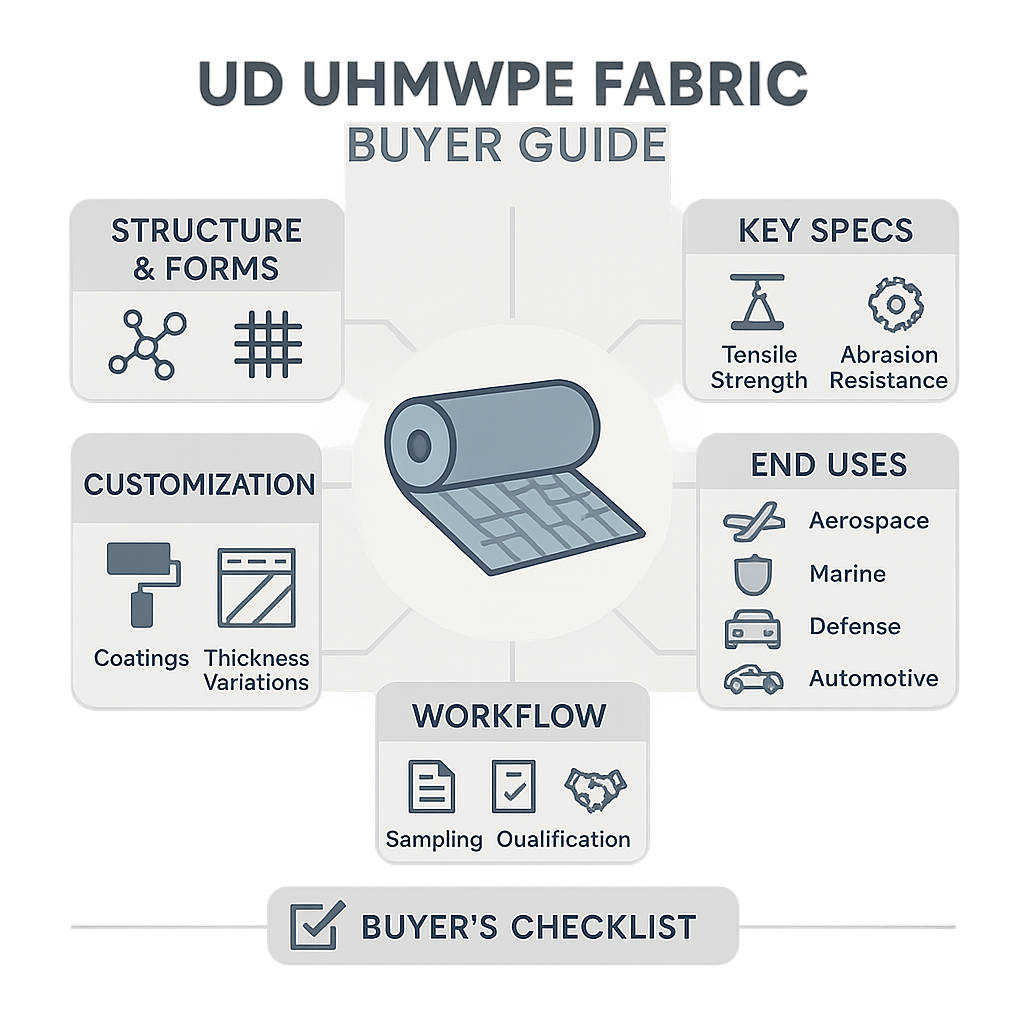
Product Structure and Available Forms
Understanding the structure and available forms of UD UHMWPE (Ultra-High Molecular Weight Polyethylene) fabric is crucial for making informed purchasing decisions. This high-performance textile is known for its exceptional strength-to-weight ratio, abrasion resistance, and low friction properties. It is often used in demanding applications where durability and performance are paramount.
Key Technical Points
- Material Composition: UD UHMWPE fabric is made from long-chain polyethylene molecules, which provide its unique properties.
- Weave Structure: The unidirectional (UD) weave enhances tensile strength, making it suitable for high-stress applications.
- Thickness and Weight: Available in various thicknesses and weights, the choice depends on the specific application requirements.
Application and Sourcing Considerations
When considering UD UHMWPE fabric, it’s essential to evaluate the specific application needs. Factors such as environmental conditions, load-bearing requirements, and compatibility with other materials should be assessed. Sourcing from a reputable supplier ensures quality and consistency in performance.
Buyer Checklist Before Sampling
- Define the specific application and performance requirements.
- Research potential suppliers and their certifications.
- Request samples to evaluate material properties and performance.
Key Specifications and Test Items
Understanding the key specifications and test items for UD UHMWPE fabric is vital for ensuring it meets the required standards for your application.
Key Technical Points
- Tensile Strength: A critical measure of the fabric’s ability to withstand pulling forces.
- Elongation at Break: Indicates how much the fabric can stretch before failing, which is important for applications requiring flexibility.
- Abrasion Resistance: Essential for applications exposed to wear and tear.
Application and Sourcing Considerations
Different applications may require different specifications. For instance, a fabric used in marine applications may need enhanced UV resistance, while one used in ballistic protection may prioritize tensile strength. Always consult with suppliers to ensure the fabric meets the necessary specifications for your intended use.
Buyer Checklist Before Sampling
- Identify the key specifications required for your application.
- Ensure the supplier can provide relevant test data and certifications.
- Evaluate the fabric’s performance in real-world conditions through sampling.
Common End Uses and Industries
UD UHMWPE fabric is utilized across various industries due to its unique properties. Understanding these applications can help buyers make informed decisions.
Typical Industries Using This Material
- Aerospace: Used for lightweight components and protective gear.
- Marine: Ideal for sails, ropes, and protective coverings.
- Defense: Commonly used in ballistic vests and protective gear.
- Automotive: Utilized in lightweight components to improve fuel efficiency.
Why Engineers and Buyers Choose It
Engineers and buyers often select UD UHMWPE fabric for its superior performance characteristics, including high strength, low weight, and resistance to environmental factors. These attributes make it a reliable choice for critical applications.
When Another Material May Be Better
While UD UHMWPE fabric offers numerous advantages, there are scenarios where other materials may be more suitable. For example, if cost is a primary concern, alternatives like polyester or nylon may be more economical, albeit with trade-offs in performance.
Customization Options
Customization is often necessary to meet specific application requirements. Understanding the available options can enhance the performance of UD UHMWPE fabric in your application.
Key Technical Points
- Coatings: Various coatings can enhance properties such as water resistance and UV stability.
- Thickness Variations: Custom thicknesses can be produced based on application needs.
Application and Sourcing Considerations
When considering customization, it’s essential to communicate your specific needs to suppliers. This ensures that the final product meets your performance requirements while adhering to budget constraints.
Buyer Checklist Before Sampling
- Clearly define your customization requirements.
- Discuss potential impacts on performance with your supplier.
- Request samples of customized options to evaluate their suitability.
Sampling, Qualification, and Order Workflow
Understanding the sampling, qualification, and order workflow is crucial for ensuring that the UD UHMWPE fabric meets your needs.
Key Technical Points
- Sampling Process: Establish a clear process for obtaining and evaluating samples.
- Qualification Criteria: Define the criteria that the fabric must meet before proceeding with an order.
Application and Sourcing Considerations
Ensure that the sampling process includes real-world testing conditions to accurately assess performance. This will help in making informed decisions about the suitability of the fabric for your application.
Buyer Checklist Before Sampling
- Outline the sampling process and criteria for evaluation.
- Discuss timelines and expectations with your supplier.
- Conduct thorough testing of samples under relevant conditions.
How to Compare Offers from Different Suppliers
When sourcing UD UHMWPE fabric, comparing offers from different suppliers is essential for making an informed decision.
Key Technical Points
- Specifications: Ensure that all offers meet the required specifications for your application.
- Testing Data: Request test data to validate performance claims.
Application and Sourcing Considerations
Consider not only the price but also the quality, reliability, and service level of each supplier. A lower price may not always equate to better value if the material does not perform as required.
Buyer Checklist Before Sampling
- Compile a comparison matrix to evaluate offers based on key criteria.
- Engage with suppliers to clarify any uncertainties regarding their products.
- Consider the long-term relationship potential with each supplier.
Conclusion
Choosing the right UD UHMWPE fabric involves careful consideration of its properties, applications, and sourcing options. By understanding the material’s structure, specifications, and potential customization, buyers can make informed decisions that align with their specific needs. Utilize the provided checklists to guide your sampling and evaluation processes, ensuring that you select a fabric that meets your performance requirements while fostering a productive relationship with your supplier.