
What does twist per inch benefits mean in sewing thread applications?
In the realm of sewing thread manufacturing, understanding the concept of twist per inch (TPI) is essential for optimizing thread performance and ensuring suitability for various applications. The benefits of twist per inch can significantly influence the durability, strength, and overall functionality of sewing threads.
Basic definition
Twist per inch refers to the number of twists or turns that a thread undergoes in one inch of its length. This twisting process is crucial in the production of sewing threads as it affects the yarn’s structure and properties. A higher TPI typically results in a tighter, more robust thread, while a lower TPI can lead to a softer and more flexible thread.
Why it matters in sewing performance
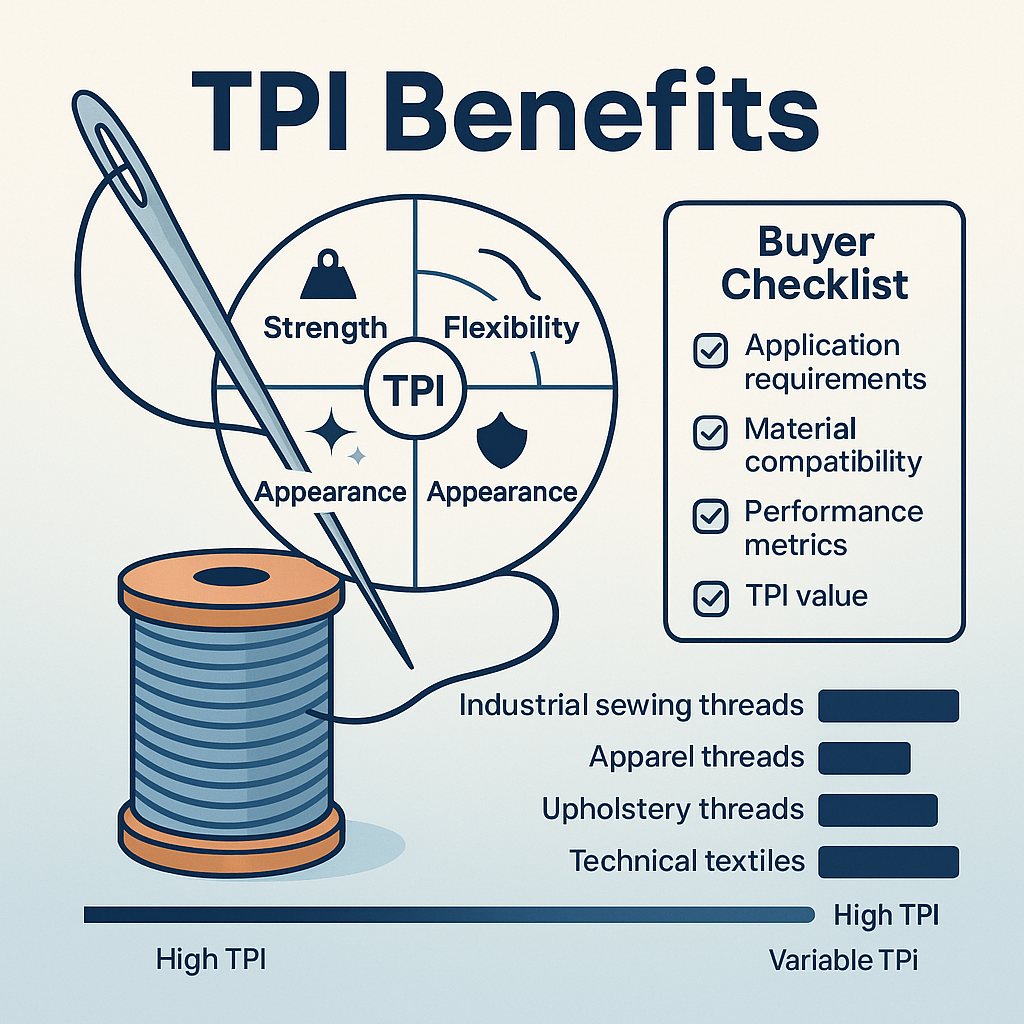
The twist per inch benefits extend beyond mere strength; they also play a vital role in the thread’s performance during sewing. Here are some key aspects to consider:
- Strength: Threads with higher TPI generally exhibit greater tensile strength, making them suitable for heavy-duty applications.
- Flexibility: Lower TPI threads can provide better flexibility, which is advantageous for delicate fabrics.
- Durability: The right TPI can enhance the durability of the thread, reducing the likelihood of breakage during sewing.
- Appearance: The twist can also affect the thread’s appearance, influencing the final look of the sewn product.
Where is twist per inch benefits used?
Understanding where twist per inch benefits are applied can guide sourcing decisions and thread selection for specific projects.
Common sewing thread products or applications
Twist per inch is a critical factor in various sewing thread products:
- Industrial sewing threads: Often require higher TPI for enhanced strength and durability.
- Apparel threads: May utilize lower TPI for flexibility and comfort, especially in garments that require stretch.
- Upholstery threads: Typically benefit from higher TPI to withstand wear and tear.
- Technical textiles: Often demand specific TPI levels to meet performance standards.
What buyers usually check
When evaluating sewing threads, buyers typically consider several factors related to TPI:
- Application requirements: The intended use of the thread can dictate the necessary TPI.
- Material compatibility: Different materials may require specific TPI to achieve optimal performance.
- Performance metrics: Buyers often assess tensile strength, elongation, and abrasion resistance in relation to TPI.
How to evaluate twist per inch benefits
Evaluating twist per inch benefits involves understanding the specifications and common misconceptions surrounding TPI.
Key points on a specification sheet
When reviewing a specification sheet, consider the following points related to TPI:
- TPI value: Look for the specific TPI value listed, as it directly impacts thread performance.
- Material type: Different materials (e.g., polyester, nylon) may exhibit varying performance characteristics at the same TPI.
- Application suitability: Ensure that the TPI aligns with the intended application of the thread.
Common misunderstandings
Several misconceptions can cloud the understanding of twist per inch benefits:
- Higher TPI is always better: While higher TPI can enhance strength, it may not be suitable for all applications, particularly those requiring flexibility.
- All threads with the same TPI perform similarly: Thread performance is influenced by various factors, including material type and construction.
Practical takeaway for sourcing teams
For sourcing teams, understanding twist per inch benefits is crucial for making informed decisions regarding thread selection.
When to ask for samples
Requesting samples is advisable when:
- The application requires specific performance characteristics that are not clearly defined in the specifications.
- There is uncertainty about how the thread will perform with the intended fabric or material.
- Comparing different TPI options to determine the best fit for a project.
When another thread type may fit better
In some cases, it may be beneficial to consider alternative thread types:
- If the application requires extreme flexibility, a lower TPI thread may be more suitable.
- For applications involving heavy-duty materials, a thread with a higher TPI may provide the necessary strength.
- When working with specialized fabrics, such as stretch materials, evaluating TPI in conjunction with other thread properties is essential.
In conclusion, understanding the benefits of twist per inch in sewing thread manufacturing is vital for optimizing sewing performance and ensuring the right fit for various applications. By evaluating TPI alongside other thread characteristics, sourcing teams can make informed decisions that enhance the quality and durability of their sewn products.