
What does twist direction benefits mean in sewing thread applications?
Understanding the twist direction benefits in sewing thread manufacturing is essential for optimizing sewing performance and ensuring the right fit for various applications. The twist direction refers to the way fibers are twisted together to form a thread, which can significantly impact the thread’s strength, durability, and behavior during sewing. This article delves into the nuances of twist direction and its implications for sewing applications.
Basic definition
Twist direction in sewing threads can be categorized into two primary types: S-twist and Z-twist. The designation comes from the direction in which the fibers are twisted:
- S-twist: Fibers are twisted in a direction resembling the letter ‘S’.
- Z-twist: Fibers are twisted in a direction resembling the letter ‘Z’.
This fundamental aspect of thread construction affects how the thread interacts with the fabric and the sewing machine, influencing the overall performance of the sewn product.
Why it matters in sewing performance
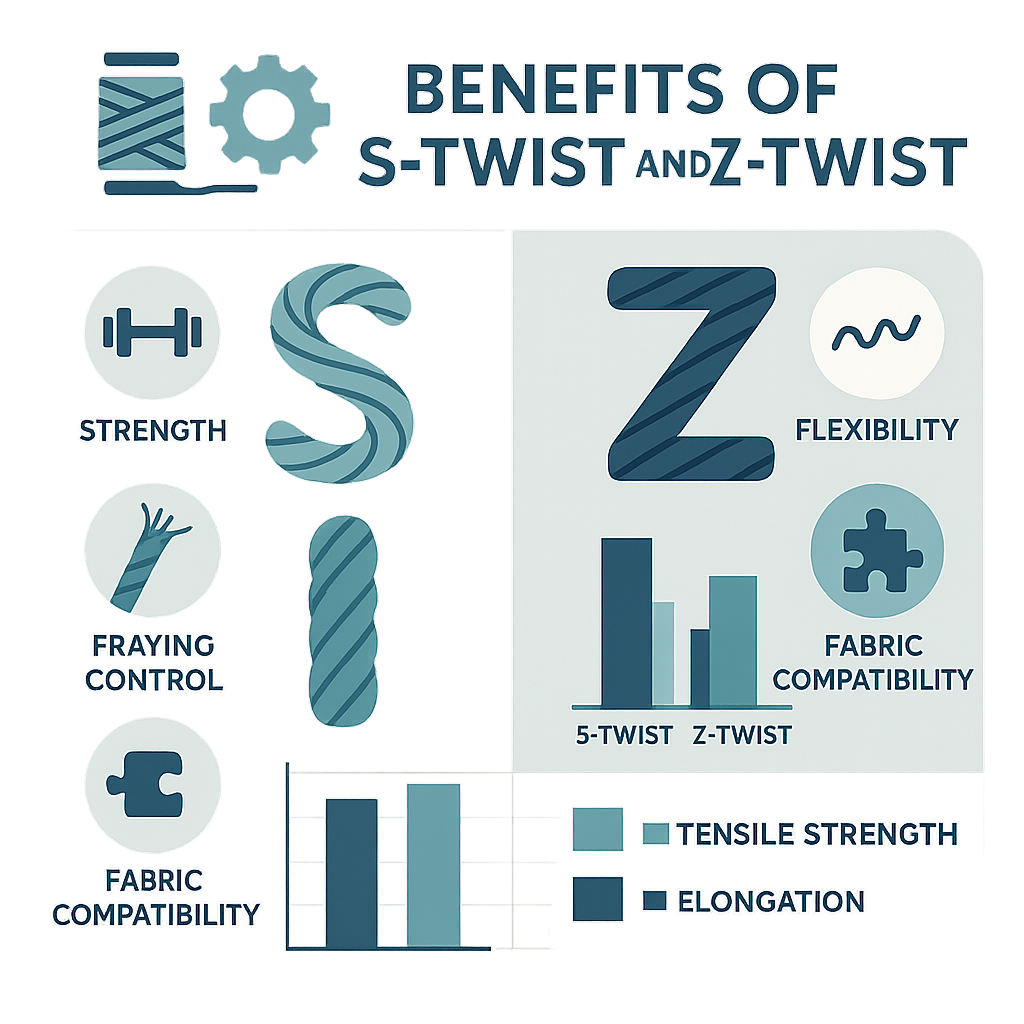
The twist direction can have a profound effect on several performance characteristics of sewing threads, including:
- Strength: The twist direction can enhance the tensile strength of the thread, making it more resistant to breaking under stress.
- Flexibility: Different twist directions can affect how flexible the thread is, which is crucial for applications requiring intricate stitching or movement.
- Fraying: The twist can influence how the thread behaves at the cut ends, impacting fraying and overall durability.
- Compatibility: The twist direction can affect how well the thread works with various fabrics and sewing techniques.
Understanding these factors is vital for manufacturers and sourcing teams when selecting the appropriate thread for specific applications.
Where is twist direction benefits used?
Twist direction benefits are evident across various sewing applications and products. Knowing where these benefits apply can guide buyers in making informed decisions.
Common sewing thread products or applications
Twist direction plays a critical role in several common sewing thread products, including:
- Industrial sewing threads: Used in heavy-duty applications such as automotive and upholstery, where strength and durability are paramount.
- Apparel threads: Used in clothing manufacturing, where flexibility and compatibility with various fabrics are essential.
- Embroidery threads: Often require specific twist directions to achieve the desired aesthetic and performance.
- Quilting threads: Need to balance strength and flexibility to accommodate multiple layers of fabric.
Each application may benefit differently from the twist direction, making it essential for buyers to consider the specific requirements of their projects.
What buyers usually check
When evaluating sewing threads, buyers typically consider several factors related to twist direction:
- Thread strength: Ensuring the thread can withstand the demands of the application.
- Flexibility: Assessing how the thread will perform in terms of movement and stitching.
- Compatibility: Checking how well the thread interacts with specific fabrics and sewing techniques.
- Durability: Understanding how the twist direction affects the longevity of the thread in the finished product.
These considerations help buyers select the most suitable thread for their needs.
How to evaluate twist direction benefits
Evaluating twist direction benefits requires a careful examination of specifications and performance characteristics. Here are key points to consider.
Key points on a specification sheet
When reviewing a thread’s specification sheet, look for:
- Twist type: Whether the thread is S-twist or Z-twist.
- Tensile strength: The maximum load the thread can bear before breaking.
- Elongation: The extent to which the thread can stretch before breaking, which can be influenced by twist direction.
- Recommended applications: Specific uses for which the thread is best suited, often linked to twist direction benefits.
These details can provide insights into how the twist direction will impact the thread’s performance in various applications.
Common misunderstandings
There are several common misunderstandings regarding twist direction benefits that can lead to poor thread selection:
- All threads are the same: Many buyers assume that all threads perform similarly, but twist direction can significantly alter performance.
- Twist direction is irrelevant: Some may overlook the importance of twist direction, but it can affect strength, flexibility, and compatibility.
- Only strength matters: While strength is crucial, flexibility and compatibility with fabrics are equally important for successful sewing.
Clarifying these misunderstandings can help buyers make more informed decisions.
Practical takeaway for sourcing teams
For sourcing teams, understanding twist direction benefits is essential for selecting the right sewing threads for specific applications. Here are some practical considerations:
When to ask for samples
Requesting samples is advisable when:
- Evaluating a new thread type for a specific application.
- Testing compatibility with particular fabrics or sewing techniques.
- Assessing performance under different conditions, such as stress or environmental factors.
Samples allow for hands-on evaluation of how twist direction impacts performance in real-world scenarios.
When another thread type may fit better
There are instances when a different thread type may be more suitable, such as:
- When the application requires a specific aesthetic that a different twist direction can provide.
- In cases where flexibility is more critical than strength, necessitating a thread with a different twist.
- When working with unique fabrics that may not perform well with the selected thread’s twist direction.
Being open to exploring various thread types can lead to better outcomes in sewing projects.
In conclusion, understanding the twist direction benefits in sewing thread manufacturing is vital for optimizing performance and ensuring the right fit for various applications. By considering twist direction alongside other performance factors, sourcing teams can make more informed decisions that enhance the quality and durability of their sewn products.