
What does what is ticket number in sewing thread mean in sewing thread applications?
Understanding the ticket number in sewing thread is essential for anyone involved in the sewing industry, from manufacturers to sourcing managers. This number serves as a key identifier that reflects the thread’s characteristics, influencing its performance in various applications. Knowing how to interpret this number can significantly affect the quality and efficiency of sewing projects.
Basic definition
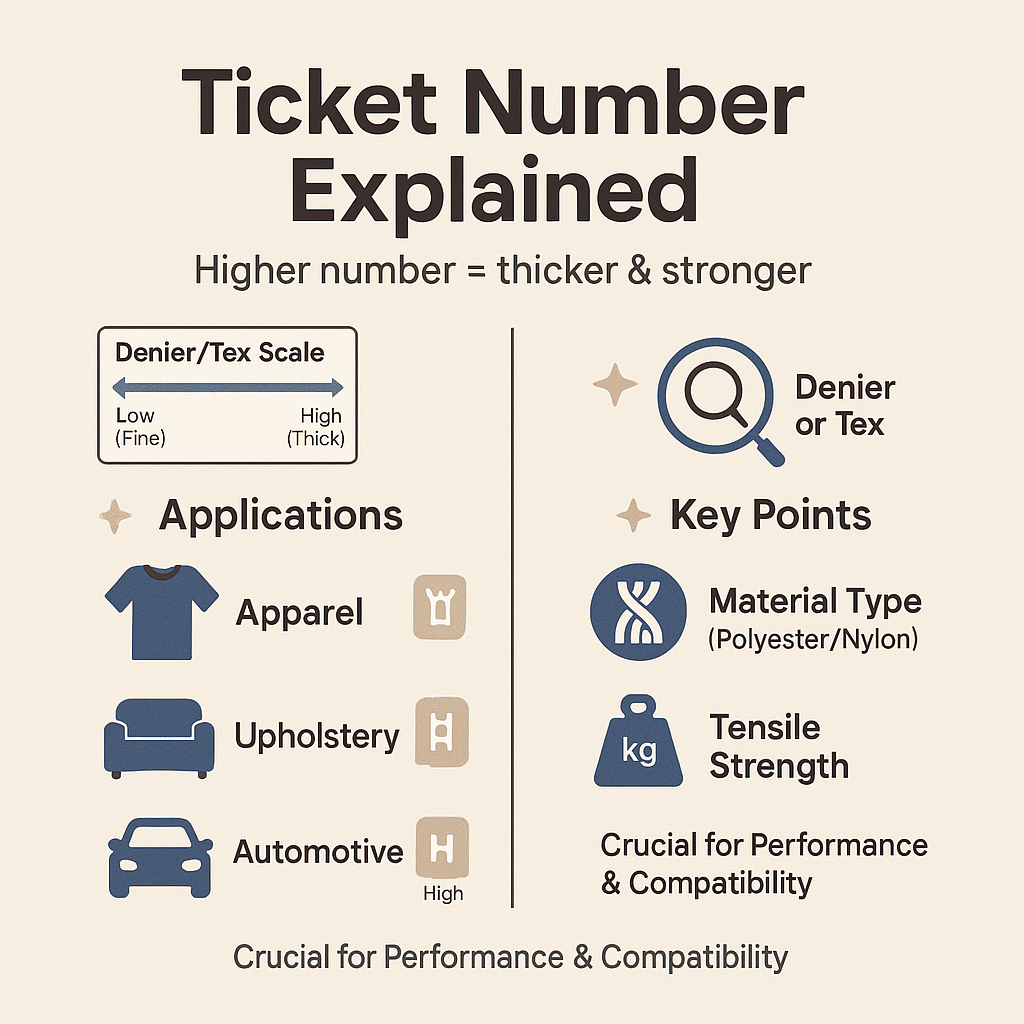
The ticket number is a numerical value assigned to sewing threads that indicates their thickness and strength. It is often expressed in terms of denier or tex, which are units that measure the linear mass density of the thread. Essentially, a higher ticket number typically signifies a thicker and stronger thread, while a lower ticket number indicates a finer and lighter thread.
Why it matters in sewing performance
The ticket number plays a crucial role in determining how a thread will perform during sewing. Threads with different ticket numbers behave differently under various conditions:
- Strength: A higher ticket number often correlates with greater tensile strength, making it suitable for heavy-duty applications.
- Flexibility: Finer threads may offer better flexibility, which is advantageous for delicate fabrics.
- Compatibility: The ticket number can affect how well the thread works with different sewing machines and needle types.
Understanding these factors helps buyers make informed decisions about which thread to select for specific applications.
Where is what is ticket number in sewing thread used?
The ticket number is relevant across various sewing thread products and applications. Knowing where it is used can help buyers identify the right thread for their needs.
Common sewing thread products or applications
Different industries utilize threads with varying ticket numbers based on their specific requirements:
- Apparel: Threads used in clothing often have a moderate ticket number, balancing strength and flexibility.
- Upholstery: Heavy-duty threads with higher ticket numbers are commonly used for upholstery to withstand wear and tear.
- Automotive: Threads in automotive applications typically require high tenacity to endure harsh conditions.
Each application demands a specific ticket number to ensure optimal performance.
What buyers usually check
When evaluating sewing threads, buyers often consider several factors related to the ticket number:
- Material Composition: The type of fiber (e.g., polyester, nylon) can influence the thread’s performance.
- Application Requirements: Understanding the end-use helps in selecting the appropriate ticket number.
- Machine Compatibility: Ensuring that the thread works well with the sewing machines in use is critical.
These checks help ensure that the selected thread meets the specific needs of the project.
How to evaluate what is ticket number in sewing thread
Evaluating the ticket number involves understanding the specifications and common misunderstandings associated with it.
Key points on a specification sheet
A specification sheet for sewing thread should include the ticket number along with other critical details:
- Denier or Tex: The unit of measurement for the ticket number.
- Material Type: Information on whether the thread is polyester, nylon, or another fiber.
- Tensile Strength: The strength of the thread, which often correlates with the ticket number.
Reviewing these points can help buyers make informed decisions based on the ticket number.
Common misunderstandings
There are several misconceptions about the ticket number that can lead to poor purchasing decisions:
- Higher is Always Better: While a higher ticket number indicates strength, it may not always be suitable for every application.
- Uniformity Across Brands: Different manufacturers may have variations in how they assign ticket numbers, making it essential to evaluate each thread individually.
Being aware of these misunderstandings can help buyers avoid common pitfalls.
Practical takeaway for sourcing teams
For sourcing teams, understanding the ticket number is not just about knowing what it is but also when to request samples and consider alternative thread types.
When to ask for samples
Requesting samples is advisable when:
- You are evaluating a new supplier and want to assess the quality of their threads.
- You are unsure how a specific ticket number will perform in your application.
- You are considering a thread for a new project and need to ensure compatibility.
Samples can provide valuable insights that specifications alone cannot offer.
When another thread type may fit better
Sometimes, a different thread type may be more suitable than what the ticket number suggests. Consider alternatives when:
- The application requires unique properties, such as stretch or heat resistance.
- The sewing machine settings are optimized for a different thread type.
- The fabric being used has specific requirements that a different thread can better meet.
Being open to alternatives can lead to better outcomes in sewing performance.
In conclusion, understanding the ticket number in sewing thread is crucial for making informed decisions in the sourcing process. By grasping its definition, significance, and application, buyers can optimize their thread selection for various sewing applications. Always consider the specific needs of your project and remain open to exploring different options to achieve the best results.