
What does thread tenacity properties mean in sewing thread applications?
Thread tenacity properties are essential considerations in the realm of sewing threads, influencing both the performance and durability of the final product. Understanding these properties can significantly impact the quality and longevity of sewn items, making it a critical factor for manufacturers, distributors, and sourcing managers.
Basic definition
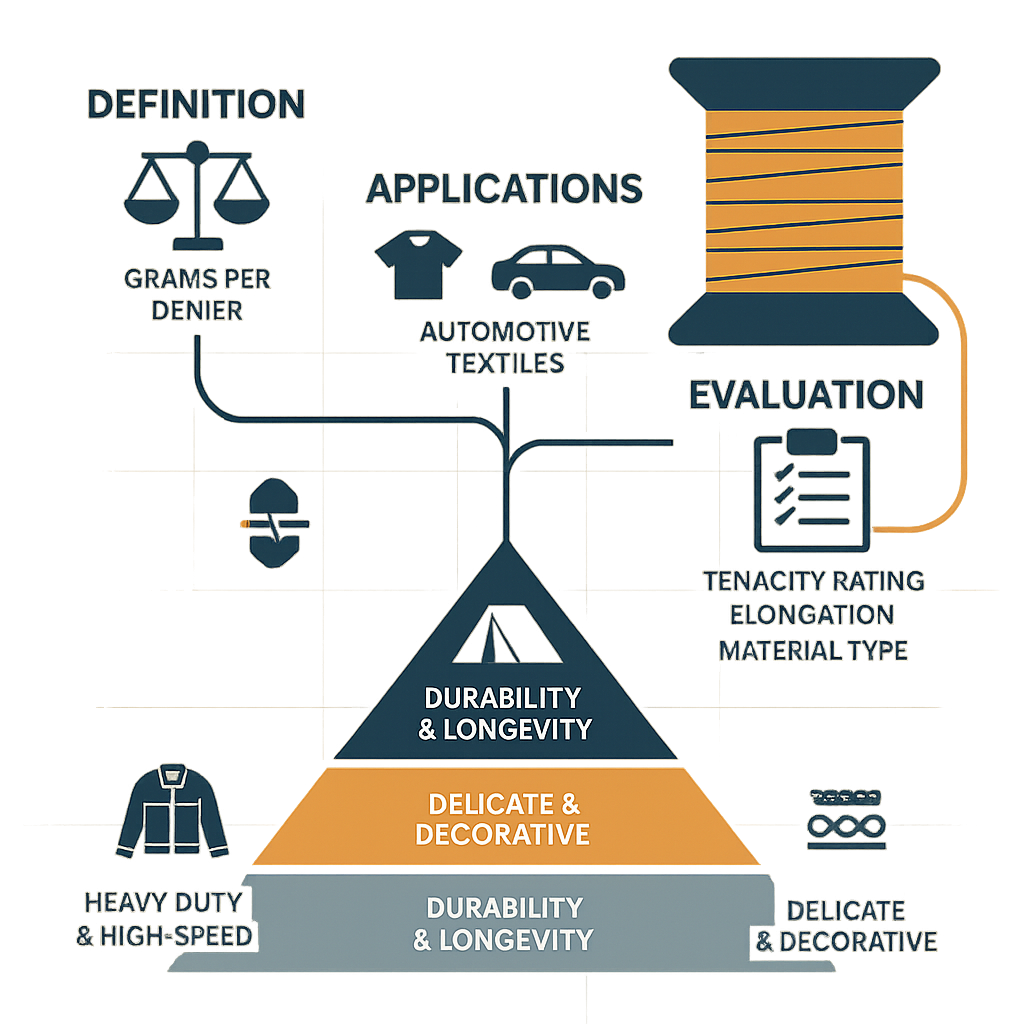
Thread tenacity refers to the strength of the thread, typically measured in grams per denier or tex. It indicates how much force the thread can withstand before breaking. In practical terms, higher tenacity threads can endure greater tension during sewing, making them suitable for high-stress applications.
Why it matters in sewing performance
The importance of thread tenacity properties in sewing performance cannot be overstated. Threads with higher tenacity can handle the rigors of various sewing applications, such as:
- Heavy-duty fabrics: When working with thick materials like denim or canvas, a strong thread is necessary to prevent breakage.
- High-speed sewing: In industrial settings, where machines operate at high speeds, a robust thread is essential to maintain integrity.
- Durability: For products that require longevity, such as outdoor gear or upholstery, selecting a thread with high tenacity ensures that seams remain intact over time.
Where is thread tenacity properties used?
Understanding where thread tenacity properties are applied helps in making informed decisions during the selection process.
Common sewing thread products or applications
Thread tenacity properties are relevant across various sewing applications, including:
- Apparel manufacturing: High-tenacity threads are often used in garments that experience significant wear and tear.
- Automotive textiles: Upholstery and seat covers require threads that can withstand environmental stressors.
- Outdoor equipment: Items like tents and backpacks benefit from strong threads to ensure durability against the elements.
- Home furnishings: Curtains and upholstery often require threads that can handle both weight and frequent use.
What buyers usually check
When evaluating thread tenacity properties, buyers typically consider several factors:
- Material composition: Different materials (e.g., polyester vs. nylon) offer varying levels of tenacity.
- Thread count: Higher thread counts can indicate greater strength and durability.
- Application requirements: Understanding the specific needs of the end product helps in selecting the appropriate thread.
How to evaluate thread tenacity properties
Evaluating thread tenacity properties involves a careful examination of specifications and performance metrics.
Key points on a specification sheet
When reviewing a thread specification sheet, look for the following key points:
- Tenacity rating: This is often provided in grams per denier or tex, indicating the strength of the thread.
- Elongation: This measures how much the thread can stretch before breaking, which can be critical in certain applications.
- Material type: Knowing whether the thread is polyester, nylon, or another material can help assess its suitability for specific applications.
Common misunderstandings
There are several misconceptions regarding thread tenacity properties that can lead to poor thread selection:
- Higher tenacity always means better: While high tenacity is beneficial, it must be matched with the application requirements. For example, a thread that is too stiff may not perform well in delicate fabrics.
- All polyester threads are the same: Variations in manufacturing processes can lead to significant differences in tenacity among polyester threads.
- Price correlates with performance: While higher-priced threads may offer better performance, it is essential to evaluate them based on specifications rather than cost alone.
Practical takeaway for sourcing teams
For sourcing teams, understanding thread tenacity properties is vital for making informed decisions that align with production needs and quality standards.
When to ask for samples
Requesting samples is advisable when:
- You are exploring new suppliers or materials.
- Testing a thread for a specific application to ensure it meets performance requirements.
- You need to compare different threads to evaluate their tenacity and overall suitability.
When another thread type may fit better
In some cases, a different thread type may be more appropriate based on the application. For instance:
- For lightweight fabrics: A lower tenacity thread may provide the necessary flexibility without compromising the fabric’s integrity.
- For decorative stitching: Specialty threads with lower tenacity can enhance aesthetic appeal without the need for high strength.
- For specific environmental conditions: Threads designed for moisture resistance or UV stability may be more suitable than those focused solely on tenacity.
In conclusion, understanding thread tenacity properties is crucial for selecting the right sewing thread for various applications. By evaluating specifications carefully and considering the specific needs of each project, sourcing teams can make informed decisions that enhance the quality and durability of their sewn products.