
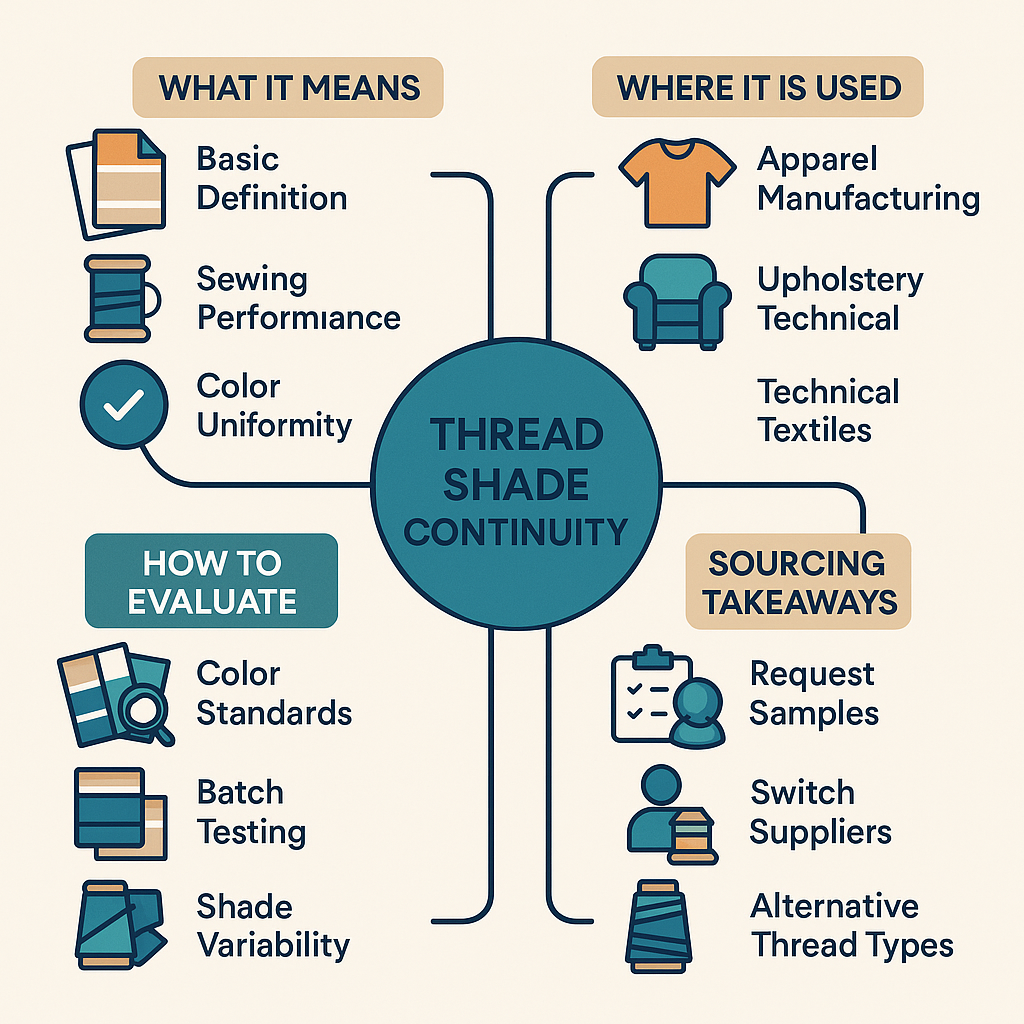
What does thread shade continuity mean in sewing thread applications?
Thread shade continuity is a critical concept in the realm of sewing threads, particularly for industries where color consistency is paramount. Whether you’re working on garments, upholstery, or technical textiles, understanding this term can significantly impact the quality and aesthetic of the final product.
Basic definition
At its core, thread shade continuity refers to the uniformity of color across different batches of sewing thread. This consistency ensures that the thread used in a project matches perfectly, even if sourced at different times or from different suppliers. Variations in shade can lead to noticeable discrepancies in the finished product, affecting both appearance and brand integrity.
Why it matters in sewing performance
In sewing applications, the performance of the thread is not solely about strength or durability; color consistency plays a vital role in the overall quality of the work. Here are a few reasons why thread shade continuity is essential:
- Aesthetic Appeal: In fashion and upholstery, color matching is crucial. Any variation can detract from the visual appeal.
- Brand Consistency: For companies producing branded items, maintaining color uniformity is vital for brand recognition and customer satisfaction.
- Quality Assurance: Consistent thread color can be an indicator of overall quality control in the manufacturing process.
Where is thread shade continuity used?
Thread shade continuity is particularly relevant in several sewing thread products and applications. Understanding where it is applied can help sourcing teams make informed decisions.
Common sewing thread products or applications
Thread shade continuity is crucial in various sectors, including:
- Apparel Manufacturing: Garments often require multiple threads for seams, hems, and decorative stitching, necessitating strict color matching.
- Upholstery: In furniture and automotive upholstery, thread shade continuity ensures a cohesive look across different components.
- Technical Textiles: In industries like medical or military applications, color consistency can be critical for functionality and compliance.
What buyers usually check
When evaluating thread shade continuity, buyers typically focus on several key aspects:
- Color Standards: Buyers often refer to established color standards (like Pantone) to ensure consistency.
- Batch Testing: Requesting samples from different batches can help assess color uniformity.
- Supplier Reputation: A supplier’s history of maintaining shade continuity can be a deciding factor.
How to evaluate thread shade continuity
Evaluating thread shade continuity involves careful examination and testing. Here are some practical steps to consider.
Key points on a specification sheet
When reviewing a specification sheet for sewing threads, pay attention to the following:
- Colorfastness Ratings: This indicates how well the color holds up under various conditions.
- Shade Variability: Look for any notes on potential shade differences between batches.
- Certification: Certifications related to color matching can provide additional assurance.
Common misunderstandings
There are several misconceptions surrounding thread shade continuity that can lead to confusion:
- All Threads Are the Same: Not all threads from different suppliers will have the same color consistency.
- Color Matching is Simple: Achieving perfect color matching requires careful consideration of dye lots and materials.
- Only Aesthetic Concerns Matter: While visual appeal is important, inconsistencies can also affect performance and durability.
Practical takeaway for sourcing teams
For sourcing teams, understanding thread shade continuity is not just about aesthetics; it’s about ensuring quality and consistency in production.
When to ask for samples
It’s advisable to request samples when:
- Launching a new product line where color consistency is critical.
- Switching suppliers or sourcing from a new region.
- Testing different thread types for specific applications.
When another thread type may fit better
In some cases, it may be beneficial to consider alternative thread types if:
- The required color consistency is not achievable with the current thread.
- Different applications demand varying performance characteristics.
- Cost considerations necessitate a reevaluation of thread specifications.
In conclusion, understanding thread shade continuity is essential for achieving high-quality sewing applications. By focusing on color consistency, buyers can ensure that their products meet both aesthetic and functional standards. This knowledge not only aids in making informed purchasing decisions but also enhances the overall quality of the final product.