
What does thread sample approval properties mean in sewing thread applications?
In the world of sewing, selecting the right thread is as critical as choosing the fabric. One of the key concepts that come into play during this selection process is thread sample approval properties. Understanding these properties helps ensure that the chosen thread performs well in the intended application, leading to high-quality finished products.
Basic definition
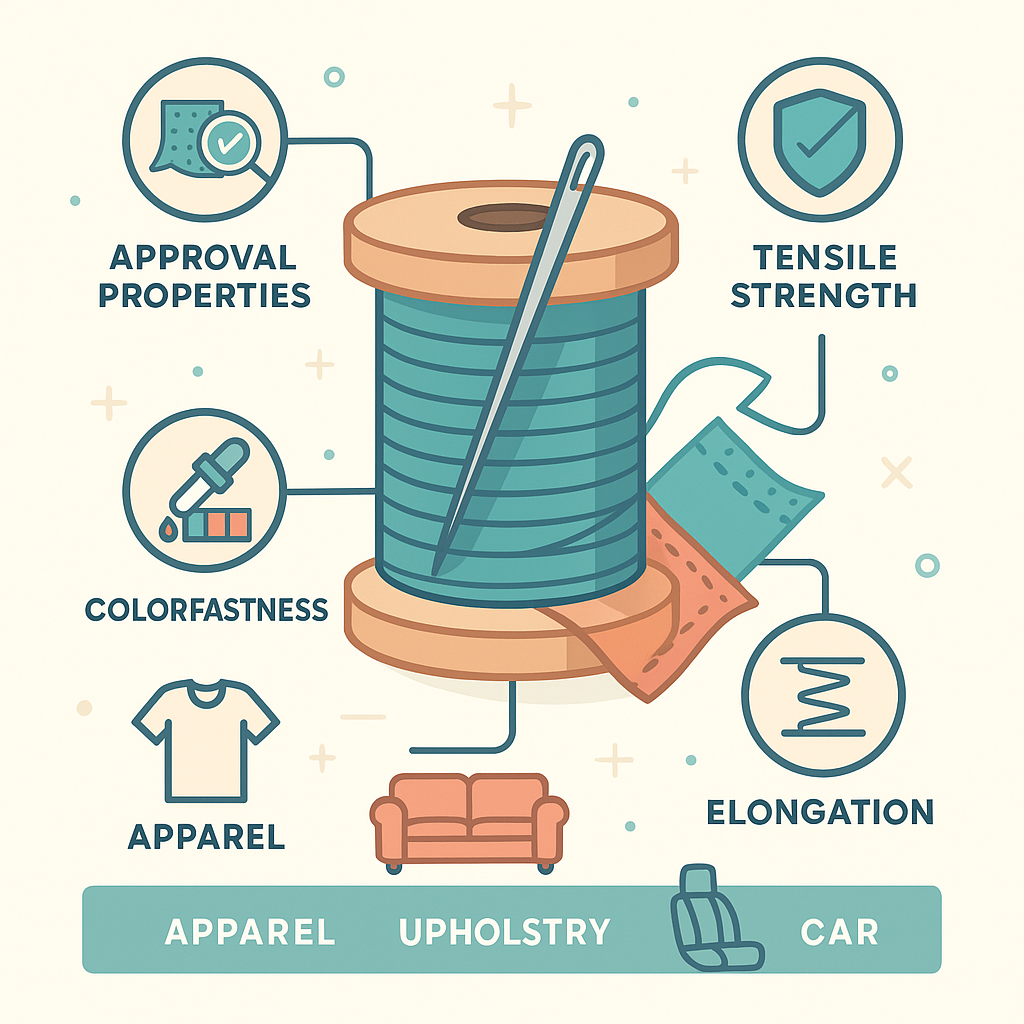
Thread sample approval properties refer to the characteristics and specifications that a thread must meet to be deemed suitable for a particular sewing application. These properties can include tensile strength, elongation, colorfastness, and compatibility with various fabrics. Approval typically involves testing samples against these criteria to ensure they meet the required standards.
Why it matters in sewing performance
The performance of a sewing thread directly impacts the quality and durability of the final product. If a thread does not meet the necessary approval properties, it can lead to issues such as:
- Seam failure due to inadequate tensile strength.
- Poor appearance from color mismatch or fading.
- Incompatibility with the fabric, leading to puckering or distortion.
Understanding thread sample approval properties ensures that manufacturers and sourcing teams can select threads that will perform reliably in their specific applications.
Where is thread sample approval properties used?
Thread sample approval properties are relevant across a variety of sewing applications, from garment manufacturing to upholstery and industrial uses. Knowing where these properties apply can help buyers make informed decisions.
Common sewing thread products or applications
Some common applications where thread sample approval properties are critical include:
- Apparel: Threads used in garments must withstand frequent washing and wearing.
- Upholstery: Threads for furniture must be durable and resistant to fraying.
- Automotive: Threads used in car interiors require high tenacity to endure stress.
Each of these applications has unique requirements, making it essential to evaluate the thread sample approval properties accordingly.
What buyers usually check
When evaluating thread for approval, buyers typically focus on several key factors:
- Tensile strength: The maximum load a thread can bear before breaking.
- Elongation: The ability of the thread to stretch without breaking.
- Colorfastness: Resistance to fading or running when exposed to washing or light.
- Compatibility: How well the thread works with the chosen fabric type.
These checks help ensure that the selected thread will meet the performance expectations of the end product.
How to evaluate thread sample approval properties
Evaluating thread sample approval properties involves a systematic approach to understanding the specifications and performance metrics of the thread. This process can help sourcing teams make informed decisions.
Key points on a specification sheet
A well-structured specification sheet should include the following key points:
- Material composition: Information on whether the thread is polyester, nylon, or a blend.
- Physical properties: Details on tensile strength, elongation, and other mechanical properties.
- Color information: Details on color options and colorfastness ratings.
- Application suitability: Recommendations for specific sewing applications.
Having this information readily available allows buyers to compare different threads effectively.
Common misunderstandings
There are several common misunderstandings regarding thread sample approval properties:
- All threads are the same: Different threads serve different purposes; understanding their properties is crucial.
- Price equals quality: Higher-priced threads may not always be the best choice for a specific application.
- Testing is optional: Skipping the testing phase can lead to costly mistakes in production.
Clarifying these misunderstandings can lead to better decision-making in thread selection.
Practical takeaway for sourcing teams
For sourcing teams, understanding thread sample approval properties is not just beneficial; it’s essential for ensuring product quality and performance.
When to ask for samples
Requesting samples is advisable when:
- Introducing a new product line that requires specific thread characteristics.
- Switching suppliers or thread types to ensure compatibility.
- Testing for performance in a new application.
Samples allow for practical evaluation and testing before making bulk purchasing decisions.
When another thread type may fit better
There are instances where a different thread type may be more suitable, such as:
- When the application requires specialized properties, like heat resistance or water repellency.
- If the fabric type changes, necessitating a different thread for optimal performance.
- When cost constraints require a reevaluation of thread options without compromising quality.
Being open to alternative thread types can enhance the overall quality and efficiency of the sewing process.
Conclusion
Understanding thread sample approval properties is vital for anyone involved in the sewing industry. By recognizing the importance of these properties, where they apply, how to evaluate them, and when to request samples, sourcing teams can make informed decisions that lead to better product outcomes. This knowledge not only enhances sewing performance but also contributes to the overall success of manufacturing processes.