
What does thread count systems mean in sewing thread applications?
Understanding thread count systems is essential for sewing thread buyers, as it directly impacts the performance and suitability of threads for various applications. Thread count refers to the number of individual threads twisted together in a given length of yarn. This measurement can influence the strength, durability, and overall quality of the sewing thread, making it a critical factor in the selection process.
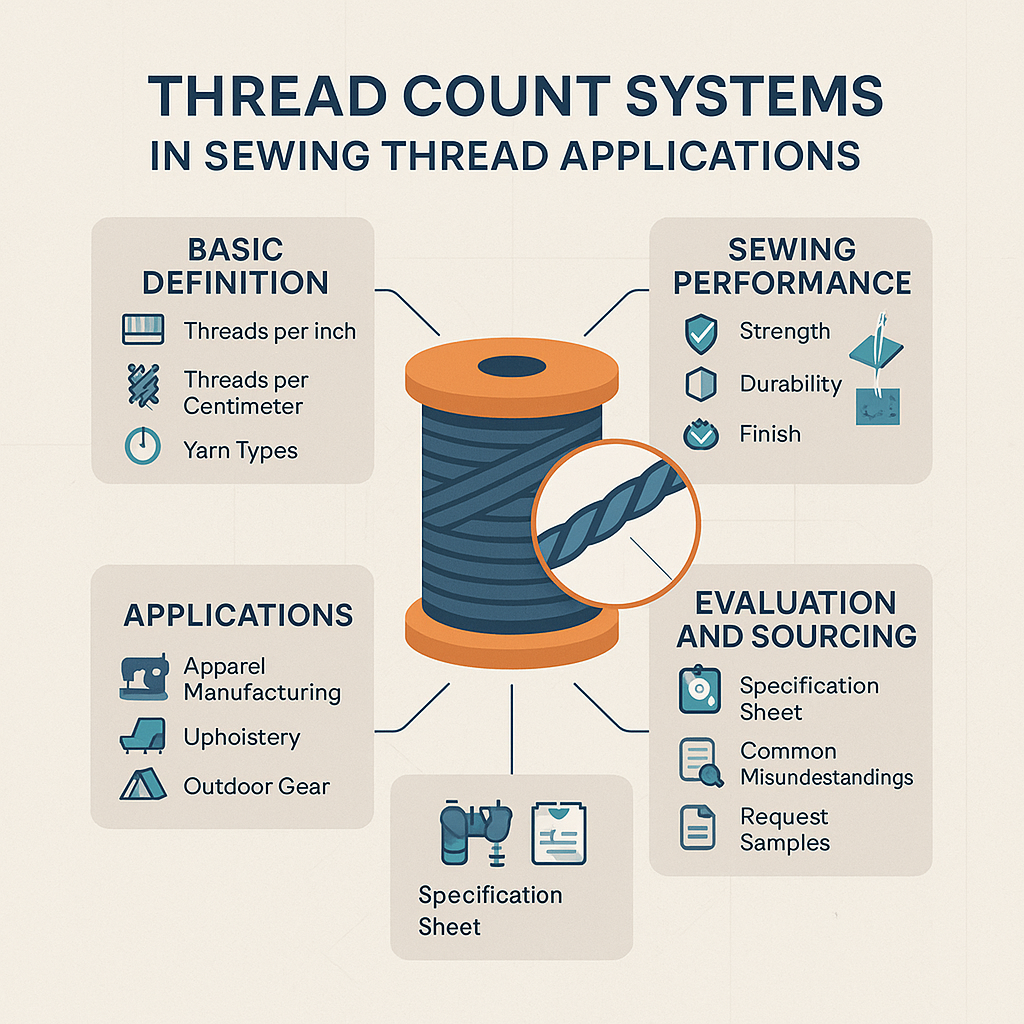
Basic definition
In the context of sewing threads, thread count systems typically refer to the number of threads per inch or per centimeter in a specific type of yarn. This can vary significantly depending on the type of thread being produced, such as spun polyester, nylon, or corespun yarns. A higher thread count often indicates a finer, more tightly woven thread, which can enhance the strength and durability of the final sewn product.
Why it matters in sewing performance
The thread count systems play a vital role in the overall performance of sewing threads. Here are a few reasons why it matters:
- Strength: Higher thread counts typically result in stronger threads, which can withstand greater tension during sewing.
- Durability: Threads with a higher count are often more resistant to wear and tear, making them suitable for heavy-duty applications.
- Finish: The finish of the thread can be affected by the thread count, influencing how it interacts with fabrics and sewing machines.
Where is thread count systems used?
Thread count systems are utilized across various sewing applications, guiding buyers in selecting the right thread for their specific needs.
Common sewing thread products or applications
Some common applications where thread count systems are crucial include:
- Apparel manufacturing: High thread counts are often preferred for garments requiring durability and a refined finish.
- Upholstery: Threads used in upholstery applications may require a balance between strength and flexibility, influencing the choice of thread count.
- Outdoor gear: For products exposed to harsh conditions, such as tents or jackets, higher thread counts can enhance resilience.
What buyers usually check
When evaluating thread count systems, buyers typically consider:
- Material type: Different materials (e.g., polyester, nylon) may have varying optimal thread counts.
- Application requirements: The intended use of the thread can dictate the necessary thread count for performance.
- Compatibility: Ensuring the thread count aligns with the fabric and sewing machine specifications is crucial for successful sewing outcomes.
How to evaluate thread count systems
Evaluating thread count systems involves understanding the specifications and common misconceptions surrounding them.
Key points on a specification sheet
When reviewing a specification sheet for sewing threads, consider the following key points:
- Thread count: Look for the specific count and ensure it aligns with your application needs.
- Material composition: Check whether the thread is made from 100% polyester, nylon, or a blended yarn.
- Finish and treatment: Some threads may undergo treatments that enhance performance, such as bonding or coating.
Common misunderstandings
Several misconceptions can lead to confusion when evaluating thread count systems:
- Higher is always better: While a higher thread count can indicate strength, it may not always be necessary for every application.
- Thread count alone determines quality: Other factors, such as material type and finish, also play significant roles in thread performance.
- All threads with the same count perform the same: Variations in material and construction can lead to different performance outcomes even with the same thread count.
Practical takeaway for sourcing teams
For sourcing teams, understanding thread count systems is essential for making informed decisions that align with production needs and quality standards.
When to ask for samples
Requesting samples is advisable when:
- You are considering a new thread for a specific application and want to assess its performance.
- There is uncertainty about how a particular thread count will perform with your chosen fabric.
- You need to compare different thread types to determine the best fit for your project.
When another thread type may fit better
Sometimes, a different thread type may be more suitable than what is initially considered. Factors to evaluate include:
- Fabric compatibility: Some fabrics may perform better with specific thread types, regardless of thread count.
- End-use requirements: Consider the final application of the sewn product; certain threads may offer advantages in specific environments.
- Cost considerations: Balancing performance with budget constraints may lead to exploring alternative thread options.
In conclusion, understanding thread count systems is vital for sewing thread buyers. By grasping the basics, recognizing applications, and evaluating specifications, sourcing teams can make informed decisions that enhance sewing performance and product quality. This knowledge not only aids in selecting the right thread but also contributes to the overall success of sewing projects.