
Why this technical textile selection guide matters in practical use
In the realm of high-end industrial textiles, making informed decisions about material selection is crucial. The landscape of technical textiles is vast and varied, encompassing a range of materials, properties, and applications. As industries evolve, so do the demands placed on these textiles, making a comprehensive understanding of their characteristics essential for buyers, engineers, and decision-makers.
This technical textile selection guide aims to illuminate the complexities involved in choosing the right materials for specific applications. By addressing common oversights and providing a structured approach to evaluation, this guide serves as a valuable resource for those navigating the intricate world of industrial textiles.
How the industrial textiles is typically defined and where the boundaries really are
Industrial textiles are often defined as fabrics engineered for specific performance criteria, typically used in applications ranging from automotive to aerospace, construction to medical. However, the boundaries of what constitutes industrial textiles can be blurred, leading to misunderstandings about their capabilities and applications.
What people often oversimplify
One common oversimplification is the assumption that all industrial textiles are created equal. In reality, the performance of these materials can vary significantly based on their composition, structure, and intended use. For instance, while some textiles may excel in tensile strength, they may lack flexibility or resistance to environmental factors. Understanding these nuances is critical for making informed choices.
Key materials, structures, or design choices that shape performance
The performance of technical textiles is influenced by several key factors, including the materials used, the structural design, and the specific manufacturing processes employed. Each of these elements plays a role in determining the textile’s suitability for various applications.
What changes the most from one application to another
Different applications demand different properties from textiles. For example, in the automotive industry, textiles must not only provide durability but also meet stringent safety standards. In contrast, textiles used in medical applications may prioritize biocompatibility and sterilization capabilities. Understanding these varying requirements is essential for selecting the right material.
Selection logic: what to evaluate before choosing a solution
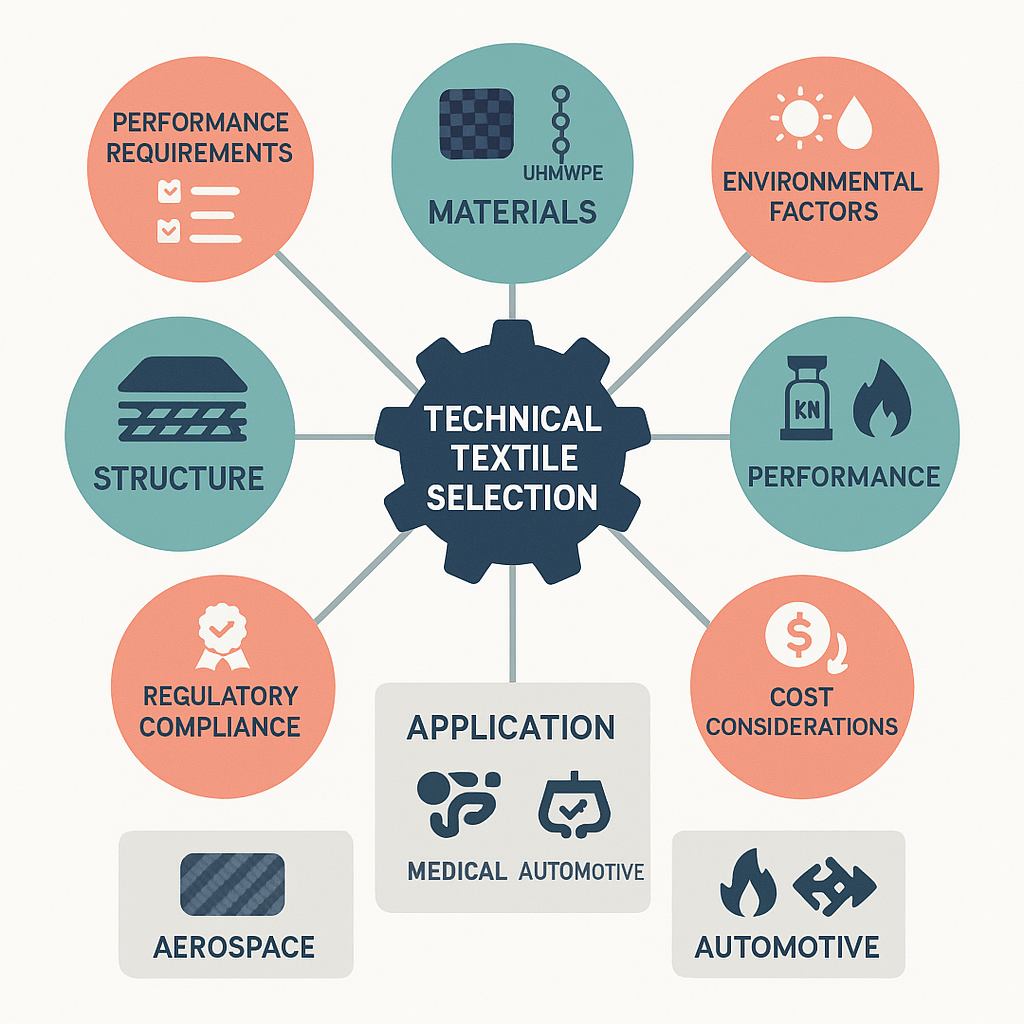
When evaluating technical textiles, a systematic approach can help streamline the decision-making process. Key factors to consider include:
- Performance Requirements: Identify the specific performance criteria needed for the application, such as strength, flexibility, or resistance to chemicals.
- Environmental Factors: Consider the conditions the textile will be exposed to, including temperature, moisture, and UV exposure.
- Regulatory Compliance: Ensure that the selected textiles meet any industry-specific regulations or standards.
- Cost Considerations: Evaluate the total cost of ownership, including not just the purchase price but also maintenance and lifecycle costs.
Common trade-offs to keep in mind
Trade-offs are an inherent part of the selection process. For instance, a textile that offers exceptional strength may be heavier and less flexible, which could be a disadvantage in certain applications. Similarly, a lightweight textile may not provide the durability required for high-stress environments. Understanding these trade-offs is essential for making informed decisions that align with project goals.
Application examples and practical takeaways
To illustrate the complexities of technical textile selection, consider the following application examples:
- Aerospace: In aerospace applications, textiles must be lightweight yet strong, often utilizing advanced composites like carbon fiber or aramid fibers. The selection process involves balancing weight savings with structural integrity.
- Medical: Textiles used in medical applications require biocompatibility and sterilization capabilities. Materials such as UHMWPE (Ultra-High-Molecular-Weight Polyethylene) are often chosen for their strength and resistance to wear.
- Automotive: Automotive textiles must meet rigorous safety standards while providing comfort and durability. The selection process often involves evaluating materials for their flame resistance and abrasion resistance.
These examples highlight the importance of understanding the specific requirements of each application and the materials that best meet those needs.
Conclusion
In conclusion, navigating the complexities of technical textile selection requires a thoughtful and informed approach. By understanding the key materials, performance requirements, and common trade-offs, buyers can make decisions that align with their specific application needs. This technical textile selection guide serves as a valuable resource for those looking to deepen their understanding of industrial textiles and enhance their sourcing strategies.
As you consider your next project, take the time to evaluate the unique requirements of your application and the materials available. A well-informed decision can lead to improved performance, reduced costs, and greater overall satisfaction with your textile solutions.