
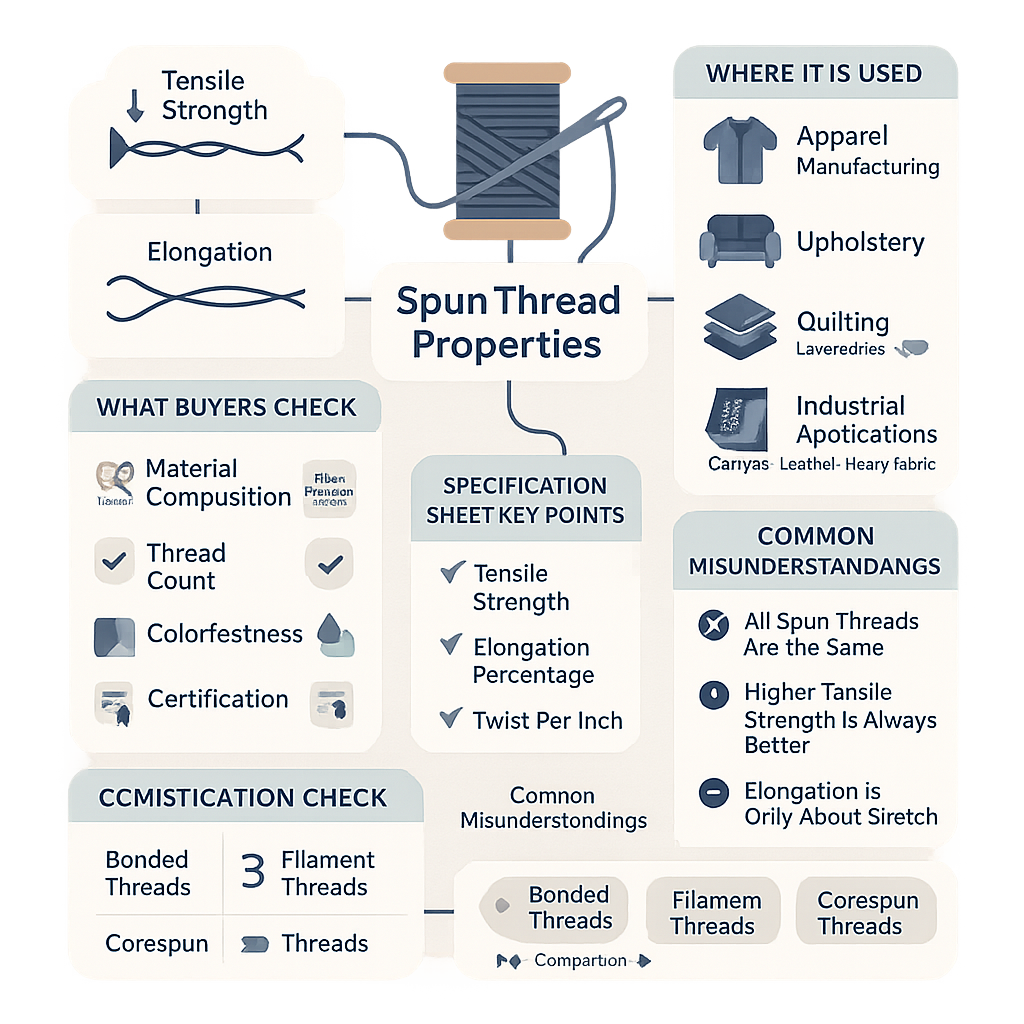
What does spun thread properties mean in sewing thread applications?
When selecting sewing threads, understanding spun thread properties is essential for achieving optimal performance in various applications. Spun threads, made from staple fibers twisted together, offer unique characteristics that influence their suitability for different sewing tasks. This article delves into the definition, significance, and practical applications of spun thread properties.
Basic definition
Spun thread properties refer to the physical and mechanical characteristics of threads made from spun yarns. These properties include tensile strength, elongation, abrasion resistance, and twist, among others. The composition of spun threads typically involves fibers such as polyester or cotton, which are spun into yarns and then twisted to create the final thread product.
Why it matters in sewing performance
The properties of spun threads directly impact sewing performance, influencing factors such as:
- Tensile strength: Determines how much force the thread can withstand before breaking.
- Elongation: Refers to the thread’s ability to stretch, which affects seam flexibility.
- Abrasion resistance: Indicates how well the thread can withstand wear and tear during use.
- Twist: Affects the thread’s stability and overall performance in various sewing applications.
Understanding these properties helps manufacturers and distributors select the right threads for their specific needs, ensuring durability and performance in the final product.
Where is spun thread properties used?
Spun thread properties find applications across a range of industries, from apparel to upholstery. Understanding where these threads are commonly used can aid in making informed purchasing decisions.
Common sewing thread products or applications
Some common applications of spun threads include:
- Apparel manufacturing: Used in seams, hems, and decorative stitching.
- Upholstery: Ideal for heavy-duty applications requiring strong seams.
- Quilting: Provides flexibility and durability for layered fabrics.
- Industrial applications: Suitable for sewing materials like canvas, leather, and other heavy fabrics.
Each application has specific requirements, making it crucial for buyers to understand the spun thread properties that best fit their needs.
What buyers usually check
When evaluating spun threads for purchase, buyers typically consider:
- Material composition: Polyester, cotton, or blends affect performance.
- Thread count: Higher counts may indicate finer threads, while lower counts suggest thicker options.
- Colorfastness: Important for applications where color retention is critical.
- Certification: Compliance with industry standards can be a deciding factor.
These considerations help ensure that the selected thread meets the specific demands of the intended application.
How to evaluate spun thread properties
Evaluating spun thread properties is crucial for making informed decisions. Understanding how to read specifications and identify key characteristics can streamline the selection process.
Key points on a specification sheet
When reviewing a specification sheet for spun threads, consider the following key points:
- Tensile strength: Look for the maximum load the thread can handle.
- Elongation percentage: Indicates how much the thread can stretch before breaking.
- Twist per inch: Affects the thread’s stability and performance.
- Color and finish: Ensure the thread meets aesthetic requirements.
These elements provide a comprehensive overview of the thread’s capabilities and suitability for specific applications.
Common misunderstandings
There are several common misunderstandings regarding spun thread properties:
- All spun threads are the same: Different materials and constructions can lead to significant performance differences.
- Higher tensile strength is always better: The ideal strength depends on the application; too strong may lead to fabric damage.
- Elongation is only about stretch: It also affects how seams behave under stress, impacting overall garment performance.
Clarifying these misunderstandings can help buyers make more informed choices when selecting spun threads.
Practical takeaway for sourcing teams
For sourcing teams, understanding spun thread properties is vital for ensuring the right thread is selected for each application. Here are some practical takeaways:
When to ask for samples
Requesting samples is advisable when:
- Evaluating a new supplier or product line.
- Testing thread performance in specific applications.
- Confirming colorfastness and aesthetic qualities.
Samples allow for hands-on evaluation, ensuring the selected thread meets performance expectations.
When another thread type may fit better
While spun threads are versatile, there are instances where other thread types may be more suitable:
- Bonded threads: Offer enhanced durability for heavy-duty applications.
- Filament threads: Provide a smoother finish and are often used in high-speed sewing.
- Corespun threads: Combine the benefits of spun and filament threads, offering strength and flexibility.
Assessing the specific requirements of the application can guide the decision to explore alternative thread types.
In conclusion, understanding spun thread properties is essential for making informed decisions in sewing thread selection. By evaluating the characteristics and applications of spun threads, sourcing teams can ensure they choose the right materials for their specific needs, leading to improved sewing performance and product quality.