
What does spun polyester yarn mean in sewing thread applications?
Basic definition
Spun polyester yarn is a type of yarn made from polyester fibers that are spun together to create a strong and durable thread. Unlike filament yarns, which consist of long continuous strands, spun polyester yarn is composed of shorter fibers twisted together. This structure provides a unique combination of strength, flexibility, and texture, making it a popular choice in various sewing applications.
Why it matters in sewing performance
The performance of spun polyester yarn in sewing is influenced by its construction. The spun nature of the yarn allows for better grip on fabric, reducing slippage during sewing. Additionally, spun polyester yarn exhibits excellent resistance to abrasion and UV light, which is crucial for outdoor applications. Its moisture-wicking properties also contribute to the longevity of the finished product, making it suitable for a wide range of textiles.
Where is spun polyester yarn used?
Common sewing thread products or applications
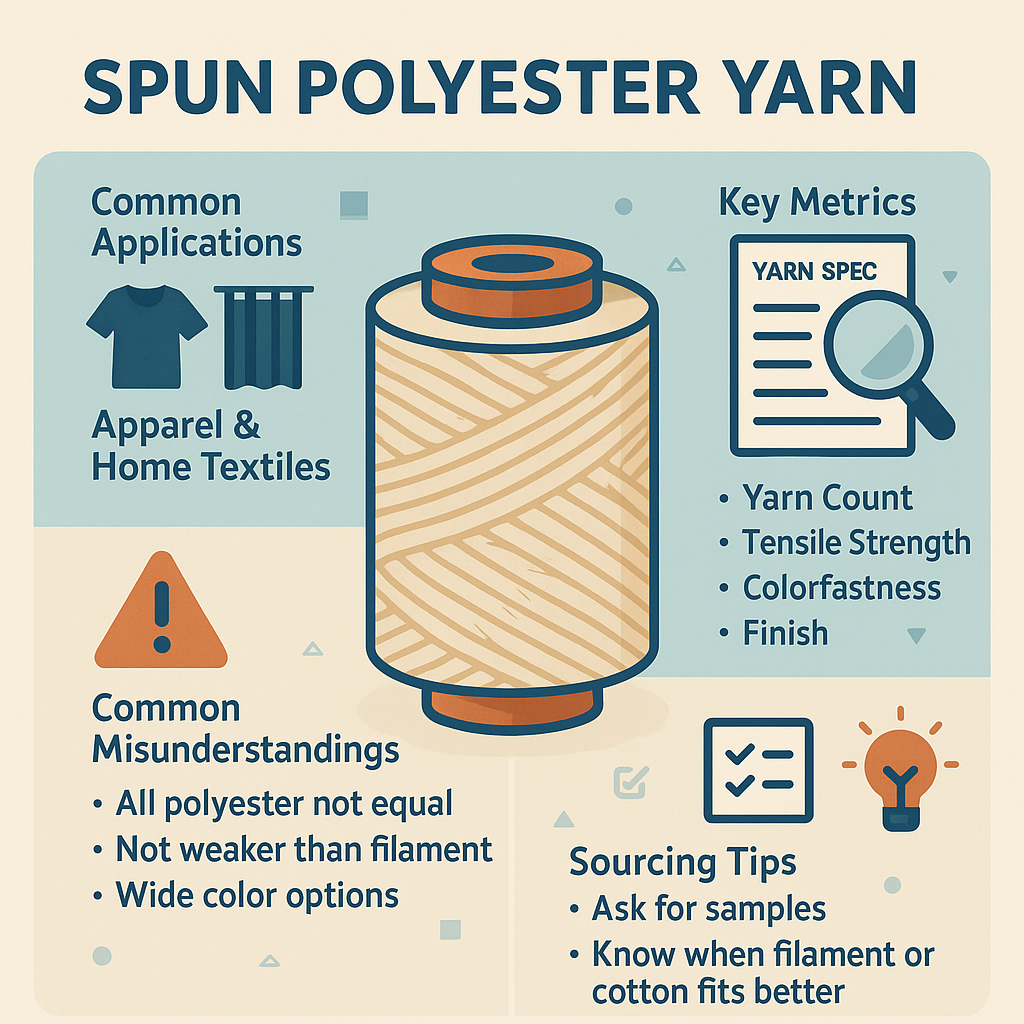
Spun polyester yarn is versatile and can be found in numerous sewing applications, including:
- Apparel: Used in garments such as shirts, pants, and jackets due to its softness and durability.
- Home textiles: Ideal for curtains, upholstery, and bedding, where a balance of strength and aesthetics is required.
- Industrial applications: Commonly used in automotive and outdoor gear, where resistance to wear and environmental factors is essential.
- Sportswear: Beneficial for activewear due to its moisture-wicking capabilities and flexibility.
What buyers usually check
When sourcing spun polyester yarn, buyers typically consider several factors:
- Yarn count: Indicates the thickness and weight of the yarn, affecting the final product’s appearance and performance.
- Tensile strength: Essential for ensuring the thread can withstand the stresses of sewing and use.
- Colorfastness: Important for applications where color retention is critical, such as fashion and home textiles.
- Finish: The type of finish applied to the yarn can influence its performance characteristics, such as lubrication and friction.
How to evaluate spun polyester yarn
Key points on a specification sheet
When reviewing spun polyester yarn specifications, focus on the following key points:
- Fiber composition: Ensure it is 100% polyester for optimal performance.
- Denier or tex: These measurements indicate the thickness of the yarn, which can affect the sewing process and final product.
- Breaking strength: Look for data on the yarn’s ability to withstand tension without breaking.
- Elongation: This measures how much the yarn can stretch before breaking, impacting its flexibility during sewing.
Common misunderstandings
There are several misconceptions surrounding spun polyester yarn that can lead to poor purchasing decisions:
- All polyester is the same: Not all polyester yarns are created equal; variations in spinning techniques and fiber quality can significantly affect performance.
- Spun yarns are weaker than filament yarns: While filament yarns may offer higher tensile strength, spun polyester yarns provide adequate strength for most sewing applications and have advantages in grip and flexibility.
- Color options are limited: Spun polyester yarn is available in a wide range of colors, making it suitable for diverse design needs.
Practical takeaway for sourcing teams
When to ask for samples
Requesting samples of spun polyester yarn is advisable when:
- You are evaluating a new supplier or product line.
- You need to test the yarn’s performance in specific applications.
- You are comparing different yarn types to determine the best fit for your project.
When another thread type may fit better
While spun polyester yarn is versatile, there are instances where other thread types may be more suitable:
- For high-stress applications: High tenacity polyester filament yarn may provide better performance under extreme conditions.
- For specific aesthetic needs: Cotton threads may be preferred for their natural look and feel in certain fashion applications.
- For specialized uses: Bonded nylon yarns may be more appropriate for outdoor gear requiring additional durability and weather resistance.
In conclusion, understanding spun polyester yarn is crucial for making informed decisions in the sewing industry. Its unique properties make it suitable for a variety of applications, but careful evaluation of specifications and performance characteristics is essential. By considering the specific needs of your projects and being aware of the nuances of different thread types, sourcing teams can ensure they select the most appropriate materials for their sewing applications.