
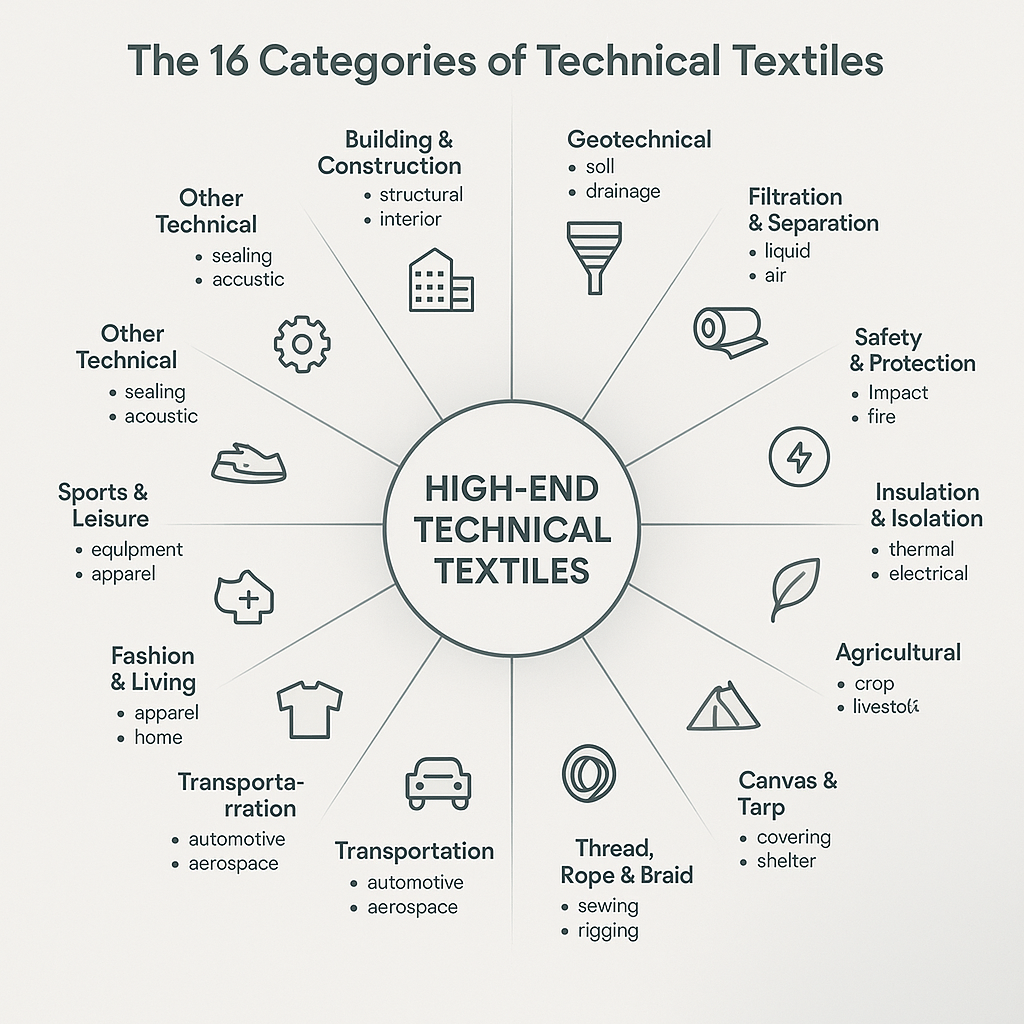
High-end technical textiles, also known as engineered textiles, are specially designed materials that go far beyond traditional clothing and home furnishing applications. They are integral to modern industry, infrastructure, healthcare, and environmental protection. From the early days of canvas used in wagon covers and aircraft wings to today’s advanced composites with embedded sensors, these textiles have evolved dramatically. The introduction of synthetic fibers like nylon in 1939 and subsequent high-performance fibers opened up countless new possibilities. Today, technical textiles are essential in fields ranging from agriculture to aerospace, and their classification reflects this diversity.
In this guide, we explore the 16 primary categories of high-end technical textiles, grouping them by their application domains to better understand their roles in shaping our world.
Infrastructure and Construction Textiles
1. Building and Construction Textiles
These textiles enhance the performance, safety, and sustainability of buildings and civil structures. They are used for reinforcement, waterproofing, insulation, and even aesthetic purposes. Key products include:
- Waterproofing membranes for roofs and foundations
- Membrane structures for tensile architecture (stadiums, exhibition halls)
- Fiber-reinforced composites for repairing and strengthening concrete
- Insulation materials for thermal and acoustic control
- Safety nets and shock-absorbing textiles for earthquake protection
2. Geotechnical Textiles
Geotextiles are permeable fabrics used in civil engineering projects to improve soil characteristics. They provide separation, filtration, drainage, and reinforcement. Common forms include:
- Geotextiles (woven, nonwoven) for road stabilization
- Geogrids for retaining walls and slope reinforcement
- Geonets and geocomposites for drainage systems
- Geosynthetic clay liners for landfill and pond liners
- Geocells for erosion control and load support
Industrial and Protective Textiles
3. Filtration and Separation Textiles
These textiles are critical for environmental protection and industrial processes, separating solids from gases or liquids. They are used in:
- High-temperature gas filtration (baghouse filters in power plants)
- Liquid filtration in chemical, food, and pharmaceutical industries
- Dust collection systems
- Cigarette filters and industrial sieve meshes
4. Industrial Felt and Blanket Textiles
Felts and blankets are nonwoven or woven materials used for their cushioning, insulating, or polishing properties. Applications span:
- Papermaking machine clothing
- Polishing pads for electronics and optics
- Soundproofing and thermal insulation in machinery
- Oil-absorbent felts for spill cleanup
- Ballistic-resistant felts for armor
5. Safety and Protection Textiles
Designed to shield people and equipment from hazards, these textiles are engineered for:
- Ballistic and stab resistance (body armor, vehicle armor)
- Firefighting suits and industrial heat protection
- Chemical and biological protective clothing
- High-visibility garments for road workers
- Radiation shielding for medical and nuclear applications
6. Insulation and Isolation Textiles
These materials provide electrical, thermal, or electromagnetic isolation. They include:
- Electrical insulation tapes and sleeving for wires
- Battery separators in electric vehicles
- Capacitor and transformer membranes
- Electromagnetic shielding fabrics for electronics
Agricultural and Environmental Textiles
7. Agricultural Textiles (Agrotextiles)
Agrotextiles boost crop yields and reduce chemical use by creating controlled environments. They include:
- Greenhouse covers and shade nets
- Mulch films for weed control and moisture retention
- Insect-proof nets and bird protection
- Ground covers for erosion control
- Fishing nets and aquaculture cages
8. Canvas and Tarp Textiles
Heavy-duty fabrics used for covering, storage, and transport. Typical products are:
- Tent fabrics for camping and emergency shelters
- Tarpaulins for trucks and construction sites
- Awning materials for outdoor shading
- Liquid storage bladders and collapsible tanks
Medical and Hygiene Textiles
9. Medical and Hygiene Textiles
These textiles save lives and improve hygiene in healthcare settings. They encompass:
- Surgical sutures and implantable meshes (hernia repair, vascular grafts)
- Wound dressings and bandages
- Disposable surgical gowns, drapes, and masks
- Incontinence products and baby diapers
- Extracorporeal devices like artificial kidneys
10. Textiles for Fashion, Clothing and Living
Beyond traditional apparel, these textiles find use in lifestyle products:
- High-performance sportswear and outdoor gear
- Footwear components (shoe linings, laces)
- Home textiles with antimicrobial or flame-retardant finishes
- Textiles for musical instruments (drum heads, piano hammers)
- Cultural and artistic textiles for restoration and display
Transportation and Energy Textiles
11. Transportation Textiles
Vehicles rely on textiles for safety, comfort, and efficiency. They are used in:
- Automotive interiors (seat covers, headliners, carpets)
- Tire cord fabrics for reinforcement
- Seat belts and airbags
- Composite materials for lightweight body panels
- Filtration systems in engines and cabins
12. Thread, Rope and Braid Textiles
High-strength linear textiles are essential in many industries:
- Industrial sewing threads for heavy-duty seams
- Safety belts and harnesses
- Ropes for marine, mining, and rescue operations
- Parachute cords and cargo straps
- Fishing lines and netting
Specialty and Miscellaneous Textiles
13. Synthetic Leather Textiles
Artificial leathers are made by coating or laminating textile substrates to mimic natural leather. They are used for:
- Upholstery in furniture and automotive interiors
- Footwear, bags, and belts
- Garments and accessories
- Base fabrics include woven, knitted, and nonwoven materials
14. Packaging Textiles
Textile-based packaging protects goods during storage and transport. Examples include:
- Woven sacks for grains, cement, and chemicals
- Flexible intermediate bulk containers (FIBCs) for bulk materials
- Protective wraps for fragile items
- Reusable shopping bags and gift packaging
15. Textiles for Sports and Leisure
From professional sports to casual recreation, textiles enhance performance and enjoyment:
- Outdoor gear (tents, backpacks, sleeping bags)
- Sports equipment (ball covers, racket strings)
- Facility textiles (artificial turf, stadium seating)
- Fitness apparel and yoga mats
16. Other Technical Textiles
This catch-all category includes innovative and niche products:
- Interlinings and fusible fabrics for garment construction
- Cleaning wipes and industrial rags
- Specialty fibers like carbon, aramid, and glass
- Smart textiles with integrated electronics
Conclusion
The 16 categories of high-end technical textiles illustrate the remarkable breadth of this field. From the depths of the ocean to the vacuum of space, these engineered fabrics provide solutions that are stronger, lighter, and smarter than ever before. As material science advances and new technologies like nanotechnology and biodegradable polymers emerge, the possibilities for technical textiles continue to expand. They are not just fabrics; they are the building blocks of a more resilient, sustainable, and innovative future.