
Why This Industrial Textiles Matters in Practical Use
In the realm of industrial applications, the choice of textile materials can significantly influence performance, durability, and overall effectiveness. Understanding industrial textile application requirements is essential for engineers, product developers, and decision-makers who aim to optimize their projects. The right textile can enhance functionality, reduce costs, and improve safety, making it a critical factor in the success of various applications.
From automotive to aerospace, construction to medical, the demands placed on textiles vary widely. Each application has unique requirements that dictate the choice of materials and structures. Therefore, a thorough understanding of these requirements is not just beneficial but necessary for achieving desired outcomes.
How the Industrial Textiles is Typically Defined and Where the Boundaries Really Are
Industrial textiles encompass a broad range of materials designed for specific applications. These textiles are often categorized as high-end industrial textiles, technical textiles, and advanced industrial textiles. Each category serves different purposes and is defined by its unique properties and performance characteristics.
What People Often Oversimplify
One common misunderstanding is the tendency to equate industrial textiles solely with strength or durability. While these are important factors, they are not the only considerations. For instance, flexibility, weight, chemical resistance, and thermal stability can be equally critical depending on the application. Oversimplifying these factors can lead to suboptimal material choices that may compromise performance.
Key Materials, Structures, or Design Choices That Shape Performance
The performance of industrial textiles is influenced by several key materials and structural choices. Understanding these elements is vital for aligning textiles with specific application requirements.
What Changes the Most from One Application to Another
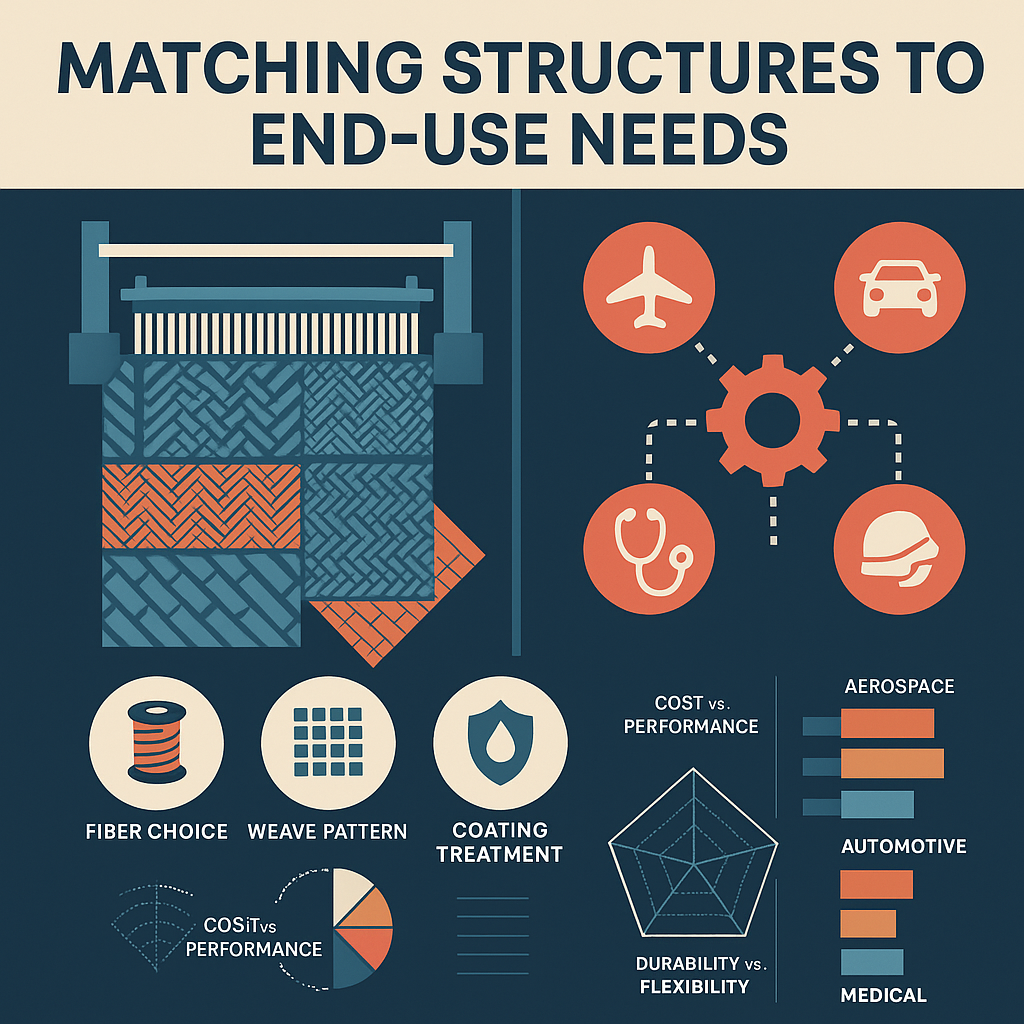
- Material Composition: Different applications may require specific fibers, such as UHMWPE for high-strength applications or aramid fibers for heat resistance.
- Weave Patterns: The choice of weave can affect breathability, flexibility, and strength. For example, a tighter weave may enhance durability but reduce flexibility.
- Coatings and Treatments: Additional coatings can provide water resistance, UV protection, or flame retardance, which are crucial for certain environments.
By carefully considering these factors, decision-makers can better match textiles to their intended applications, ensuring optimal performance and longevity.
Selection Logic: What to Evaluate Before Choosing a Solution
When selecting industrial textiles, a systematic approach is essential. Evaluating various factors can help ensure that the chosen material meets the specific application requirements.
Common Trade-Offs to Keep in Mind
- Cost vs. Performance: Higher-performing materials often come with increased costs. It’s important to balance budget constraints with performance needs.
- Weight vs. Strength: Lighter materials may be easier to handle but could sacrifice strength. Understanding the application’s demands is crucial.
- Durability vs. Flexibility: Some applications may require a balance between a material’s durability and its ability to flex without breaking.
These trade-offs require careful consideration and should be evaluated in the context of the specific application to avoid costly mistakes.
Application Examples and Practical Takeaways
To illustrate the importance of aligning industrial textile structures with application requirements, consider the following examples:
- Aerospace: In aerospace applications, weight reduction is critical. Advanced composites, such as carbon fiber, are often used for their high strength-to-weight ratio, but they can be expensive.
- Automotive: Automotive textiles must meet stringent safety and durability standards. Materials that offer flame resistance and abrasion resistance are often prioritized.
- Medical: In medical applications, textiles must be biocompatible and easy to sterilize. This often leads to the selection of specific polymers that meet these criteria.
These examples highlight the diverse requirements across industries and the importance of a tailored approach to material selection.
Conclusion
Matching industrial textile structures with end-use requirements is a nuanced process that demands a thorough understanding of both the materials available and the specific needs of the application. By evaluating key factors such as material composition, structural design, and performance requirements, decision-makers can make informed choices that enhance the effectiveness of their projects.
As you navigate the complexities of industrial textile application requirements, consider the trade-offs involved and the specific demands of your application. A thoughtful approach will not only improve performance but also contribute to the overall success of your initiatives.